
For many households, the garage is the true front door of the home. It’s where you enter after work, where kids drop their backpacks, where muddy shoes pile up, and where coats and sports gear often land. Without a system, this high-traffic area quickly becomes cluttered and chaotic.
That’s where a garage mudroom entryway comes in.
Traditionally, a mudroom is a small transitional space designed to catch dirt, shoes, coats, and bags before they enter the main living areas of a home. But not every house has a dedicated mudroom inside. Fortunately, you can create one inside your garage using simple design elements like paint, trim, and basic storage features.
A garage mudroom entryway helps organize daily routines, keeps your home cleaner, and creates a welcoming transition between the outdoors and the interior of your house. Even better, this upgrade can often be completed in a weekend using affordable materials.
In this guide, we’ll explore how to design and build a functional mudroom entryway in your garage using paint and trim, along with layout ideas, color inspiration, and practical tips for long-lasting results.
Why Add a Mudroom Entryway in the Garage?
Before jumping into the design process, it helps to understand why a mudroom area in the garage can be so valuable.
1. Keeps Dirt Out of the House
Garages often serve as the first entry point after outdoor activities. Shoes may carry:
- dirt
- snow
- mud
- leaves
- road salt
Without a designated area to remove and store these items, dirt gets tracked throughout the home. A mudroom entryway creates a buffer zone where shoes and coats stay contained.
2. Improves Daily Organization
Families juggle many daily essentials:
- backpacks
- jackets
- umbrellas
- sports gear
- grocery bags
A garage mudroom keeps these items in one convenient location so everyone knows where things belong.
3. Reduces Clutter Inside the Home
Instead of coats piling up on kitchen chairs or shoes filling the hallway, the garage entryway becomes the designated storage zone.
4. Adds Style to an Overlooked Space
Garages are often purely functional, but a thoughtfully designed mudroom entryway can make the space feel more polished and welcoming.
Using paint and trim allows you to define the entry zone visually, making the area look intentional rather than improvised.

Planning Your Garage Mudroom Entryway
Creating a garage mudroom doesn’t require a full renovation, but good planning is essential.
Start by assessing your space and identifying the best location.
Ideal Location
The mudroom area should be located near the door that connects the garage to the house. This ensures everyone passes through the space before entering the home.
Look for a wall with enough room for:
- hooks
- a bench
- small storage cubbies
Even a 3- to 5-foot wall section can work well for a compact mudroom.
Consider Traffic Flow
Make sure the mudroom zone doesn’t block:
- car doors
- garage storage cabinets
- walkways
The goal is to create a functional transition space without interfering with other garage activities.
Using Paint to Define the Mudroom Area
Paint is one of the easiest and most affordable ways to visually separate a mudroom entryway from the rest of the garage.
Instead of painting the entire garage, you can highlight the mudroom zone with a unique color or pattern.
Create a Feature Wall
A feature wall behind the bench or hooks instantly marks the mudroom space.
Popular choices include:
- soft gray
- navy blue
- sage green
- warm beige
This painted backdrop makes the area feel intentional and decorative rather than purely utilitarian.
Two-Tone Paint Design
A two-tone wall works beautifully in mudroom areas.
For example:
- darker color on the lower half
- lighter color on the upper half
This design helps hide scuffs from shoes and bags while keeping the space bright.
Painted “Mudroom Zone”
Another creative approach is to paint a large rectangular block of color on the wall that frames the mudroom area.
This technique visually groups hooks, shelves, and benches together.
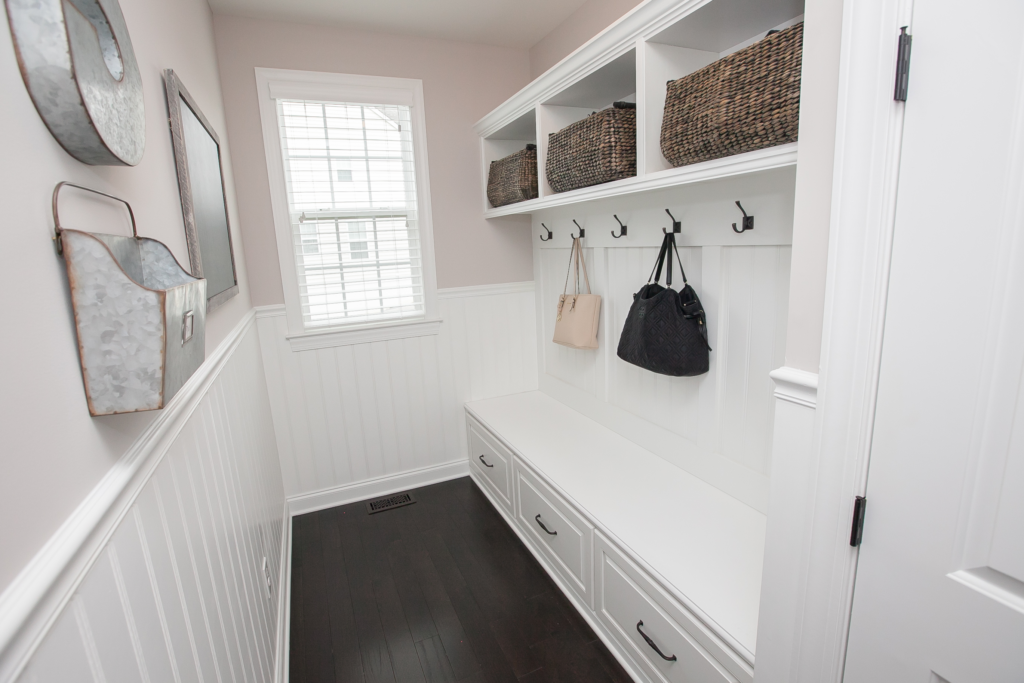
Using Trim to Add Character and Structure
Trim is a powerful design tool that can transform a simple painted wall into a stylish mudroom entryway.
Even basic trim boards can create the look of built-in cabinetry without the high cost.
Board and Batten Walls
Board and batten is one of the most popular mudroom wall treatments.
This style uses vertical trim boards spaced evenly across the wall.
Benefits include:
- classic farmhouse style
- added wall protection
- visual structure
The trim also creates a natural place to mount hooks.
Picture Frame Molding
Picture frame molding involves creating rectangular trim frames on the wall.
This style feels more traditional and elegant.
It works especially well when paired with neutral paint colors.
Shiplap Walls
Shiplap adds texture and character to a mudroom entryway.
Painted white or soft gray, shiplap creates a cozy cottage look while protecting the wall from scratches.
Essential Features of a Garage Mudroom Entryway
While paint and trim define the space visually, the functionality of a mudroom comes from its storage features.
Here are the most useful elements.
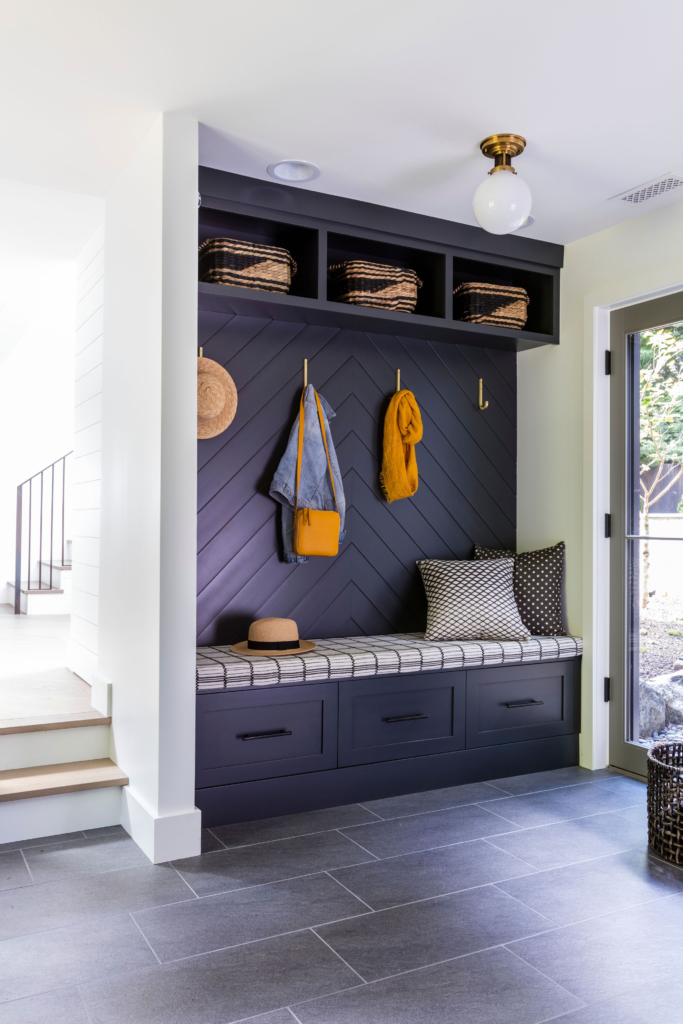
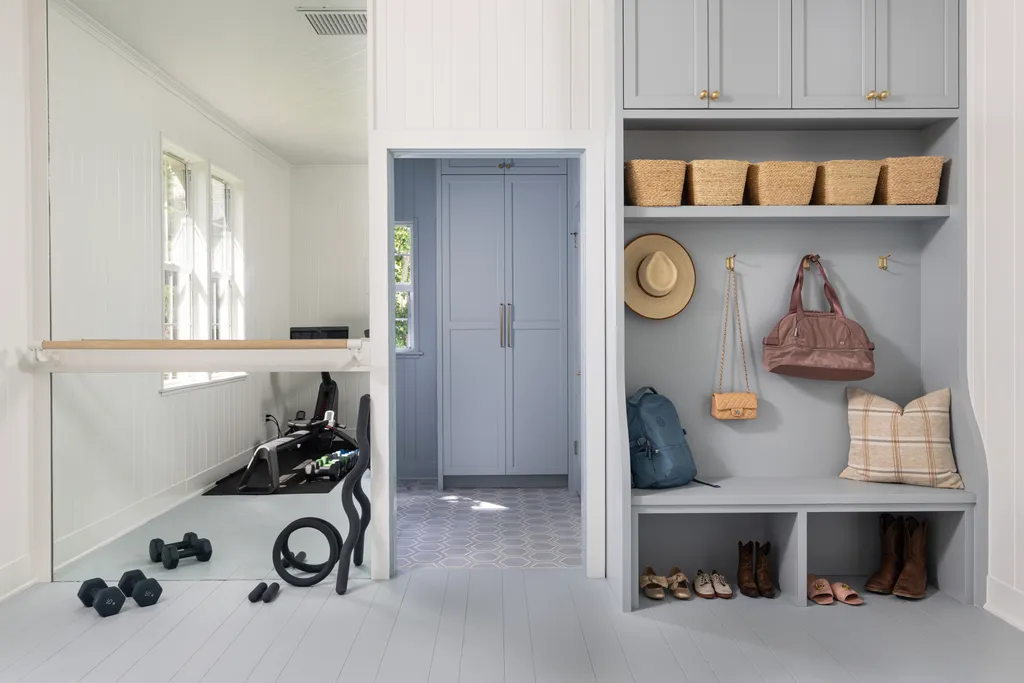
Hooks for Coats and Bags
Wall hooks are a must-have in any mudroom.
Install sturdy hooks for:
- jackets
- backpacks
- hats
- reusable shopping bags
Spacing hooks evenly along the trim boards keeps the wall looking organized.
A Bench for Seating
A small bench makes it easier to put on and remove shoes.
Bench options include:
- simple wooden benches
- storage benches
- built-in seating
Even a narrow bench can dramatically improve the usability of the space.
Shoe Storage
Shoes are often the biggest source of mudroom clutter.
Solutions include:
- shoe racks
- open cubbies
- baskets under the bench
Keeping shoes off the floor prevents the area from looking messy.
Overhead Shelving
Shelves above the hooks provide extra storage for:
- seasonal gear
- helmets
- sports equipment
- storage baskets
Using matching baskets helps maintain a clean visual appearance.
Choosing the Right Colors for a Garage Mudroom
Color choice influences both the look and practicality of the space.
Neutral Colors
Neutral tones create a timeless look.
Popular options include:
- warm gray
- greige
- taupe
- soft white
These colors blend easily with most garage interiors.
Dark Colors
Dark shades hide dirt and scuffs better.
Good choices include:
- charcoal
- navy
- deep green
These colors are especially useful for the lower half of the wall.
Earthy Colors
Earth tones create a warm and welcoming entryway.
Examples include:
- olive green
- clay
- muted terracotta
These colors pair nicely with wood benches and natural materials.
Best Paint Finishes for Mudroom Walls
Mudroom walls experience heavy use, so durability is important.
Satin Finish
Satin paint is a great choice because it is:
- easy to clean
- moderately reflective
- durable
Semi-Gloss Finish
Semi-gloss paint is even more durable and moisture resistant.
It works especially well on trim and lower wall sections.
Matte Finish
Matte paint hides imperfections but may be harder to clean, so it’s usually better for upper walls.
Flooring Ideas for Garage Mudrooms
The floor is another important consideration.
Mudroom floors should be easy to clean and resistant to moisture.
Options include:
- rubber mats
- epoxy garage flooring
- vinyl tiles
- washable rugs
Placing a large entry mat helps trap dirt and protect the floor.
Lighting for the Mudroom Area
Garages often have limited lighting, so improving illumination around the mudroom area is helpful.
Consider adding:
- LED strip lighting under shelves
- wall sconces
- bright overhead lights
Better lighting makes the space feel more inviting and functional.
Small Garage Mudroom Ideas
Not every garage has space for a full mudroom.
But even small areas can be transformed with clever design.
Narrow Wall Solution
A narrow wall can still hold:
- three hooks
- a small bench
- a compact shoe rack
Vertical Storage
Use vertical space with tall shelves or stacked cubbies.
Fold-Down Bench
A fold-down bench saves space while providing seating when needed.
Budget-Friendly DIY Mudroom Ideas
Creating a garage mudroom doesn’t have to be expensive.
Affordable upgrades include:
- painting a feature wall
- installing simple hooks
- using thrifted benches
- building DIY cubbies
- repurposing old shelves
With creativity, you can achieve a stylish mudroom for a fraction of the cost of custom cabinetry.
Step-by-Step Guide to Creating Your Mudroom Entryway
Here’s a simple process for building your garage mudroom.
Step 1: Clean the Wall
Remove dust, grease, and cobwebs.
Step 2: Repair the Surface
Fill holes and sand rough areas.
Step 3: Install Trim
Add board and batten or molding to create structure.
Step 4: Prime the Wall
Primer helps paint adhere better.
Step 5: Paint the Accent Area
Apply two coats of your chosen color.
Step 6: Install Hooks and Shelves
Secure them into studs for strength.
Step 7: Add Bench and Storage
Finish the space with practical furniture and baskets.
Decorating Your Garage Mudroom
Once the functional elements are in place, you can add small decorative touches.
Ideas include:
- framed signs
- small plants
- woven baskets
- decorative hooks
- labeled storage bins
These details make the space feel more like part of the home rather than just the garage.
Common Mistakes to Avoid
Ignoring Durability
Choose materials and finishes that can withstand heavy use.
Overcrowding the Space
Keep the design simple to avoid clutter.
Poor Hook Placement
Hooks should be installed at comfortable heights for family members.
Skipping Storage
Without proper storage, clutter will quickly return.
Benefits of a Garage Mudroom Entryway
Once completed, a garage mudroom entryway offers several lasting benefits:
- cleaner interior floors
- improved household organization
- easier daily routines
- better use of garage space
- enhanced home value and functionality
It turns a chaotic entry point into an organized transition area.
Final Thoughts
Creating a mudroom entryway in your garage using paint and trim is one of the simplest ways to improve both organization and aesthetics in your home.
With just a few design elements—paint, trim, hooks, and a bench—you can transform a small section of your garage into a functional entry zone that keeps dirt contained and daily essentials organized.
Whether you choose a classic board-and-batten wall, a bold accent color, or a simple two-tone design, this upgrade adds both style and practicality to a space that often goes overlooked.
Best of all, it’s a project that can be completed with minimal tools and budget, yet delivers a noticeable improvement to your home’s daily routine.