

Modern hospitals are under constant pressure to expand surgical capacity, improve healthcare standards, and respond quickly to growing patient demands. However, traditional hospital construction projects often face major challenges such as long timelines, labor shortages, complex engineering coordination, and operational disruption.
Operating theatre construction is particularly demanding because surgical environments require strict infection control, advanced HVAC systems, medical gas integration, and precise engineering standards.
To overcome these challenges, many healthcare facilities are now adopting modular operating theatre technology as a faster and more efficient construction solution.
In this article, we explore how modular operating theatre technology helps reduce hospital construction time and improve healthcare infrastructure efficiency.
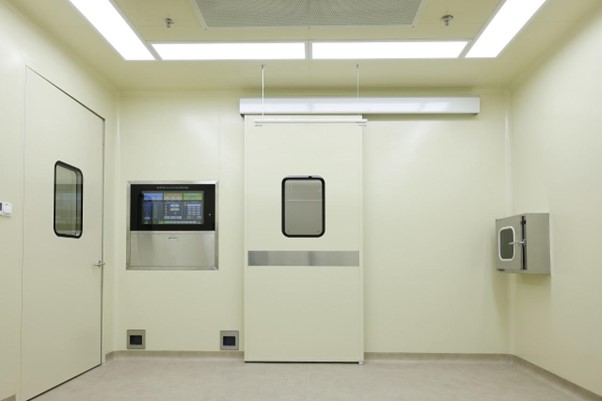
What Is Modular Operating Theatre Technology?
A Modular Operating Theatre is a prefabricated surgical environment built using factory-manufactured components that are assembled on-site.
Unlike traditional operating room construction, modular OT systems integrate:
- Antibacterial wall panels
- Ceiling systems
- Hermetic OT doors
- Laminar airflow systems
- Medical gas systems
- Integrated control panels
- Stainless steel built-in furniture
These components are produced in controlled manufacturing facilities before installation, significantly simplifying on-site construction.
Traditional OT Construction Challenges
Traditional operating theatre construction often involves multiple contractors working simultaneously on-site.
This process may include:
- Civil construction
- HVAC installation
- Electrical work
- Medical gas piping
- Surface finishing
- Equipment integration
Coordinating these systems can be highly time-consuming and may result in:
- Project delays
- Installation conflicts
- Rework
- Increased labor costs
- Extended hospital downtime
In many cases, traditional OT construction can take several months to complete.
Faster Installation Through Prefabrication
One of the biggest advantages of modular OT technology is prefabrication.
Since major operating theatre components are manufactured in advance, hospitals can significantly reduce on-site construction activities.
Prefabricated systems allow:
- Parallel manufacturing and site preparation
- Faster component assembly
- Reduced dependency on on-site labor
- Simplified installation procedures
As a result, modular operating theatres can often be installed much faster than conventionally built operating rooms.
This is especially valuable for hospitals that need to expand surgical capacity quickly.
Reduced On-Site Construction Work
Traditional hospital construction generates large amounts of:
- Dust
- Noise
- Material waste
- Construction traffic
These factors may disrupt nearby hospital operations and slow project progress.
Modular OT systems reduce on-site work because components arrive pre-finished and ready for installation.
Benefits include:
- Less cutting and welding on-site
- Cleaner installation environments
- Reduced construction waste
- Improved installation efficiency
Hospitals can therefore complete projects with less operational disruption.
Simplified Engineering Coordination
Operating theatre projects require coordination between multiple engineering disciplines, including:
- HVAC systems
- Medical gas systems
- Electrical infrastructure
- Cleanroom engineering
- Surgical equipment integration
In traditional construction, poor coordination often causes delays and costly modifications.
Modular OT systems simplify this process by integrating engineering systems during the design and manufacturing stage.
Many modular OT providers offer turnkey solutions that include:
- Design
- Manufacturing
- Installation
- Commissioning
This centralized approach improves project management and reduces scheduling conflicts.
Faster Hospital Renovation Projects
Hospital renovation projects are often difficult because healthcare facilities must continue operating during construction.
Traditional renovation methods may require:
- Extended OT shutdowns
- Major demolition work
- Temporary service interruption
Modular operating theatre technology minimizes these issues through rapid installation and cleaner construction methods.
Hospitals can:
- Upgrade surgical facilities faster
- Reduce operating room downtime
- Maintain medical services during renovation
This makes modular systems ideal for healthcare modernization projects.
Improved Quality Control Reduces Rework
Construction errors and rework are major causes of project delays in traditional hospital construction.
Factory-controlled manufacturing improves quality consistency because components are produced under standardized engineering processes.
Benefits include:
- Higher manufacturing precision
- Better material consistency
- Improved system compatibility
- Reduced installation errors
With fewer on-site corrections required, hospitals can complete projects more efficiently.
Flexible and Scalable Construction
Healthcare demands continue to evolve rapidly.
Hospitals may need to:
- Add new surgical rooms
- Expand departments
- Upgrade technologies
- Increase patient capacity
Modular operating theatre systems provide flexible infrastructure that can be expanded or upgraded more easily than traditional construction.
This flexibility helps hospitals respond faster to changing healthcare needs without lengthy reconstruction projects.
Reduced Labor Dependency
Labor shortages are becoming a major challenge in construction industries worldwide.
Traditional hospital construction often requires large numbers of skilled workers on-site for extended periods.
Modular systems reduce labor dependency because much of the work is completed in factories using controlled production processes.
This improves:
- Project scheduling
- Workforce efficiency
- Construction predictability
and helps reduce delays caused by labor shortages.
Conclusion
Modular operating theatre technology is transforming healthcare construction by reducing project timelines, simplifying engineering coordination, and minimizing hospital operational disruption.
Compared to traditional construction methods, modular OT systems provide:
- Faster installation
- Better quality control
- Reduced labor dependency
- Cleaner construction environments
- Greater flexibility for future expansion