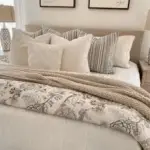

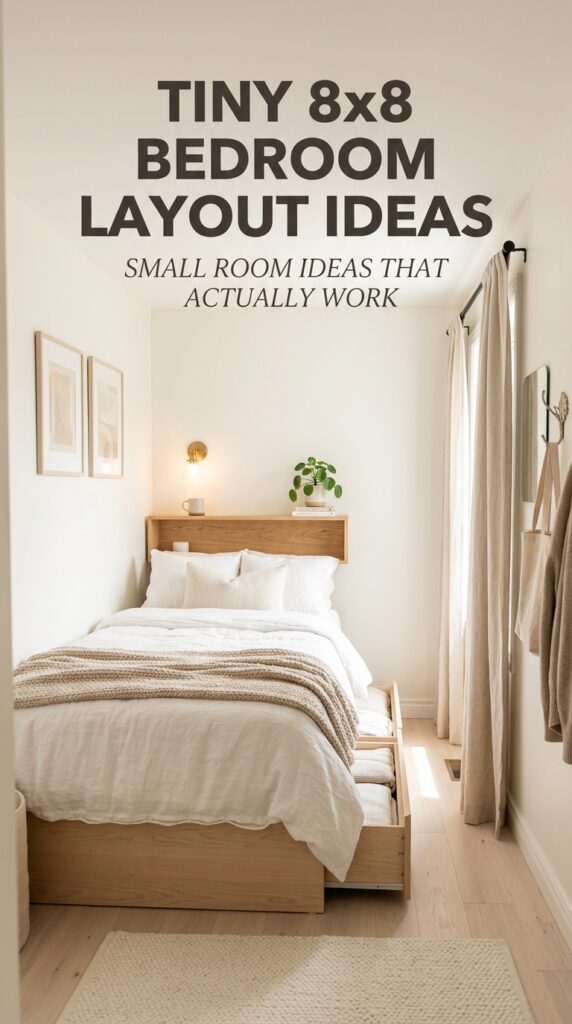
An 8×8 bedroom sounds impossible at first.
It is only 64 square feet, which means every inch has a job. You cannot casually throw in a bed, dresser, desk, side table, chair, and storage baskets and hope the room magically feels cozy. In a tiny bedroom, one wrong furniture choice can make the whole space feel like a storage closet with a mattress in it.
But here is the good news: an 8×8 bedroom can absolutely work. It can feel calm, stylish, organized, and even Pinterest-worthy when the layout is planned properly.
The secret is not buying more furniture. The secret is choosing fewer pieces, placing them with intention, and making the walls work harder than the floor.
Below are practical tiny 8×8 bedroom layout ideas that actually work in real homes, apartments, dorm rooms, guest rooms, kids’ rooms, and small rental bedrooms.
Why 8×8 Bedrooms Are So Tricky
An 8×8 room gives you very little flexibility because most standard beds already take up a big portion of the floor.
A twin bed is usually around 38 inches wide and 75 inches long. A full-size bed is usually around 54 inches wide and 75 inches long. That means even the smallest practical bed can take up almost one-third of the room.
The biggest mistake people make in an 8×8 bedroom is treating it like a normal bedroom. A tiny bedroom needs a different mindset.
Instead of asking, “How can I fit everything in here?” ask:
“How can I make this room do the most important things really well?”
For most people, that means the room should have:
- A comfortable sleeping area
- Some clothing or linen storage
- A small surface for a lamp, book, phone, or water glass
- Enough walking space to move without bumping into furniture
- A calm, uncluttered look
Once you focus on those basics, the room becomes much easier to design.
1. The Classic Wall Bed Layout
The easiest layout for a tiny 8×8 bedroom is placing the bed lengthwise against one wall.
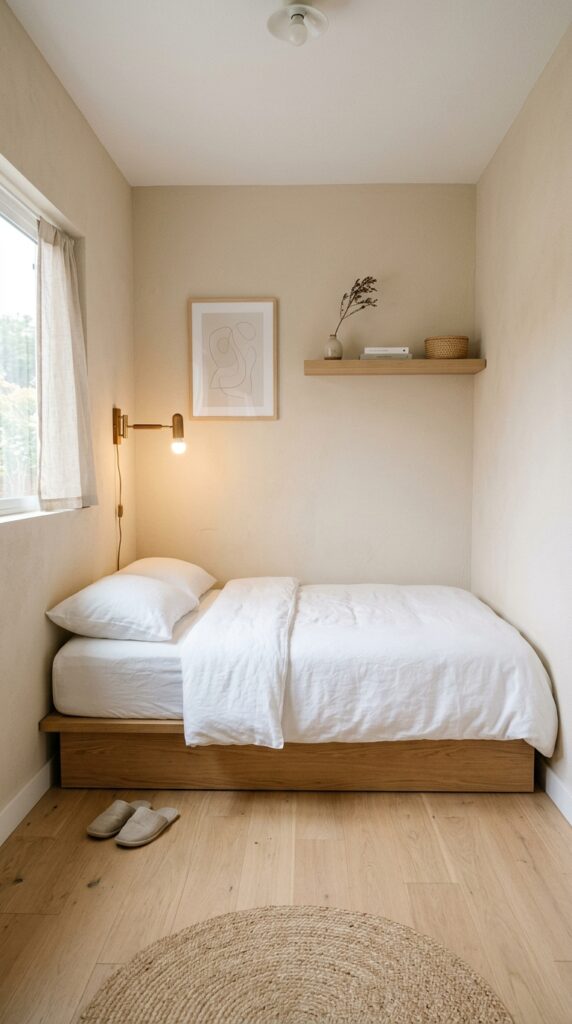
This layout works especially well with a twin bed, daybed, or narrow platform bed. By pushing the bed against the wall, you open up the center of the room and create one clear walking path.
This is one of the best layouts for:
- Kids’ bedrooms
- Guest bedrooms
- Dorm-style rooms
- Small rental bedrooms
- Minimalist bedrooms
The bed can sit along the left or right wall, depending on where the door opens. If the door swings inward, place the bed on the wall that gives the door enough clearance.
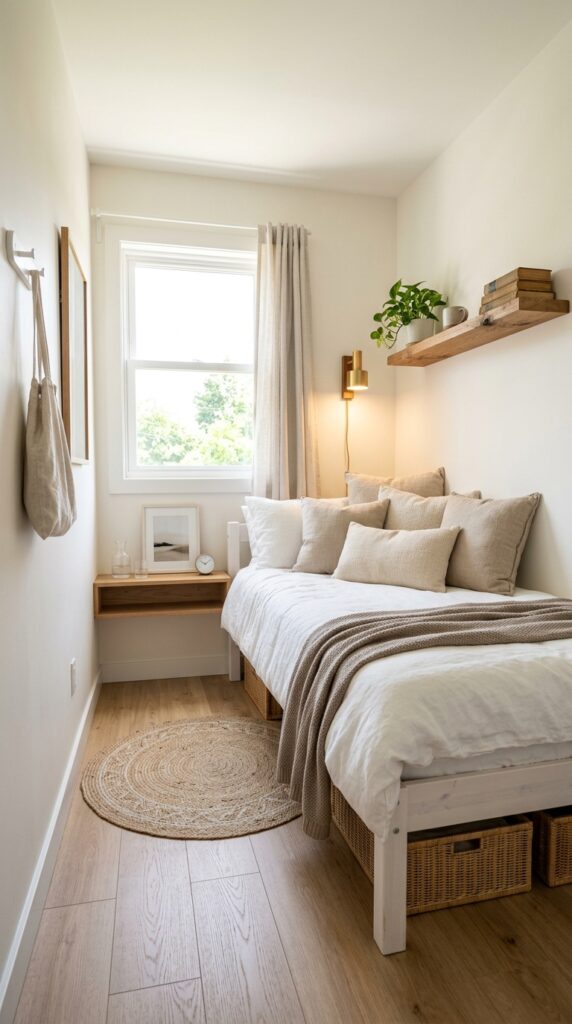
To make this layout feel intentional instead of cramped, style the bed like a built-in daybed. Use pillows along the back wall, add a throw blanket, and install a floating shelf above the bed for books, decor, or a small lamp.
A wall-mounted sconce is better than a floor lamp because it saves floor space. A floating shelf can replace a traditional nightstand completely.
2. The Corner Bed Layout
A corner bed layout is perfect when you want the room to feel cozy instead of empty.
In this layout, the bed goes into one corner, touching two walls. This frees up the opposite corner for a small dresser, desk, wardrobe, or storage cabinet.
It is not always the most “hotel-like” setup because one side of the bed is against the wall, but in an 8×8 bedroom, practicality matters more than symmetry.
This layout works best with:
- Twin beds
- Full beds
- Storage beds
- Kids’ rooms
- Guest rooms
To make a corner bed look stylish, add layered pillows against both walls. This gives the bed a sofa-like feeling during the day. You can also use peel-and-stick wallpaper, a small painted accent wall, or vertical wall art above the bed to make the corner look designed rather than squeezed in.
A corner bed is also great if the bedroom has one awkward window or closet door. Instead of fighting the room, you can use the corner to anchor the layout.
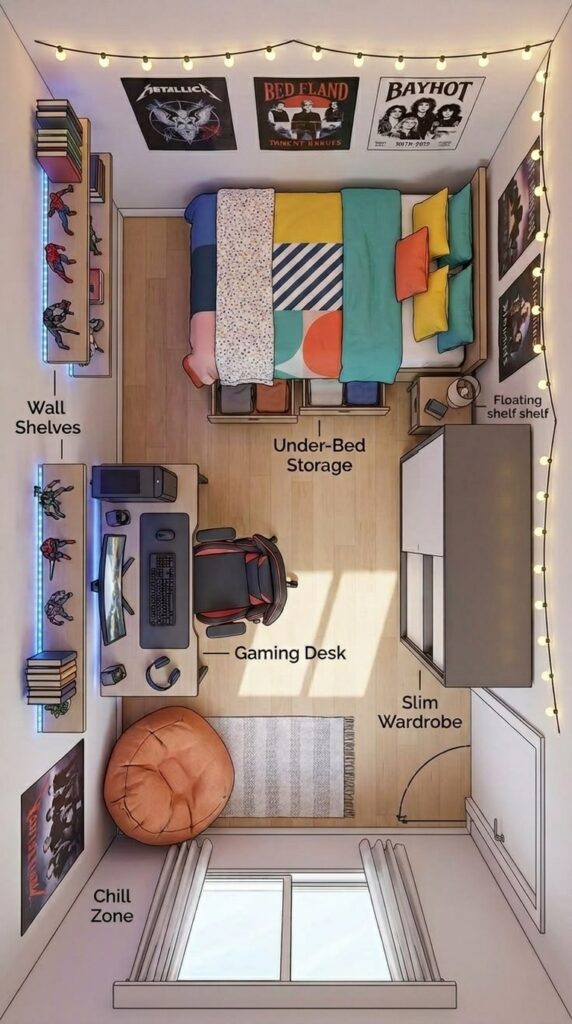
3. The Storage Bed Layout
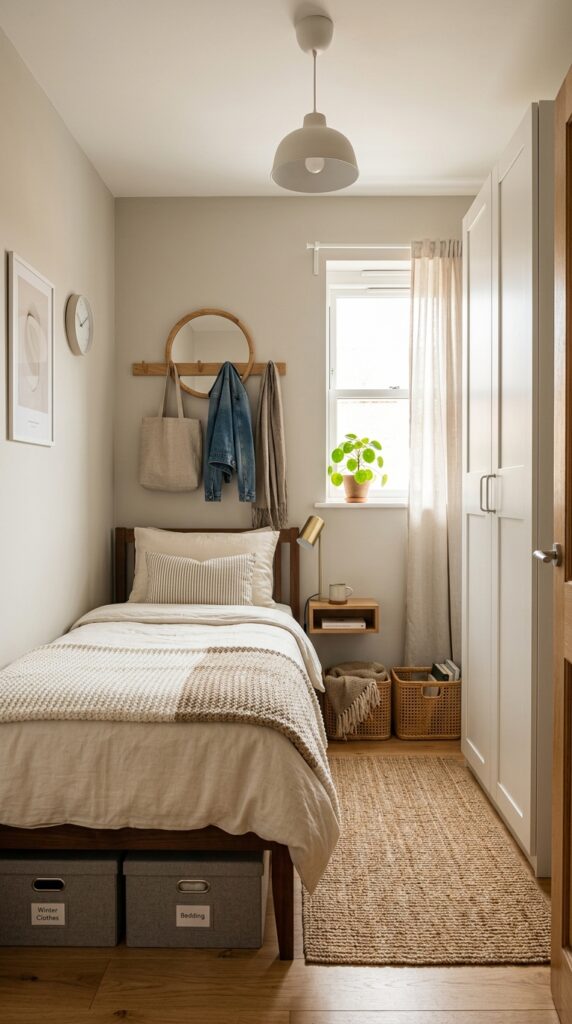
In a tiny bedroom, the area under the bed is too valuable to waste.
A storage bed is one of the smartest choices for an 8×8 room because it combines sleeping space and hidden storage in one piece of furniture. Instead of adding a bulky dresser, you can store clothes, bedding, seasonal items, bags, or extra blankets under the mattress.
There are three good options:
- A bed with built-in drawers
- A platform bed with open cubbies
- A simple bed frame with under-bed storage boxes
For a tiny 8×8 bedroom, avoid tall, heavy bed frames that visually dominate the room. Choose something clean and low-profile if you want the room to feel open. Choose a taller storage bed if you need maximum function and do not have a closet.
The best part about this layout is that it reduces the need for extra furniture. Fewer furniture pieces make the bedroom feel larger immediately.
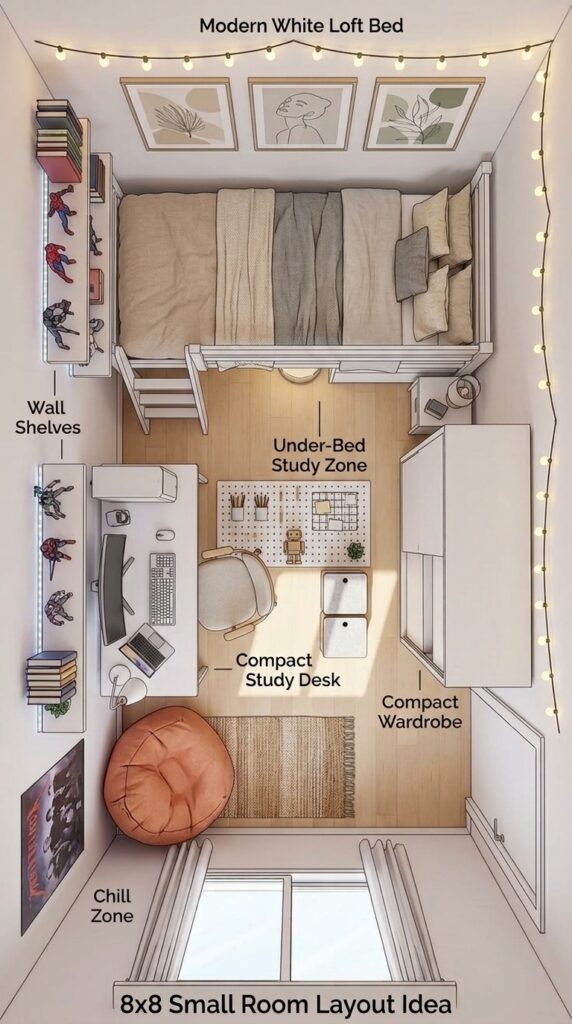
4. The Loft Bed Layout
If the room is for a student, teen, or someone who needs a desk, a loft bed can completely change the space.
A loft bed uses vertical space instead of floor space. The bed goes up, and the area underneath becomes useful for a desk, reading nook, dresser, or storage zone.
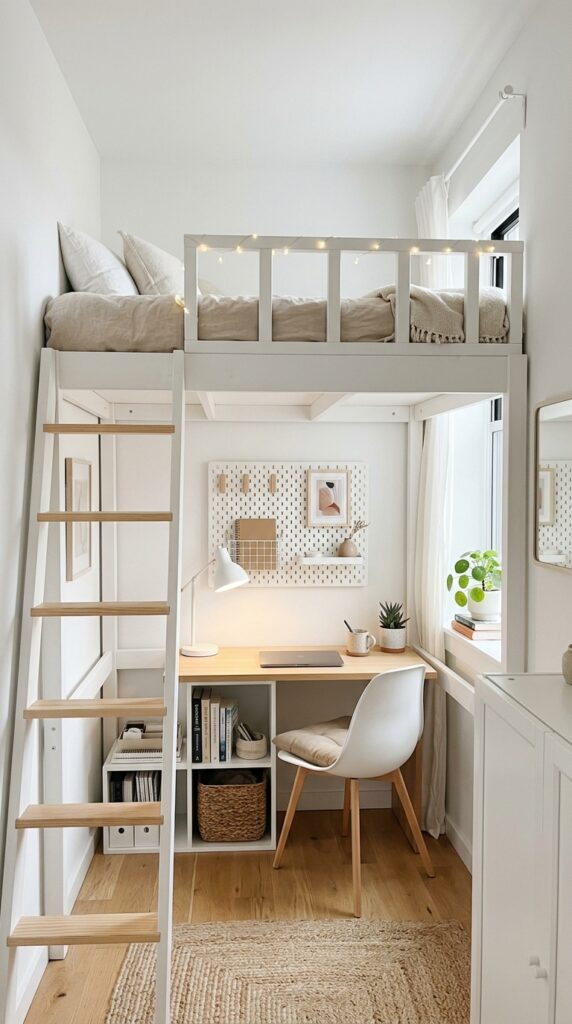
This layout is especially helpful when an 8×8 bedroom needs to work as both a bedroom and study area.
Under the loft bed, you can add:
- A small desk
- A compact chair
- A pegboard wall
- A mini bookshelf
- A clothing rack
- Storage cubes
- A cozy reading corner
The only thing to be careful about is ceiling height. A loft bed needs enough headroom so the sleeping area does not feel uncomfortable. If the ceiling is low, a semi-loft or low loft bed may be better.
This layout is not for everyone, but when it works, it gives the room a completely new level of function.
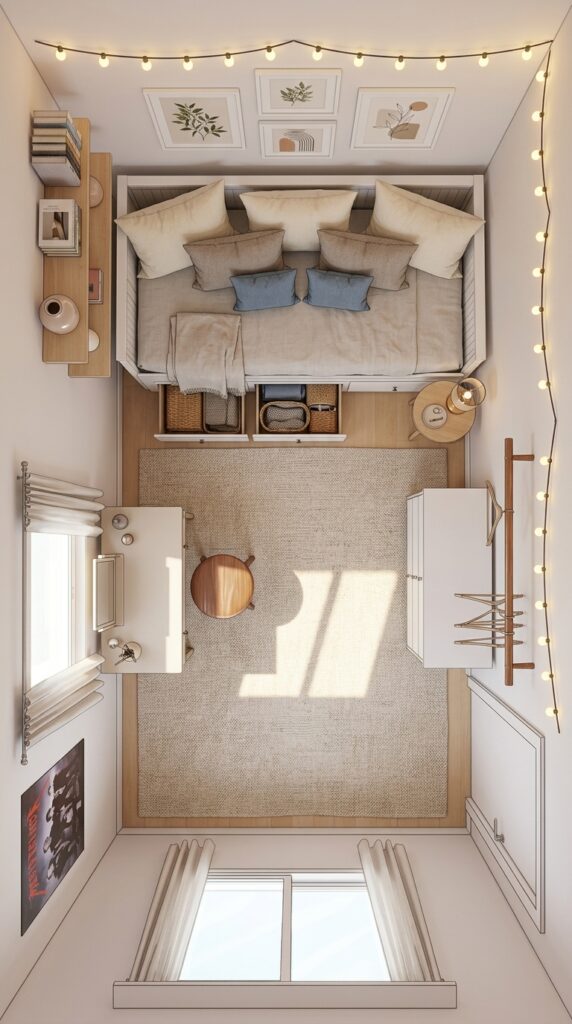
5. The Daybed Layout
A daybed is one of the most underrated furniture choices for a tiny bedroom.
It works as a bed at night and a sofa during the day. This makes the room feel less like a cramped bedroom and more like a small lounge, guest room, or studio-style space.
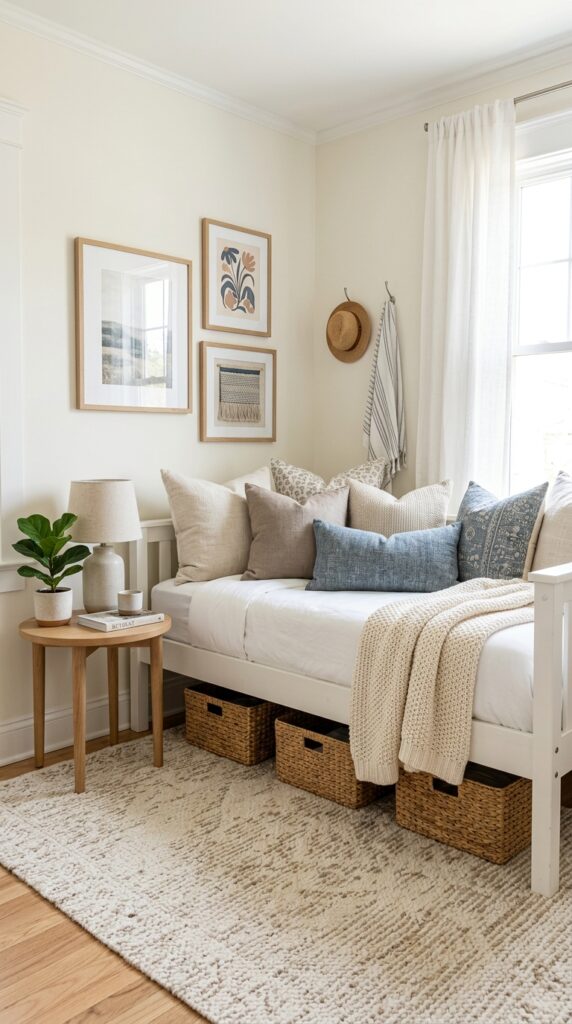
A daybed layout is perfect for:
- Guest rooms
- Teen bedrooms
- Small apartments
- Multi-purpose rooms
- Rooms that also need to feel like a sitting area
Place the daybed along one wall, then style it with large pillows along the back. Add a small side table or floating shelf nearby. If you need extra sleeping space, choose a daybed with a trundle underneath.
A daybed also looks amazing in Pinterest images because it naturally feels layered, soft, and cozy.
6. The Bed Under The Window Layout
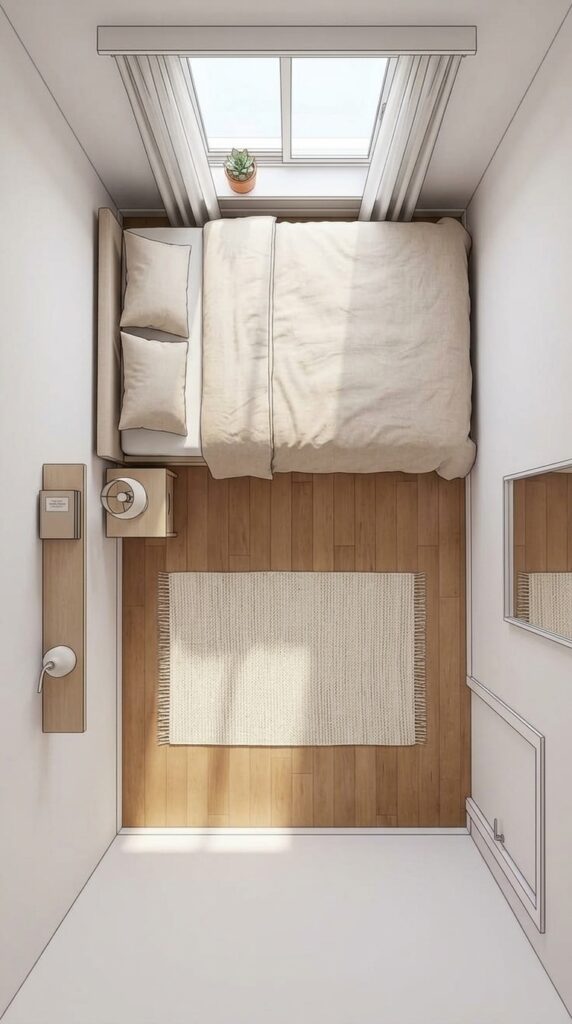
Placing the bed under the window can work beautifully in an 8×8 bedroom, especially when the room has limited solid wall space.
This layout creates a natural focal point and keeps the bed from blocking storage or door clearance. It can also make the room feel balanced because the window acts like a visual headboard.
To make this layout work, choose a low headboard or skip the headboard completely. Use soft curtains, Roman shades, or light-filtering blinds to frame the bed.
A small shelf above or beside the bed can replace a nightstand. Keep the bedding simple so the window area does not look too busy.
This layout is especially nice when the window brings in good natural light. The whole room feels brighter, and that can make the small space feel larger.
7. The Closet-Free Layout
Not every tiny bedroom has a proper closet. Some 8×8 bedrooms need to include clothing storage inside the room, which can get tricky fast.
The key is to avoid wide, bulky dressers. Instead, use vertical storage.
Good closet-free storage ideas include:
- A tall narrow wardrobe
- A slim clothing rack
- Wall hooks
- Over-door hooks
- Floating shelves
- Under-bed bins
- A small drawer tower
- Storage baskets on top of a wardrobe
Place the wardrobe or clothing rack on the wall opposite the bed, or beside the door if there is enough clearance. Choose storage that goes upward rather than outward.
A mirrored wardrobe is also a clever choice because it adds storage while reflecting light. This can make the room feel bigger without adding another mirror to the wall.
8. The Minimalist Floor Space Layout
Sometimes the best layout is the simplest one.
If you want an 8×8 bedroom to feel as open as possible, use only the essential pieces:
- A bed
- One floating shelf or tiny nightstand
- Wall lighting
- Under-bed storage
- One slim storage piece if needed
That is it.
This layout works because it protects the floor. In a tiny room, visible floor space is powerful. The more floor you can see, the larger the room feels.
A low-profile bed can also help because it keeps the eye line open. Pair it with light-colored bedding, simple curtains, and one piece of wall art.
The minimalist layout is best for people who do not need to store everything in the bedroom. It is also a great choice for rental rooms where you cannot install built-ins or make major changes.
Best Furniture For An 8×8 Bedroom
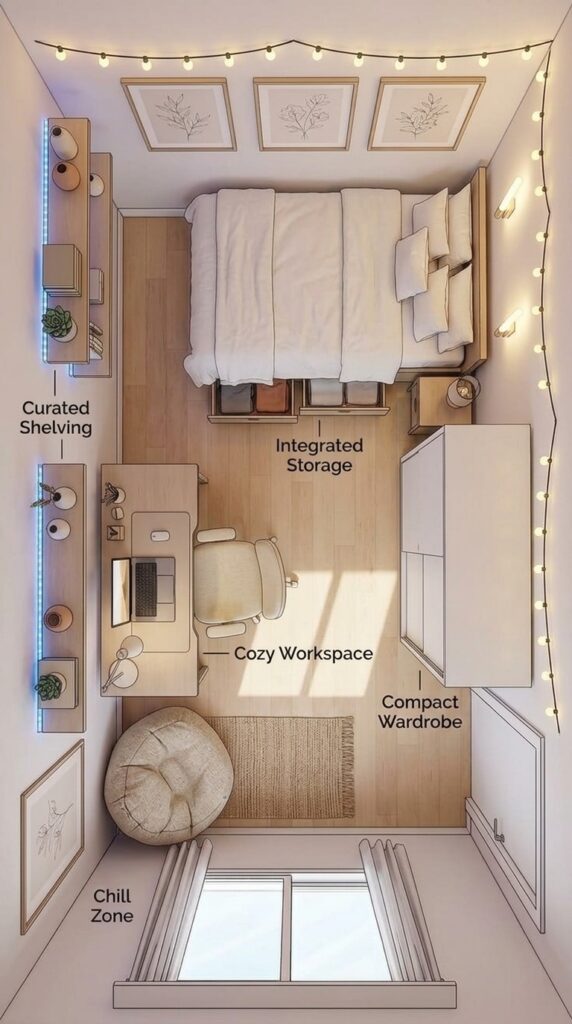
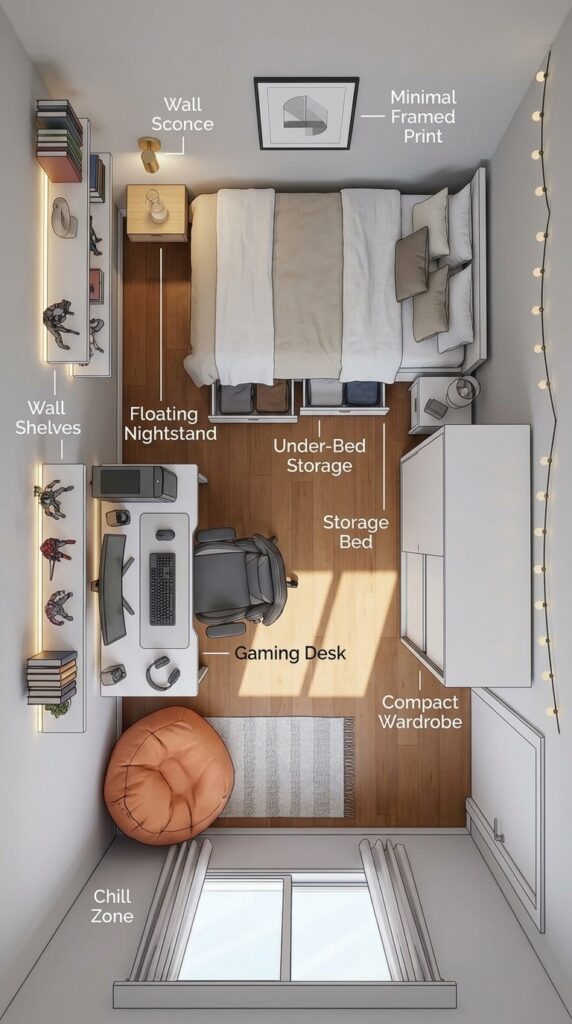
When choosing furniture for a tiny bedroom, size matters more than style. A beautiful dresser that is too deep will ruin the layout. A cute chair that blocks the walking path will become annoying in two days.
Look for pieces that are narrow, tall, foldable, wall-mounted, or multi-functional.
The best furniture choices for an 8×8 bedroom include:
Storage bed: Perfect when you need hidden storage.
Twin bed or daybed: Best for keeping the room open.
Floating nightstand: Saves floor space.
Wall-mounted sconce: Better than a table lamp.
Tall narrow wardrobe: Great for rooms without closets.
Fold-down desk: Useful when the room needs a workspace.
Under-bed bins: Simple and affordable storage.
Over-door hooks: Great for bags, jackets, robes, or towels.
Wall shelves: Helpful for books and decor without using floor space.
Mirror: Makes the room feel brighter and more open.
The goal is not to fill the room. The goal is to make every piece earn its place.
What Not To Put In A Tiny 8×8 Bedroom
A tiny bedroom can become crowded very quickly, so some furniture pieces are better avoided.
Try to skip:
- Large dressers
- Two nightstands
- Floor lamps
- Oversized headboards
- Accent chairs
- Big laundry hampers
- Heavy dark furniture
- Wide bookshelves
- Large desks
- Too many decor pieces
This does not mean the room has to be boring. It simply means the style should come from bedding, wall decor, lighting, color, and texture instead of too many furniture pieces.
In a tiny bedroom, clutter is louder. One messy corner can make the whole room feel chaotic.
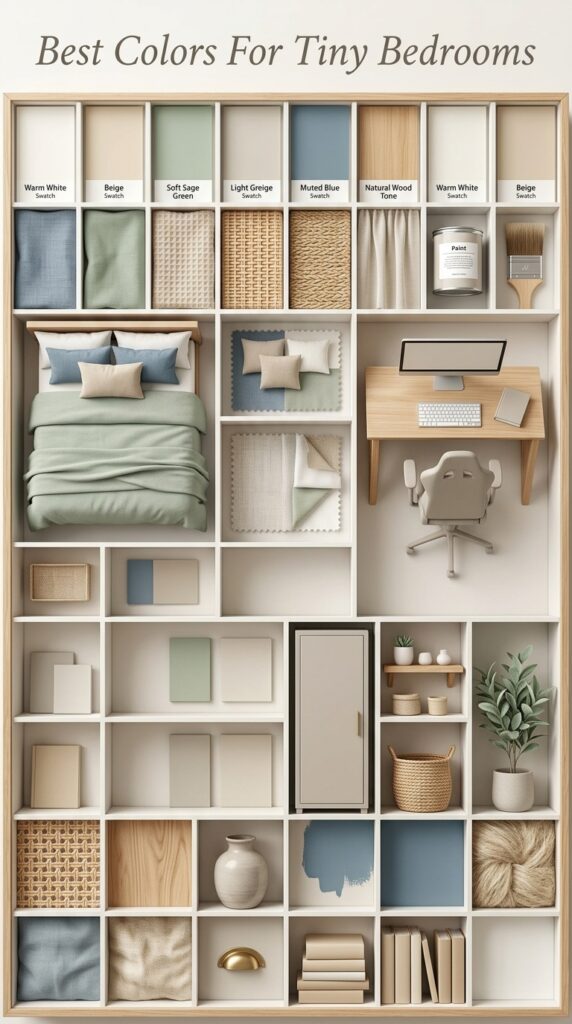
Best Colors For A Tiny 8×8 Bedroom
Color can make a huge difference in a small bedroom.
Light colors usually make the room feel more open, while darker shades can make it feel cozy and dramatic. Both can work, but the key is consistency.
For an airy look, try:
- Warm white
- Soft beige
- Cream
- Pale gray
- Light greige
- Soft sage
- Misty blue
- Blush beige
For a cozy look, try:
- Olive green
- Warm taupe
- Charcoal accent wall
- Deep blue
- Mushroom brown
- Dusty terracotta
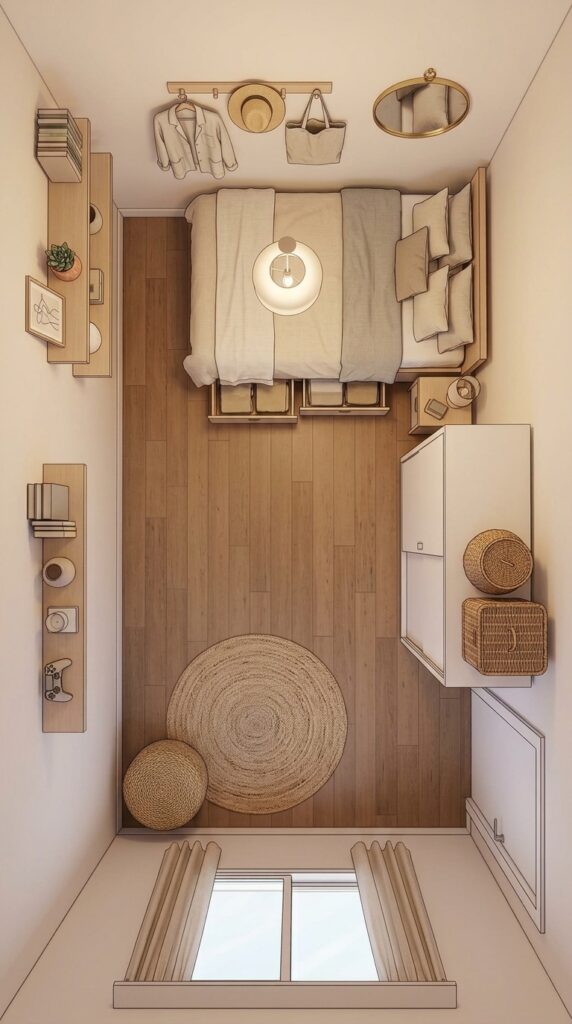
If the room is extremely small, a soft neutral palette is usually the safest choice. You can add personality through pillows, art, curtains, and a small rug.
One simple trick is to keep the walls, curtains, and bedding in similar tones. This reduces visual breaks and helps the room feel calmer.
How To Make An 8×8 Bedroom Feel Bigger
A better layout helps, but styling matters too.
Here are simple ways to make a tiny bedroom feel bigger:
Use the wall space
Install shelves, hooks, sconces, pegboards, or a wall-mounted desk. The more you use the walls, the less pressure you put on the floor.
Keep furniture legs slim
Furniture with visible legs often feels lighter than heavy block-style furniture. Slim legs help the eye see more floor.
Choose one main focal point
In a tiny bedroom, too many focal points create visual noise. Let the bed be the main feature, then keep everything else simple.
Use mirrors carefully
A mirror across from a window can reflect light and make the room feel brighter. A mirrored wardrobe can also work well.
Keep bedding simple
Huge comforters, too many pillows, and bulky blankets can overwhelm a small room. Choose soft layers, but keep them controlled.
Add hidden storage
Use under-bed drawers, baskets, storage ottomans, or built-in cubbies. The less you see, the calmer the room feels.
Avoid tiny clutter
Small rooms do not handle clutter well. Use trays, boxes, baskets, and drawer organizers to keep everyday items contained.
Best 8×8 Bedroom Layouts By Room Type
Different people need different layouts. Here are the best options depending on how the room will be used.
For a kid’s 8×8 bedroom
Use a twin bed against the wall, under-bed storage, wall hooks, and floating shelves. Leave open floor space for play.
Best layout: Wall bed layout or corner bed layout.
For a teen bedroom
Use a loft bed if they need a study space, or a daybed if they want the room to feel more like a lounge.
Best layout: Loft bed layout or daybed layout.
For a guest bedroom
Use a daybed, twin bed, or full bed in the corner. Add a small luggage rack, wall hooks, and soft lighting.
Best layout: Daybed layout or corner bed layout.
For a small apartment bedroom
Choose a storage bed, narrow wardrobe, and floating nightstand. Keep the palette soft and minimal.
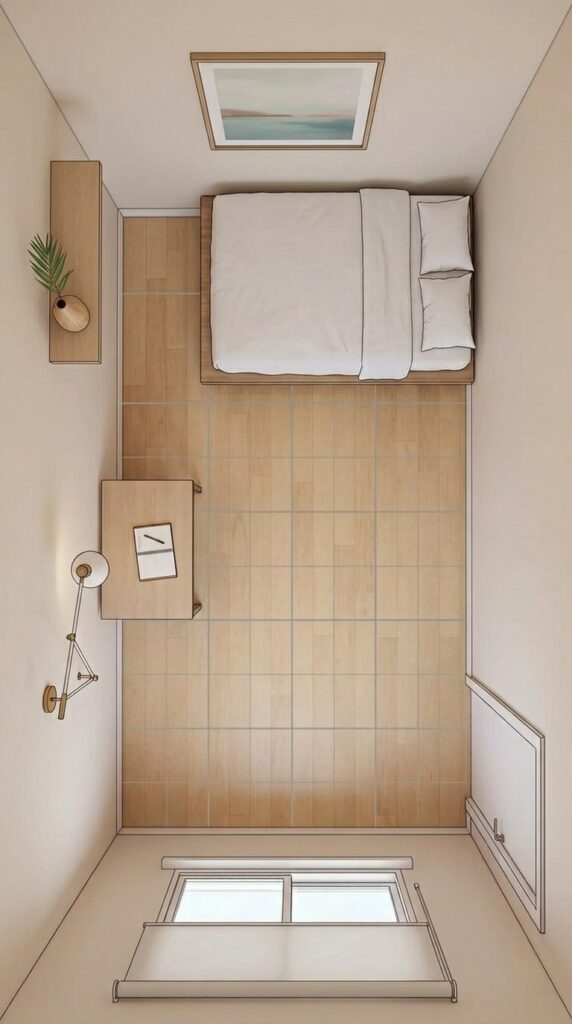
Best layout: Storage bed layout or minimalist layout.
For a room without a closet
Use a tall wardrobe, bed with storage drawers, wall hooks, and over-door organizers.
Best layout: Closet-free layout.
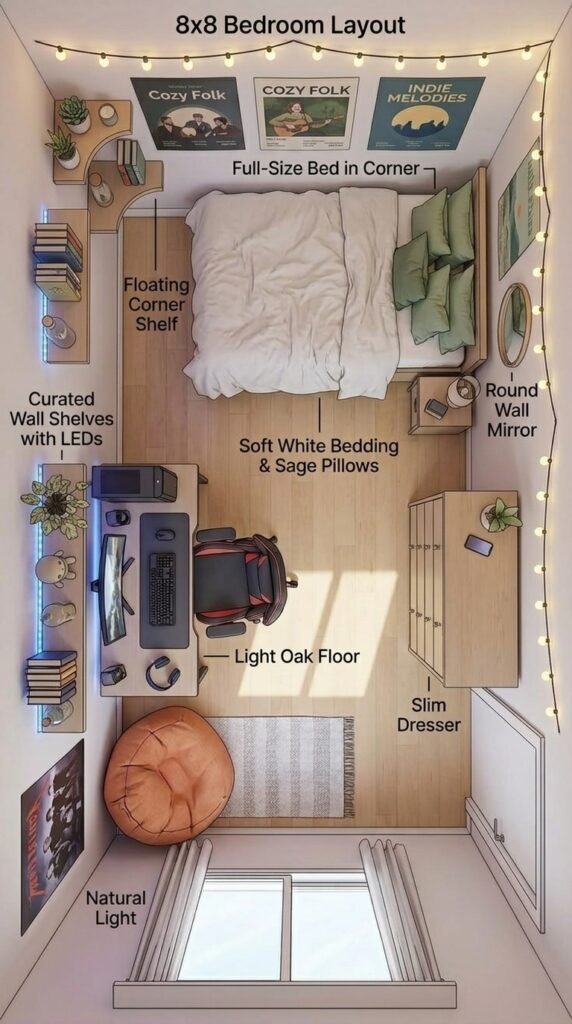
Simple 8×8 Bedroom Layout Plan
Here is a simple layout that works for many tiny bedrooms:
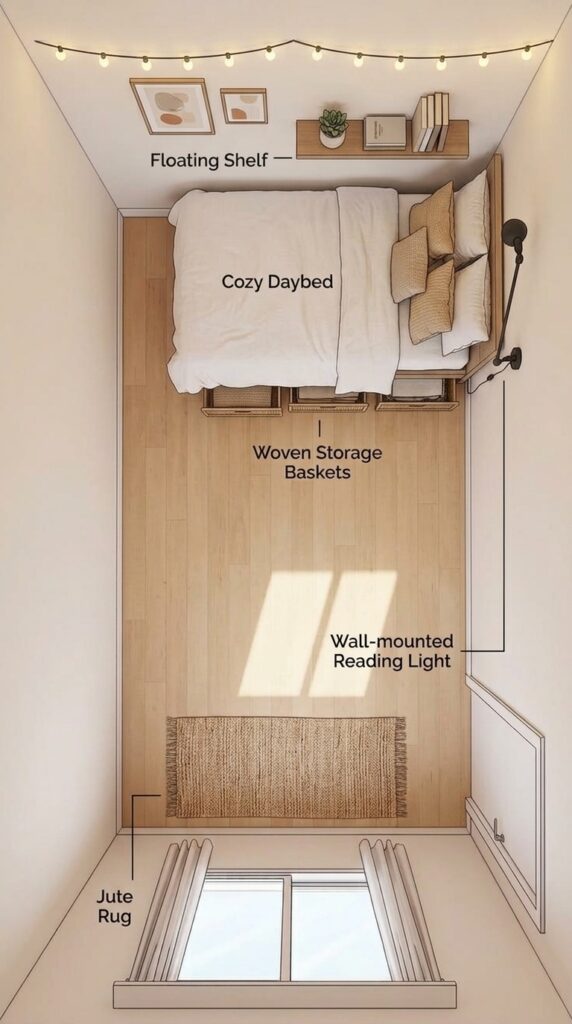
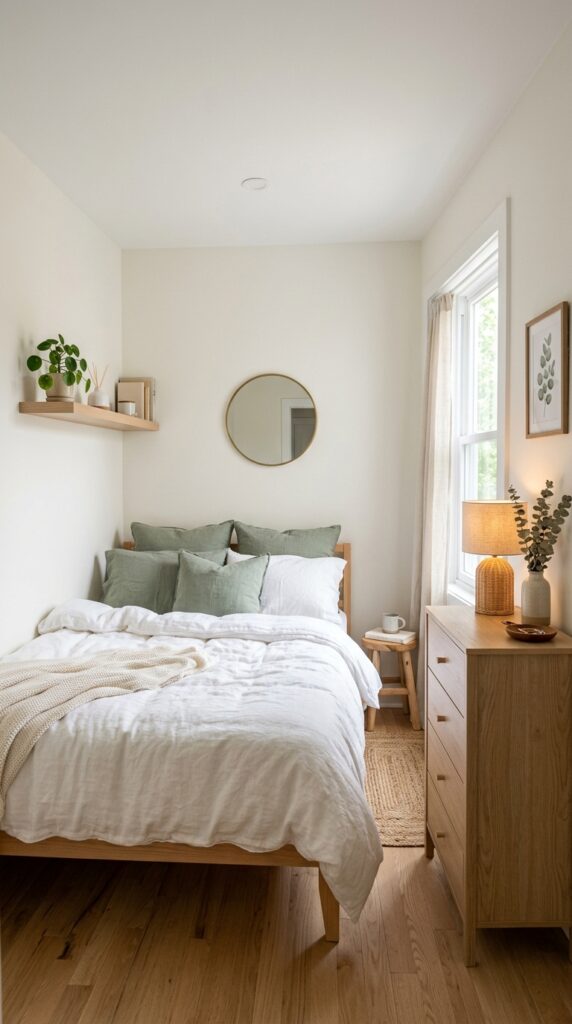
Place the bed along the longest clear wall. Add a floating shelf beside the bed instead of a nightstand. Use wall-mounted lighting above or beside the bed. Place a narrow wardrobe or dresser on the opposite wall if needed. Keep the center walkway open. Use baskets or drawers under the bed for hidden storage.
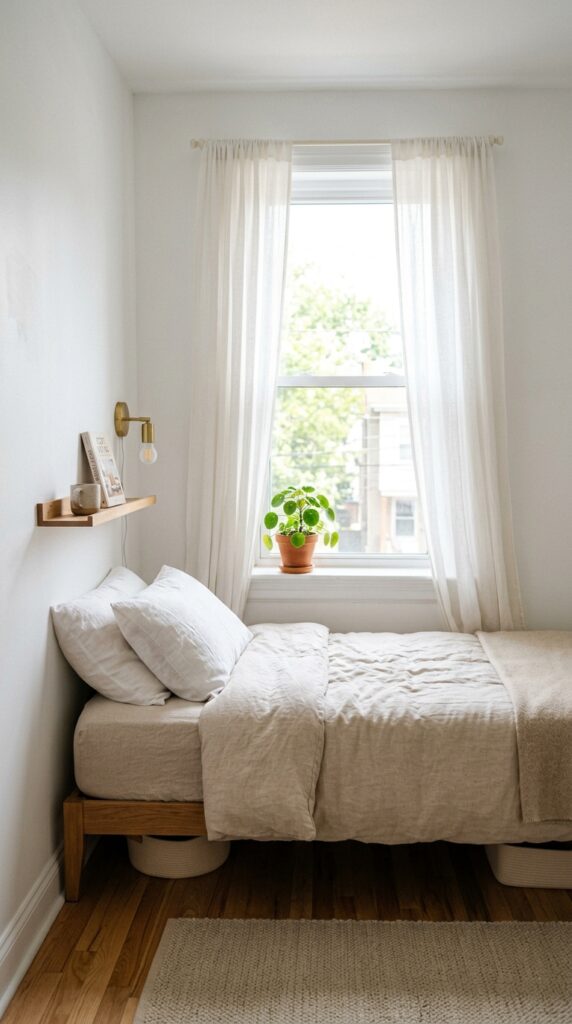
This layout gives you sleep, storage, lighting, and movement without overcrowding the room.
For a more styled look, add a small rug, simple curtains, and one large piece of art instead of many small decorations.
[IMAGE PLACEMENT 11: Layout Diagram Style Image]
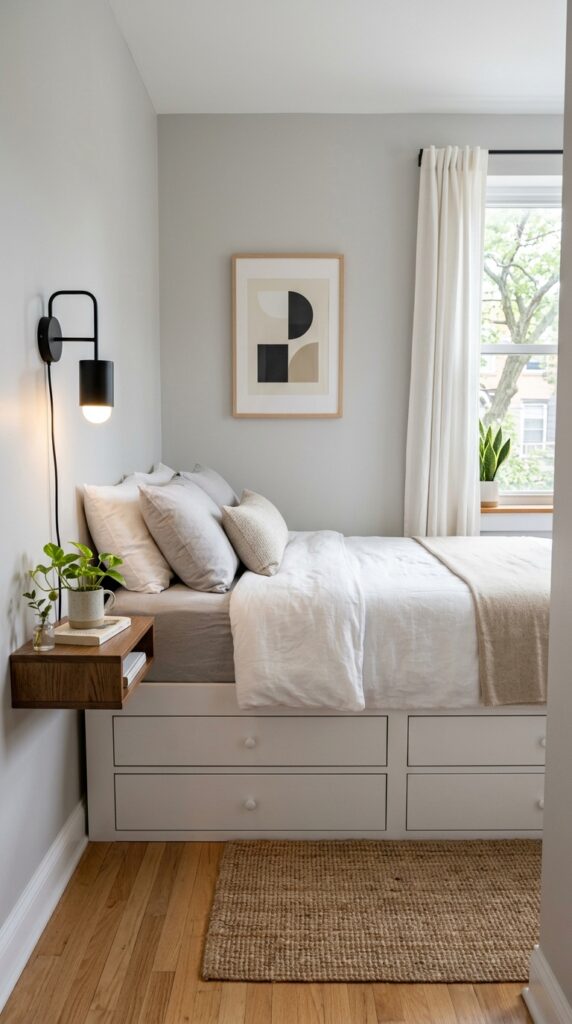
Image Prompt:
Create a clean top-down 8×8 bedroom layout diagram in a realistic but simple interior design style. Show an 8×8 square room with a twin bed along one wall, floating shelf nightstand, slim wardrobe opposite the bed, small rug in center, door swing marked clearly, and window placement. Use neutral colors, clear labels, Pinterest-friendly design, no watermark.
Suggested Alt Text: Top-down diagram of a tiny 8×8 bedroom layout with bed, wardrobe, and open walkway.
Pinterest Overlay Text: 8×8 Bedroom Layout Plan
Tiny 8×8 Bedroom Decorating Ideas
Once the layout is solved, decorating becomes much easier.
Use soft bedding to make the bed feel cozy. Add one or two accent pillows, but do not overdo it. Choose curtains that hang close to the ceiling to make the walls feel taller. Add a rug that fits partly under the bed to soften the floor.
Wall decor should be simple. One large print usually looks cleaner than a gallery wall in a tiny bedroom. A small plant on a shelf or windowsill can add life without taking up floor space.
Lighting is also important. A tiny bedroom with only one ceiling light can feel harsh. Add a wall sconce, clip-on lamp, or small LED strip under a shelf to create softer lighting.
Texture matters more than clutter. Use linen bedding, woven baskets, wood shelves, soft curtains, and a cozy rug to make the room feel warm without adding too much stuff.
Final Thoughts
A tiny 8×8 bedroom may be small, but it does not have to feel frustrating.
The best layouts are the ones that keep the floor open, use vertical storage, and make the bed feel intentional instead of squeezed into the room. Whether you choose a wall bed layout, corner bed layout, loft bed, daybed, or storage bed, the goal is always the same: make the room comfortable, functional, and calm.
In a room this small, every inch matters. But when the layout is right, even 64 square feet can feel surprisingly cozy, stylish, and useful.
The trick is to stop fighting the size of the room and start designing with it.