
In winter, road salt is everywhere. It keeps roads safer, melts ice faster, and helps prevent accidents. But once it enters your garage, road salt becomes one of the most destructive substances your home is exposed to.
Every winter drive brings salt into your garage—clinging to tires, wheel wells, undercarriages, boots, and tools. Over time, this salt attacks concrete floors, metal shelving, tools, and even vehicle components, causing corrosion, surface damage, and costly long-term deterioration.
Unlike obvious winter problems like snow buildup or frozen doors, salt damage is slow, silent, and cumulative. Many homeowners don’t realize the extent of the damage until it’s already severe.
This article explains:
- How road salt enters garages
- Why salt is so destructive
- How it damages concrete floors
- How it corrodes metal shelving, tools, and car parts
- Practical steps to prevent and reverse salt damage
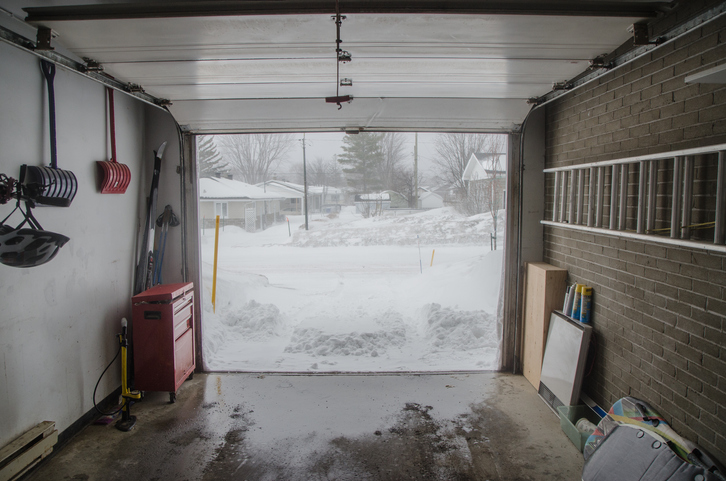
How Road Salt Enters Garages and Why It’s So Destructive
What Makes Road Salt So Harmful?
Road salt isn’t just regular table salt. It typically contains:
- Sodium chloride
- Calcium chloride
- Magnesium chloride
These compounds are:
- Highly corrosive
- Hygroscopic (they attract moisture)
- Chemically aggressive to concrete and metal
Once inside a garage, salt continues working even when surfaces appear dry.
How Salt Gets Into Your Garage (Every Single Day)
Salt enters garages through multiple sources:
1. Vehicles
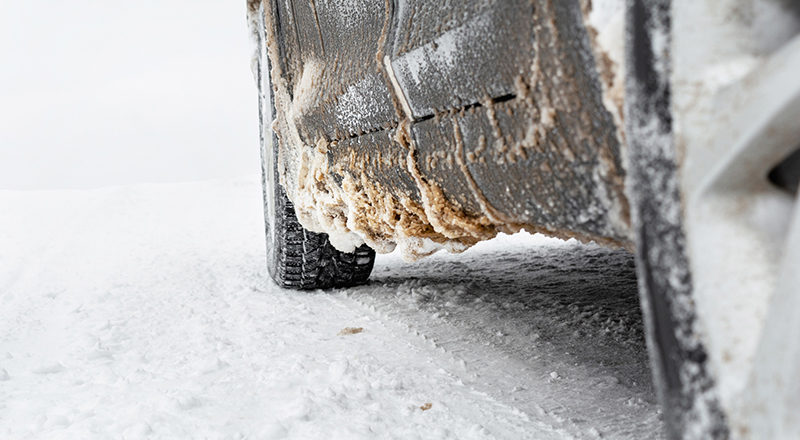
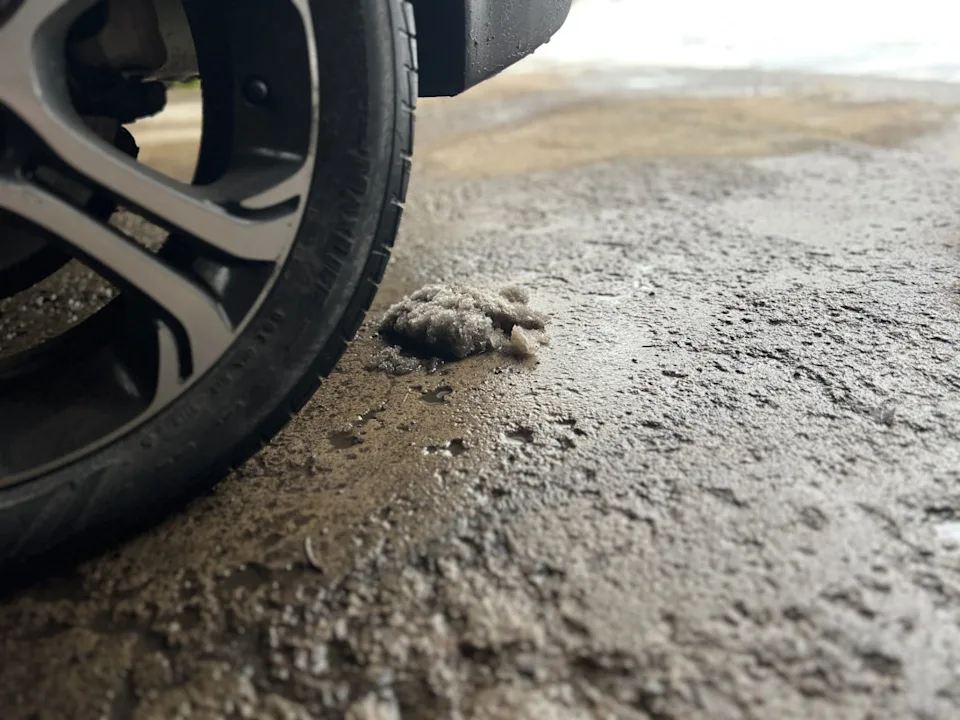
- Salt sticks to tires
- Packs into wheel wells
- Collects on undercarriages
- Drips onto the floor as snow melts
One winter commute can deposit significant salt residue inside a garage.

2. Foot Traffic
- Salt sticks to shoes and boots
- Falls off onto concrete
- Gets ground into the surface
Entryways between garage and home often show early salt damage.
3. Wind and Splashback
- Salt spray blows in through door gaps
- Meltwater splashes inside from driveways
Garages are rarely airtight, especially in winter.
Why Salt Damage Gets Worse Over Time
Salt damage is cumulative:
- It doesn’t evaporate
- It doesn’t break down naturally
- Each winter adds another layer
Salt continues to attract moisture, keeping surfaces damp long after snow is gone.
Why Winter Accelerates Salt Damage
Winter creates ideal conditions for corrosion:
- Cold slows evaporation
- Moisture lingers longer
- Freeze-thaw cycles force salt deeper into surfaces
This combination amplifies salt’s destructive effects.
Early Warning Signs of Salt Damage
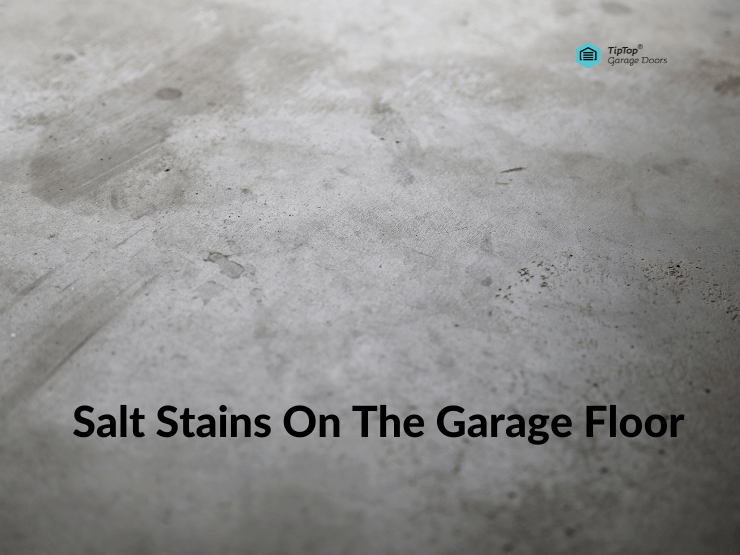
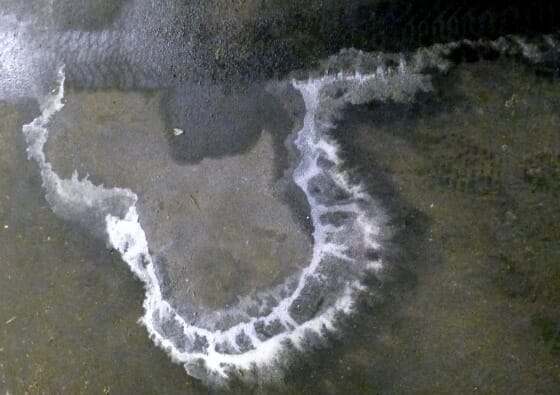
- White powdery residue on floors (efflorescence)
- Rust spots on metal shelves
- Tools discoloring or pitting
- Flaking concrete surface
- Persistent dampness even on dry days
These signs indicate active salt corrosion, not cosmetic issues.
PART 2: Road Salt Damage to Concrete Garage Floors
Why Concrete Is Vulnerable to Salt
Concrete may look solid, but it’s actually porous.
Salt:
- Penetrates microscopic pores
- Holds moisture inside the slab
- Weakens internal structure
Over time, salt attacks concrete from the inside out.
How Salt Damages Concrete Step by Step
- Salt-laden water enters concrete pores
- Moisture freezes and expands
- Internal pressure increases
- Surface layers weaken
- Concrete flakes and crumbles
This process is called scaling and spalling.
Common Salt-Related Concrete Damage
1. Surface Scaling
- Thin flakes peel off the surface
- Creates rough, uneven texture
2. Spalling
- Larger chunks break free
- Exposes aggregate underneath
3. Cracking
- Salt accelerates freeze-thaw cracking
- Cracks widen over time
4. Discoloration
- White stains
- Dark moisture patches
- Uneven appearance
Why Garage Floors Suffer More Than Driveways
Garage slabs:
- Are thinner
- Often lack proper vapor barriers
- Stay wet longer
- Trap salt indoors
This makes them more vulnerable than exterior concrete.
Why Salt Damage Is Permanent If Ignored
Once concrete spalls:
- Structural integrity is reduced
- Repairs become cosmetic only
- Full resurfacing or replacement may be required
Salt damage is progressive, not self-limiting.
Cost Comparison: Prevention vs Repair
- Sealing concrete: low cost
- Surface resurfacing: moderate cost
- Full slab replacement: very high cost
Most severe garage floor failures are preventable.
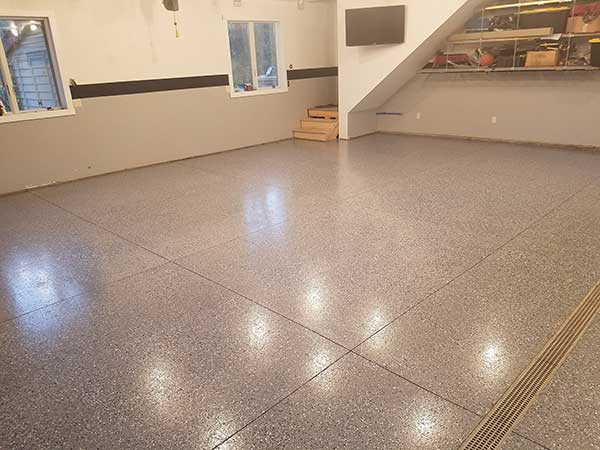
How to Protect Concrete Floors from Salt
1. Seal the Concrete
Use penetrating sealers designed for winter exposure.
2. Install Protective Floor Coatings
Epoxy or polyaspartic coatings:
- Block salt penetration
- Resist chemicals
- Improve traction
3. Control Salt Entry
- Use garage mats
- Squeegee meltwater
- Clean floors regularly
Salt Corrosion of Metal Shelving, Tools, and Car Parts
Why Metal Suffers So Much in Salt-Exposed Garages
Salt speeds up oxidation by:
- Holding moisture against metal
- Creating electrochemical reactions
Even stainless steel is vulnerable over time.
Metal Items Most Affected by Salt
1. Metal Shelving and Storage Racks
- Rust at joints and fasteners
- Weakens structural capacity
- Stains nearby surfaces
2. Tools
- Hand tools develop rust spots
- Moving parts seize
- Precision tools lose accuracy
Tools stored near the floor suffer the most.
3. Vehicle Components
- Brake lines
- Suspension parts
- Exhaust systems
- Fasteners and brackets
Salt exposure in garages accelerates vehicle corrosion.
Why Garages Make Salt Corrosion Worse Than Outdoors
Indoors:
- Salt isn’t washed away by rain
- Moisture stays trapped
- Air circulation is limited
This creates a corrosion chamber effect.
Hidden Areas Where Salt Causes Damage
- Under shelving units
- Inside tool drawers
- Behind storage bins
- On rarely moved equipment
Salt damage often spreads unnoticed.
Signs of Advanced Metal Corrosion
- Flaking rust
- Pitted surfaces
- Weak or bent shelving
- Frozen tool mechanisms
At this stage, replacement may be necessary.
How Salt Damage Affects Safety
- Shelves collapse under load
- Tools fail during use
- Vehicle components weaken
Salt damage isn’t just cosmetic—it’s a safety issue.
Practical Ways to Protect Metal Items
1. Elevate Storage
Keep metal items off the floor.
2. Use Plastic or Coated Shelving
Avoid bare steel where possible.
3. Apply Protective Coatings
Rust inhibitors, sprays, and oils help.
4. Improve Airflow
Dry air slows corrosion dramatically.
Garage Cleaning Routine That Reduces Salt Damage
Weekly:
- Sweep salt residue
- Remove standing water
Monthly:
- Rinse floor lightly (when temps allow)
- Dry thoroughly
Seasonally:
- Inspect metal surfaces
- Reapply protective coatings
Final Thoughts: Salt Damage Is One of Winter’s Most Destructive Garage Problems
Road salt protects roads—but inside your garage, it’s a slow-acting destroyer.
Left unchecked, it:
- Destroys concrete floors
- Corrodes shelving and tools
- Accelerates vehicle rust
- Creates costly repair bills
- Reduces home value
The danger of salt damage lies in its invisibility and persistence.
By understanding:
- How salt enters garages
- Why it damages concrete and metal
- How to prevent and control it
Homeowners can dramatically extend the life of their garage, tools, and vehicles—even in harsh winter climates.