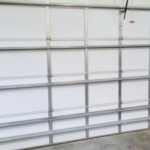

When we renovate a kitchen, living room, or bedroom, choosing the perfect paint color feels like an essential step. But when it comes to the garage, most people stop at “just paint it white.”
Yet the garage is one of the largest and most-used spaces in many homes. It’s where you park your car, store tools, do small repairs, keep seasonal items, and pass through multiple times per day. When it’s thoughtfully designed — especially with the right paint colors — it becomes:
- More visually appealing
- Easier to organize
- Brighter and more welcoming
- Connected to your home’s overall style
- More comfortable for everyday use
- A boost to curb appeal and even home value
Paint colors play a huge role in creating a garage that feels clean, modern, and well-maintained — not just functional.
Why Choosing the Right Color Matters
Picking the wrong paint color inside a home is frustrating. Picking the wrong garage color is even worse because of the space’s size, exposure to light, and wear and tear. Repainting takes time, energy, and money.
That’s why choosing the right garage paint colors the first time is important.
This guide takes the original five concepts and expands them into a detailed, 3-part, modern, homeowner-friendly article that helps you choose the perfect colors for:
- Garage walls
- Garage floors
- Cabinets
- Storage systems
- Slatwall
- Garage doors (interior and exterior)
Let’s begin.
The 5 Essential Guidelines for Choosing Garage Paint Colors
1. Choose Garage Paint Colors That Complement Each Other
A garage makeover typically includes more than just a fresh coat of paint. Most homeowners incorporate several features:
- New flooring
- Cabinetry
- Slatwall or wall storage panels
- Updated lighting
- New doors
- Wall insulation or new drywall
When you introduce multiple elements, the biggest goal is visual harmony.
Why Complementary Colors Matter
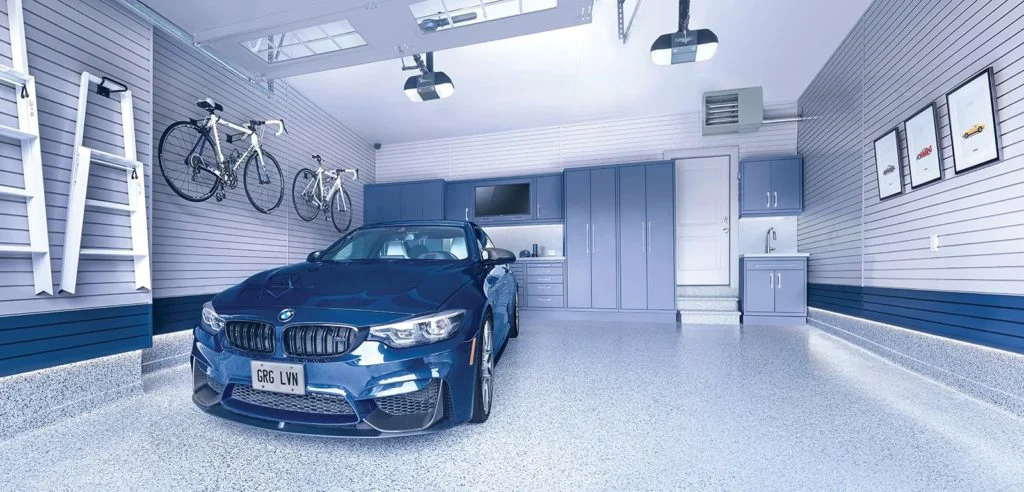
When the floor, walls, cabinets, and storage systems complement each other, the garage instantly feels:
- Cleaner
- More modern
- More spacious
- More cohesive
- More designer-level
Color harmony transforms the garage from a “utility zone” into a polished, intentional space.
Use Pops of Color for Personality
Neutral garages are timeless, but that doesn’t mean they must be boring. You can:
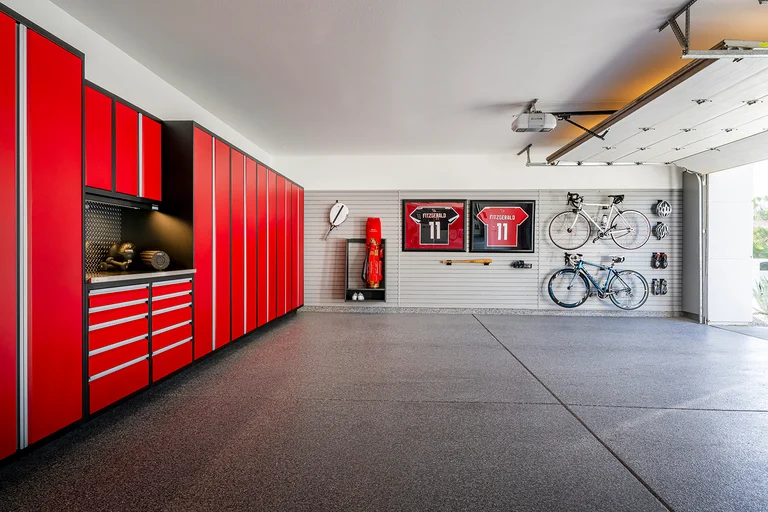
- Add a bold color to the garage cabinets
- Paint the door leading into your house in a contrasting tone
- Use accent colors in rugs, tool chests, or decor
- Paint one wall darker to add depth
Because garages are functional spaces, even small pops of color can make a big difference in atmosphere.
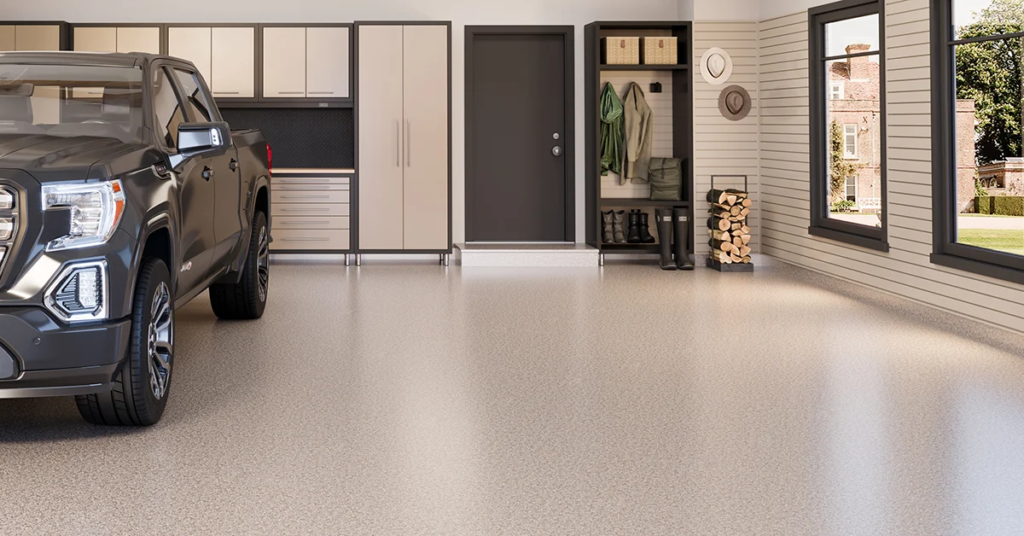
Matching Your Garage’s Color Palette
When choosing your palette, think about:
✔️ The floor
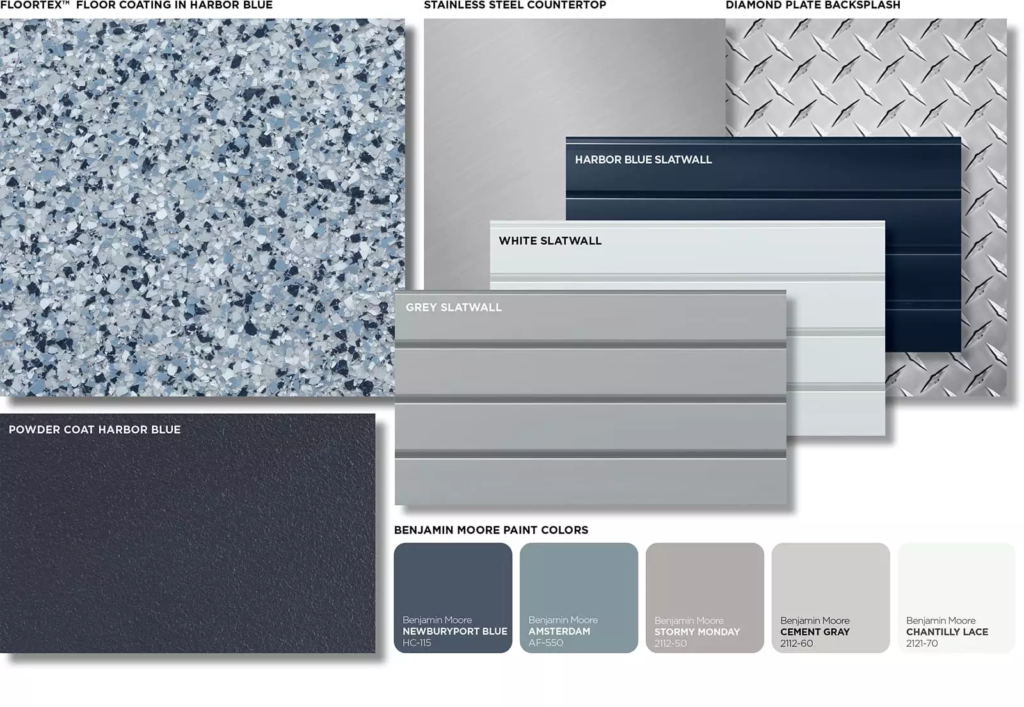
A speckled, textured floor has multiple colors — take cues from those flakes to select wall and cabinet tones.
✔️ Your home’s style
Your garage is visually and physically connected to the rest of your house. Consistency helps boost resale value.
✔️ How you use the space
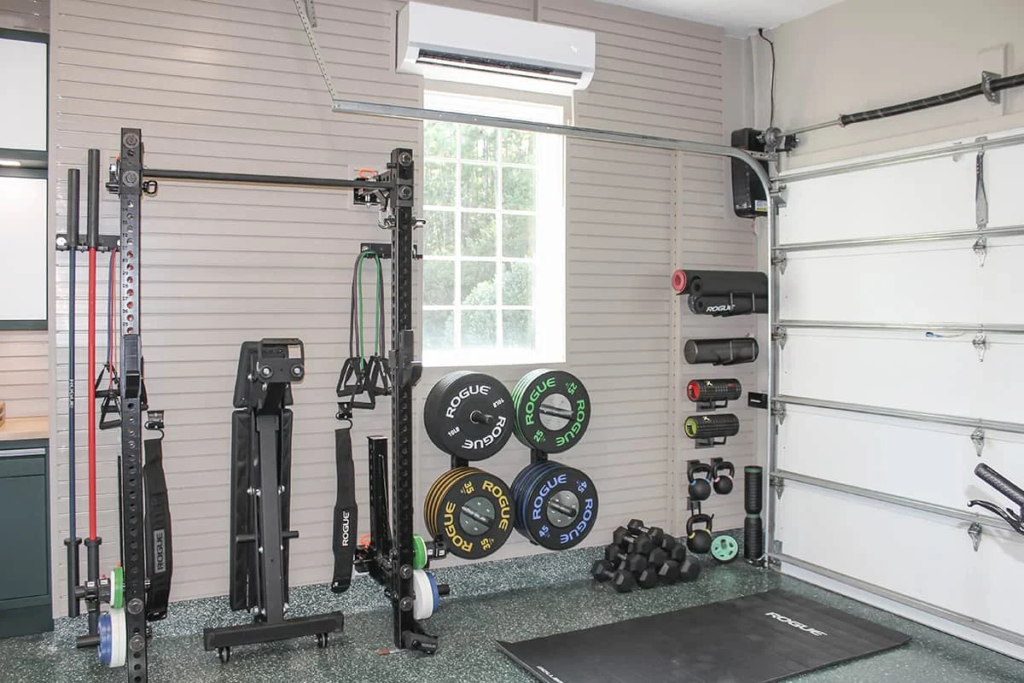
A gym may need energizing colors. A workshop might benefit from calming neutrals. A car enthusiast might choose colors that match their vehicle.
A well-planned palette ties everything together beautifully.
2. Get the Garage Floor Color Right
The garage floor is one of the largest visual surfaces in the room. Its color sets the tone for the entire space.
Why Floor Color Matters
- It affects lighting
- It impacts how clean the garage looks
- It influences how walls and cabinets appear
- It ties the color scheme together
Most modern garages now use polyaspartic or epoxy-like coatings because they are durable, long-lasting, and available in dozens of beautiful finishes.
Choosing the Best Floor Color
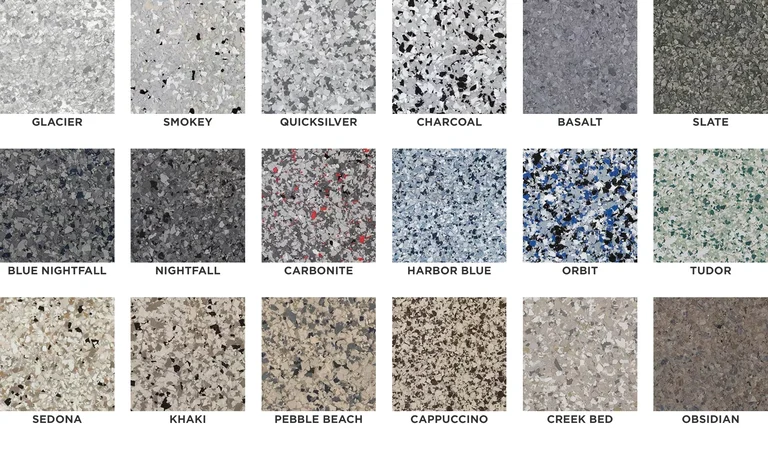
Floor coatings typically come in colors like:
- Soft grey with white and black flakes
- Taupe blends
- Blues and greys with metallic accents
- Browns and tans for a warm look
- High-contrast modern blacks and greys
Tips for picking the perfect floor color:
✔️ Choose a low-maintenance shade
Blended flake floors hide dust, dirt, and tire marks extremely well.
✔️ Match it with your wall color
Light floors + light walls = bright, airy space
Dark floors + light walls = contrast and sophistication
✔️ Consider your car color
Many car owners choose floor colors that highlight their vehicles.
✔️ Think long-term
Choose a timeless color that won’t feel outdated in five years.
Bonus Tip: Use Accent Colors from Your Flooring
Speckled floor coatings contain several colors — usually 3 to 5 different flakes. Pick one or two of those tones to use on walls or cabinets for a perfectly coordinated, cohesive look.
3. How to Choose the Perfect Garage Wall Paint Color
Garage walls have a bigger job than you think. They affect light, mood, cleanliness, and the overall visual “feel” of the space.
Light Colors Make Garages Feel Bigger and Brighter
Garages often lack natural light. Light wall colors reflect artificial lighting, making the room feel cleaner and more functional.
Good light-reflecting colors include:
- Soft whites
- Light greys
- Pale beige
- Cool neutrals
- Muted creams
- Light blue-grey tones
But remember — light colors show dirt more easily.
Semi-Gloss Paint = Practical and Attractive
Garages experience moisture, dust, and dirt. Semi-gloss is ideal because it is:
- Easy to clean
- Moisture-resistant
- Durable
- Less likely to stain
- Reflective enough to brighten the space
If you live in a humid climate, consider using exterior-grade paint for even more durability.
If You Want a Relaxing, Calm Garage…
Consider colors like:
- Soft greens
- Muted blues
- Gentle greys
- Taupes
- Sand beige tones
These tones make the garage feel more like a livable space rather than a utility room.
Replacing Wall Paint with Slatwall
Slatwall panels are one of the smartest upgrades for a garage. Instead of painting drywall, you can:
- Install wall-mounted slatwall
- Add hundreds of storage options
- Instantly modernize your garage
- Choose from multiple slatwall colors
- Mix and match tones
- Enjoy easy cleaning
Neutral slatwall shades like grey, espresso, taupe, white, and black can complement any paint or floor color.
4. Choose Garage Cabinet Colors Wisely
Cabinets take up a large portion of visual wall space. The right cabinet color is crucial for creating a balanced design.
How to Choose the Best Cabinet Color Scheme
Ask yourself:
✔️ What is the overall theme?
Modern? Industrial? Warm? Classic?
✔️ What complements the wall and floor colors?
Contrast or blend-in?
✔️ What’s the purpose of the garage?
Showroom? Workshop? Family storage?
✔️ Do you want cabinets that highlight your car?
Car enthusiasts often choose colors that match or contrast beautifully with their vehicle’s paint.
Popular Cabinet Color Styles
Here are some common cabinet color trends in modern garages:
Bold + Modern
- Charcoal
- Black
- Navy
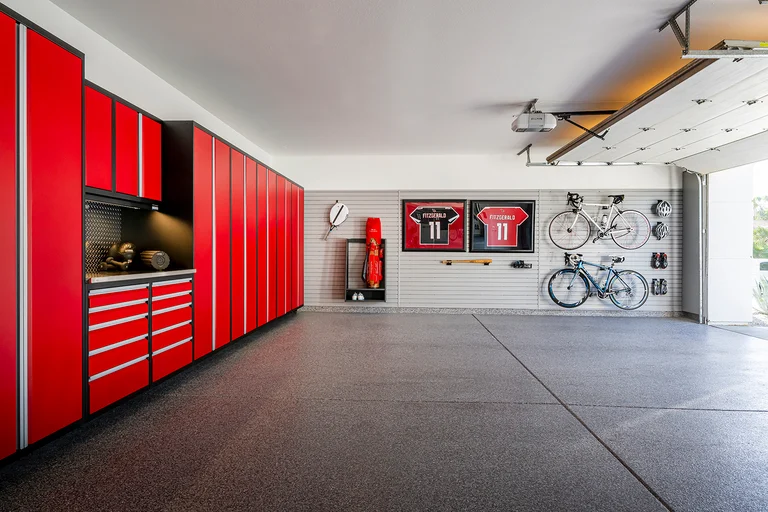
- Red
- Steel grey
Warm + Earthy
- Brown
- Taupe
- Deep tan
- Warm grey
Clean + Minimalist
- White
- Light grey
- Soft neutrals
High-Impact Combinations
- Black + red
- White + grey
- Blue + silver
- Black + stainless steel
Cabinets are a major design element — choosing the right color can turn the garage from simple to spectacular.
5. Picking the Right Garage Door Paint Color
Your garage doors influence both your home’s exterior appearance and curb appeal. For many houses, garage doors make up 25–35% of the front façade.
So choosing the right paint color is critical.
Key Garage Door Color Rules to Follow
✔️ Don’t overshadow the front door
Your entry door should remain the focal point. Your garage door should complement it, not compete with it.
✔️ Avoid loud primary colors
Bright red, bright yellow, and pure blue rarely work well for garages.
✔️ Complement your home’s exterior materials
Consider the tone of:
- Brick
- Stone
- Siding
- Roof shingles
- Trim
Your garage door color should blend with the overall scheme.
✔️ Classic, proven garage door colors
- Soft grey
- White
- Beige
- Taupe
- Black (for modern homes)
- Deep charcoal
- Light greige
- Soft brown
Your goal is a unified exterior that improves curb appeal.
Expert Tips, Color Pairings, and Final Advice
Additional Tips for Coordinating Garage Colors
Use this section to help homeowners visualize their design:
1. Create a 3-Color Palette
The simplest way to design a garage is to choose:
- A main color (walls)
- A secondary color (floor or cabinets)
- An accent color (hardware, decor, or doors)
This ensures balance and avoids visual clutter.
2. Use Contrast Wisely
Contrast makes designs pop:
- Light walls + dark cabinets
- Dark floors + light slatwall
- Bold cabinet accents + neutral surroundings
3. Choose Timeless Colors
For long-lasting appeal, timeless tones outperform trends:
- Charcoal
- Soft grey
- White
- Navy
- Taupe
- Black
- Sand beige
These shades look modern even 10 years later.
4. Think About Lighting
Color depends heavily on light. Garages are often dim, so consider:
- Installing brighter LED fixtures
- Painting ceilings white or light grey
- Using reflective floor coatings
Good lighting enhances color and safety.
5. Match to Your Home’s Style
A contemporary house might suit:
- Black
- Charcoal
- Metallic grey
A farmhouse-style home may look better with:
- Whites
- Soft greige
- Sage green
- Natural browns
Choose colors that flow with the rest of your home.
Final Thoughts: The Right Garage Colors Transform Everything
Your garage doesn’t have to be a dull, forgotten space. With the right paint colors — from the walls to the floor to the cabinets and doors — you can create a room that is clean, modern, organized, and connected to your home’s personality.
Color affects mood, functionality, brightness, and even resale value. By following these five expanded guidelines, you’ll be able to design a garage that not only looks beautiful but also supports your daily lifestyle.