

Let’s be honest—gardening looks easy on Pinterest. Perfect flowers, lush greenery, cozy seating… it all feels effortless.
But in real life?
Things die. Leaves turn yellow. Plants refuse to grow. And somehow, your outdoor space never quite looks like what you imagined.
Here’s the truth: most garden problems don’t come from lack of effort—they come from small, common mistakes that slowly ruin your space over time.
The good news?
Once you spot these mistakes, they’re surprisingly easy to fix.
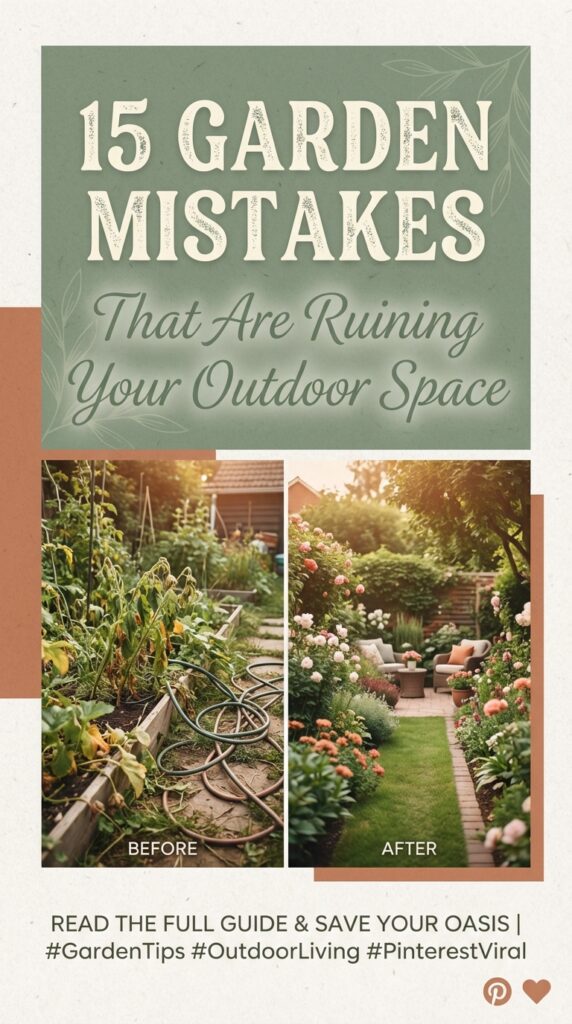
In this guide, we’re going to walk through 15 garden mistakes that could be sabotaging your outdoor space—and more importantly, how to fix them in a simple, practical way.
1. Ignoring Sunlight Conditions
This is probably the #1 mistake—and it happens more than people admit.
You see a beautiful plant at the store, bring it home, plant it… and it struggles or dies.
What’s going wrong?
Not all plants love the same amount of sunlight. Some thrive in full sun, while others prefer shade.
The Fix:
Before planting anything, observe your space:
- Full sun = 6–8 hours of sunlight
- Partial shade = 3–6 hours
- Full shade = less than 3 hours
Then match your plants accordingly.
Real Talk:
You can’t force a shade-loving plant to enjoy direct sunlight. It’s like making a night owl wake up at 5 AM—it won’t end well.
2. Overwatering (Yes, It’s a Big Problem)
Most people think more water = healthier plants.
Actually, it’s often the opposite.
What’s going wrong?
Overwatering suffocates roots and leads to root rot.
Signs:
- Yellow leaves
- Mushy soil
- Wilting despite wet soil
The Fix:
- Stick your finger 1–2 inches into the soil
- If it’s still moist, skip watering
Pro Tip:
It’s better to underwater slightly than to overwater constantly.
3. Poor Soil Quality
You can’t grow healthy plants in bad soil. Period.
What’s going wrong?
Many gardens use compacted or nutrient-poor soil that plants struggle to grow in.
The Fix:
- Add compost regularly
- Use organic matter
- Test your soil if needed
Think of it like this:
Soil is your plant’s “diet.” If it’s unhealthy, everything else suffers.
4. Planting Too Close Together
We’ve all done it—trying to fit “just one more plant.”
What’s going wrong?
Crowded plants compete for:
- Sunlight
- Water
- Nutrients
This leads to weak growth and disease.
The Fix:
Follow spacing guidelines on plant labels.
Bonus:
Proper spacing actually makes your garden look more professional and less chaotic.
5. Ignoring Drainage
Water has to go somewhere. If it doesn’t, your plants pay the price.
What’s going wrong?
Poor drainage leads to soggy roots and fungal problems.
The Fix:
- Use well-draining soil
- Add gravel or sand if needed
- Ensure pots have drainage holes
6. Choosing the Wrong Plants for Your Climate
This mistake sets you up for failure before you even begin.
What’s going wrong?
Plants not suited to your climate struggle to survive.
The Fix:
- Choose native or climate-adapted plants
- Check your growing zone
Reality Check:
A tropical plant won’t magically thrive in a cold environment—no matter how much you love it.
7. Neglecting Regular Maintenance
Gardens aren’t “set it and forget it.”
What’s going wrong?
Weeds, dead leaves, and pests slowly take over.
The Fix:
- Spend 10–15 minutes weekly maintaining
- Remove dead leaves
- Keep weeds under control
Simple Habit:
Little, consistent effort beats occasional big cleanups.
8. Using Too Many Different Styles
A garden should feel cohesive—not chaotic.
What’s going wrong?
Mixing too many styles (modern, rustic, tropical) creates visual clutter.
The Fix:
Pick one main style and stick with it.
Example:
- Modern: clean lines, minimal plants
- Cottage: dense flowers, natural look
- Tropical: big leafy plants
9. Forgetting About Vertical Space
Most people only think horizontally.
What’s going wrong?
You’re missing out on tons of potential space.
The Fix:
- Add trellises
- Use wall planters
- Grow climbing plants
Why It Matters:
Vertical gardening makes even small spaces feel bigger and more dynamic.
10. Overdecorating the Garden
Decor is great—but too much can ruin the vibe.
What’s going wrong?
Too many ornaments make the space feel cluttered and overwhelming.
The Fix:
- Stick to a few statement pieces
- Let plants be the star
Rule:
If everything stands out, nothing stands out.
11. Not Planning Before Planting
Impulse planting = messy results.
What’s going wrong?
No layout, no structure, no flow.
The Fix:
Sketch a simple layout before planting:
- Where tall plants go
- Where pathways are
- Where seating fits
12. Ignoring Seasonal Changes
Your garden shouldn’t only look good for one season.
What’s going wrong?
Everything blooms at once—and then the garden looks empty.
The Fix:
Choose plants with different blooming times.
Goal:
A garden that looks alive all year.
13. Using the Wrong Pots or Containers
Not all pots are created equal.
What’s going wrong?
- No drainage
- Too small for roots
- Poor material
The Fix:
- Choose pots with drainage holes
- Size them properly
- Use breathable materials like terracotta
14. Skipping Mulch
Mulch might not look exciting—but it’s powerful.
What’s going wrong?
Without mulch:
- Soil dries out faster
- Weeds grow easily
- Temperature fluctuates
The Fix:
Add a layer of mulch around plants.
Bonus:
It also makes your garden look clean and polished.
15. Expecting Instant Results
This might be the biggest mistake of all.
What’s going wrong?
People expect a fully grown, perfect garden overnight.
The Fix:
Be patient.
Truth:
Great gardens take time. Growth is slow—but worth it.
How to Turn Your Garden Around (Starting Today)
If you’re feeling like you’ve made some of these mistakes—don’t worry. Everyone does.
Here’s a simple reset plan:
Step 1: Observe Your Space
- Sunlight
- Soil condition
- Drainage
Step 2: Fix the Basics
- Improve soil
- Adjust watering
- Remove dead plants
Step 3: Simplify
- Reduce clutter
- Choose a clear style
Step 4: Build Slowly
- Add plants gradually
- Focus on quality over quantity
Final Thoughts
A beautiful garden isn’t about perfection—it’s about understanding what works and what doesn’t.
Most outdoor spaces don’t fail because of big mistakes.
They fail because of small, repeated habits that go unnoticed.
But now, you know better.
Fix these 15 common mistakes, and you’ll start to see a real difference—not just in how your garden looks, but in how it feels.
Because at the end of the day, your garden isn’t just a space—it’s an experience.
And with a few smart changes, it can become your favorite place to relax, recharge, and enjoy life. 🌿