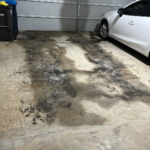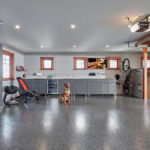

Why your concrete “sweats,” how to fix it fast, and what actually works long-term
If you’ve ever walked into your garage on a cold morning and found the floor covered in mysterious moisture — almost like it rained indoors — you’re dealing with a classic winter problem:
A sweaty garage floor.
This isn’t just annoying — it causes slippery surfaces, mold growth, rust on tools, car damage, and even long-term deterioration of concrete.
The good news?
You can stop your garage floor from sweating, and this guide will walk you through every fix that actually works in real homes.
This is your complete 2025 winter guide: what causes it, how to prevent it, fast fixes, long-term solutions, and the best products to use.

Table of Contents
- What Is a Sweaty Garage Floor?
- Why Does a Garage Floor Sweat in Winter?
- Signs You’re Dealing With Concrete Condensation (Not Leaks)
- Quick Fixes You Can Try Today
- Long-Term Solutions That Actually Work
- Best Products to Stop Garage Floor Sweating (2025 Picks)
- How to Improve Ventilation & Airflow in Winter
- Should You Seal or Coat the Garage Floor?
- Mistakes Homeowners Make (That Make Moisture Worse)
- Winter Garage Maintenance Checklist
- Final Thoughts — The Best Way to Keep Your Garage Dry
1. What Is a Sweaty Garage Floor? (Concrete Condensation Explained)
A “sweaty” garage floor happens when moisture forms on the surface of the concrete, making it look like the floor is sweating.
But the concrete isn’t pushing moisture out — it’s the air.
Here’s the simple science:
- Cold concrete
- Warm, humid winter air
- = Condensation on the surface
It’s the same process as a cold drink sweating on a hot day.
This is extremely common in:
- Unheated garages
- Garages attached to warm homes
- Homes in snowy or humid climates
- Garages with poor ventilation
It’s harmless at first…
…but over time, excess moisture destroys concrete and creates slippery, unsafe conditions.
2. Why Does a Garage Floor Sweat in Winter? (The Real Causes)
Even though winter feels dry, garages trap a lot of moisture — especially from:
✔ Melting snow from your car
This raises humidity fast. Cold concrete below + warm meltwater above = condensation.
✔ Temperature swings
A sunny afternoon warms the air…
…but your concrete stays cold.
Moisture forms instantly.
✔ Poor ventilation
Most garages don’t have airflow. Moist air comes in — but doesn’t escape.
✔ Using heaters incorrectly
Gas heaters and propane heaters increase humidity → more sweating.
✔ Classic cold-front effect
When warm air rushes into a cold garage, the cold concrete becomes a moisture magnet.
✔ No vapor barrier under the slab
Older homes often lack vapor barriers, leading to moisture rising from the soil.
Understanding the cause helps you choose the right fix — and sometimes you’ll need more than one solution.
3. Signs You’re Dealing With Condensation (Not a Leak or Groundwater Issue)
Before treating the problem, rule out other issues.
Here’s how to know it’s condensation:
It’s probably condensation if:
- The garage floor is wet only on humid days
- Moisture appears in patches or a thin film
- The wetness shows up in the morning
- The concrete near walls feels damp, not soggy
- No standing water or continuous pooling
It’s probably a leak if:
- Water appears even when humidity is low
- Moisture comes from cracks
- You see continuous puddles
- The wet spot grows steadily
- Walls or drywall are also damp
99% of winter cases = condensation, not leaks.
4. Quick Fixes You Can Use Today (Fast Relief for Winter Sweating)
If your garage floor is wet right now, try these fast solutions to dry it out quickly.
✔ 1. Use a Garage Dehumidifier (Most Effective Instant Fix)
A good dehumidifier can remove gallons of moisture per day.
Ideal specs:
- 50–70 pint capacity
- Works down to 35°F
- Auto-drain to a hose
Place it near the center of the garage and keep doors closed.
✔ 2. Improve Airflow with Fans
Even one strong floor fan can reduce condensation by:
- moving moist air out
- bringing dry air in
- preventing cold spots
Aim fans toward the garage door or a vent.
✔ 3. Keep Snow and Meltwater Contained
Don’t let meltwater spread.
Use:
This reduces humidity instantly.
✔ 4. Dry the Floor with a Squeegee
This sounds basic, but it works every time.
Push water toward the driveway.
Dry concrete = no condensation.
✔ 5. Open the Garage Door Strategically
Open for 5–10 minutes when:
- air outside is colder than inside
- humidity outside is lower
This exchanges moist air for dry air.
✔ 6. Avoid Using Propane/Gas Heaters
They create water vapor.
1 gallon of propane = almost 1 gallon of water released into air.
Switch to:
- electric heaters
- infrared heaters
- ceramic space heaters
5. Long-Term Solutions (The Fixes That Actually Stop Sweat)
These require more effort but make your garage dry all winter.
✔ 1. Heat the Garage Consistently (The Most Reliable Long-Term Fix)
Sweaty floors are caused by temperature differences.
Keep both:
- air
- concrete floor
closer in temperature.
Heating options:
Best options:
- electric garage heaters
- infrared panel heaters
- mini-split heat pump (best for cold climates)
- radiant floor heating (premium)
Avoid:
- propane heaters
- kerosene heaters
- gas torpedo heaters
They add moisture.
✔ 2. Install a Vapor Barrier on Top of the Floor
If your slab lacks a vapor barrier underneath, you can add one on the surface:
- epoxy coatings
- polyurea coatings
- garage floor tiles
- vinyl garage flooring
This stops moisture from migrating upward.
✔ 3. Seal the Concrete (Reduces Surface Absorption)
Concrete sealers help:
- reduce absorption
- prevent surface dampness
- stop moisture penetration
- improve drying time
Best sealers:
- penetrating silane/siloxane sealers
- densifiers
- acrylic sealers (budget option)
✔ 4. Install Garage Floor Tiles (Best for Fast, No-Mess Solution)
If you want a dramatic improvement:
- snap-together PVC tiles
- polypropylene drainage tiles
They prevent your feet from contacting the wet concrete.
Tiles allow moisture to evaporate underneath and keep the surface bone-dry.
✔ 5. Insulate the Garage Walls & Door
This stabilizes temperature and reduces condensation.
Insulate:
- garage door (use foam panels)
- exterior walls
- ceiling (if there is a room above)
Stable temperature = less sweat.
✔ 6. Fix Garage Drainage Issues
Water pooling near the slab increases humidity.
You may need:
- floor drains
- driveway grading
- trench drains
- surface slope correction
6. Best Products to Stop Garage Floor Sweating (2025 Recommendations)
Here is a curated list of products based on what ACTUALLY works.
Best Dehumidifiers for Garages (Cold Weather Rated)
- hOmeLabs 50-Pint
- Midea 70-Pint
- Frigidaire High-Capacity Unit
Best Garage Heaters
- Heat Storm Infrared Heater
- Dr. Infrared Electric Garage Heater
- Dreo Electric Space Heater
- MRCOOL Mini-Split (premium)
Best Garage Floor Sealers
- Foundation Armor SX5000 (penetrating)
- GhostShield Siloxa-Tek 8505
- Seal-Krete Clear-Seal (budget option)
Best Garage Floor Tiles
- SwissTrax Ribtrax Tiles
- RaceDeck Diamond Tiles
- Nisorpa PVC Garage Tiles (budget-friendly)
Best Containment Mats
- AutoFloorGuard
- VEVOR Heavy Duty Mat
- Hanjet Garage Floor Mat
7. Improve Ventilation & Airflow in Winter (Without Losing Heat)
Ventilation is key — but you don’t want a freezing garage.
Here is how to balance both:
Best ventilation options:
- install wall vents
- add a passive floor-level vent
- install a small exhaust fan
- use a ceiling fan in reverse mode
You want to move humid air OUT — not bring freezing air in unnecessarily.
8. Should You Seal or Coat the Garage Floor? (Pros & Cons)
Both options work — but choose based on your climate.
✔ Epoxy or Polyurea Coatings (Best for Long-Term Protection)
Pros:
- excellent moisture barrier
- protects against salt & chemicals
- easy to clean
- looks professional
Cons:
- more expensive
- requires floor prep
- must be applied in the right temperature
✔ Penetrating Sealers (Best Budget Fix)
Pros:
- stops surface dampness
- inexpensive
- easy DIY
Cons:
- won’t stop heavy sweating alone
- may need reapplication
✔ Garage Floor Tiles (Best for Instant Dry Surface)
Pros:
- avoids contact with wet concrete
- hides stains
- easy to install
- great airflow underneath
Cons:
- moisture still exists (just hidden)
- not a full waterproof barrier
9. Common Mistakes That Make Garage Floors Sweat More
Avoid these:
❌ Using propane or gas heaters
They release water vapor.
❌ Keeping wet snow gear in the garage
Boots, snow blowers, and wet vehicles = humidity trap.
❌ Sealing the garage too tightly
No airflow = moisture buildup.
❌ Letting snow melt on the garage floor
Always squeegee water out.
❌ Applying cheap sealers that peel
Stick with professional-grade penetrating sealers.
10. Winter Garage Maintenance Checklist
Use this simple checklist:
Daily (after parking):
- remove snow from tires
- squeegee meltwater
- close garage quickly to avoid warm-air rush
Weekly:
- run dehumidifier
- check for wet patches
- clear drainage areas
- shake out mats
Monthly:
- inspect floor coating
- clean garage door seals
- check humidity levels
Seasonally:
- reapply sealer if needed
- lubricate garage door tracks
- test heater & ventilation systems
11. Final Thoughts — The Best Way to Stop Garage Floor Sweating in Winter
If you want a dry garage all winter, use this 3-step strategy:
1. Control humidity
- dehumidifier
- containment mats
- squeegee
2. Stabilize temperature
- electric heater
- insulation
3. Protect the concrete
- seal or coat the floor
- use tiles or mats
With these steps, you’ll completely eliminate sweaty concrete, protect your garage floor, prevent rust and mold, and create a safer, cleaner winter garage environment.