

A garage workshop is more than just a place to store tools or park a car. For many homeowners, it becomes a creative workspace, a repair zone, a DIY studio, or even a personal retreat where projects come to life. But despite spending hours in the garage, many people overlook one powerful design element that can dramatically transform the space: an accent wall.
Accent walls are widely used in living rooms, bedrooms, and kitchens—but they can be just as effective in a garage workshop. By using color strategically, you can define work zones, improve visibility, boost motivation, and create a professional-looking workspace without spending a fortune.
Instead of painting every wall the same shade, an accent wall allows you to highlight a specific area with a bold or contrasting color. It creates visual structure in the room and gives your workshop personality while maintaining functionality.
In this detailed guide, we’ll explore how accent walls work in garage workshops, how to choose colors, and creative ideas to make your workspace both practical and visually inspiring.
Why Accent Walls Work Well in Garage Workshops
Most garages are painted in plain white or gray, which is practical but often uninspiring. An accent wall adds depth and character without overwhelming the space.
Here are several reasons accent walls work particularly well in workshops.
1. Visual Organization
Workshops can quickly become cluttered with tools, cabinets, and materials. A carefully placed accent wall can visually separate different functional areas.
For example:
- A bold color behind the workbench highlights the main workspace.
- A darker tone behind storage shelves hides visual clutter.
- A bright color behind tool boards improves visibility.
This simple design trick helps organize the space visually without needing major renovations.
2. Improved Focus
Color psychology plays a subtle but powerful role in productivity. A well-chosen accent color can create an environment that encourages focus, creativity, and motivation.
For instance:
- Blue tones encourage concentration.
- Green tones reduce eye strain.
- Yellow can stimulate creativity and energy.
When you’re working on detailed projects like woodworking, electronics, or car repairs, the right background color can help maintain focus.
3. Enhancing Lighting
Many garages have limited natural light. Accent walls using lighter or reflective colors can help bounce light around the room, improving visibility and making the workshop feel brighter.
This is especially helpful if your workspace relies mainly on artificial lighting.
4. Creating a Professional Look
If you watch professional workshops or garage makeover shows, you’ll often notice bold accent colors behind tool storage or workbenches. This design approach makes the workshop look organized and intentional.
It transforms a basic garage into a dedicated workspace that feels like a professional studio.
Choosing the Right Wall for Your Accent Color
Before selecting a color, it’s important to decide which wall should become the accent wall.
Not every wall works equally well.
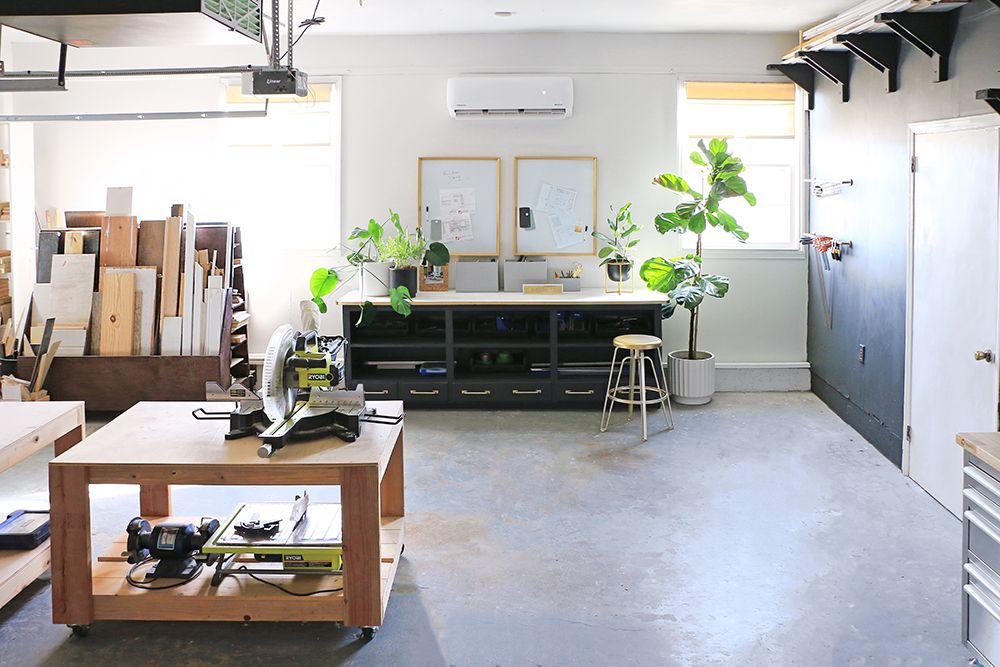
Workbench Wall
The wall behind your workbench is often the best candidate.
Why?
- It becomes the visual focal point of the workshop.
- It highlights your primary working area.
- It complements tool boards and shelving.
A strong accent color behind the workbench can create a clean, defined workspace.
Tool Storage Wall
If you have pegboards, cabinets, or tool organizers, painting the wall behind them can create a striking contrast that makes tools stand out.
Bright colors can make tools easier to see and grab quickly.
Garage Door Wall
In some layouts, the wall opposite the garage door becomes the first thing you see when entering the space. Using an accent color here creates an immediate visual impact.
Corner Workspace
If your workshop is located in a corner of the garage, an accent wall can define that area as a dedicated workspace.
This approach works particularly well in shared garages where part of the space is used for storage or parking.
Popular Accent Wall Colors for Garage Workshops
Choosing the right color is essential. Unlike living rooms or bedrooms, garage workshops need colors that are practical, energizing, and easy to maintain.
Here are some popular options.
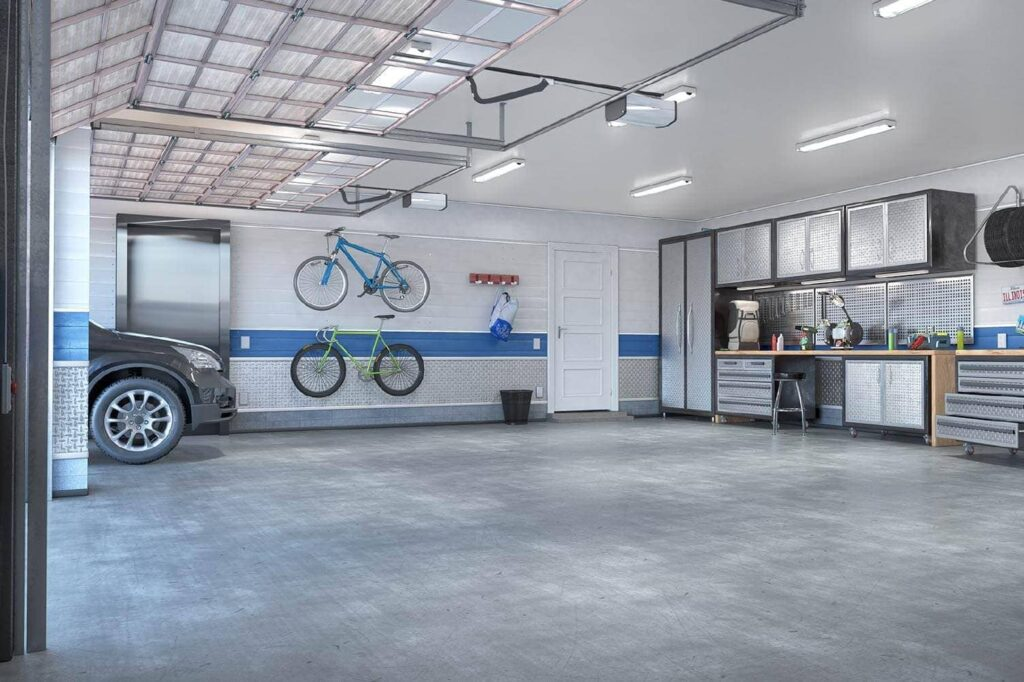
1. Industrial Gray Accent Walls
Gray is one of the most popular choices for garage workshops because it creates a clean, professional industrial look.
Why It Works
- Hides dirt and scuff marks
- Complements metal tools and equipment
- Looks modern and minimal
Best Pairings
Gray accent walls work well with:
- white walls
- stainless steel shelves
- black tool cabinets
This color combination mimics the look of professional mechanic shops and fabrication studios.
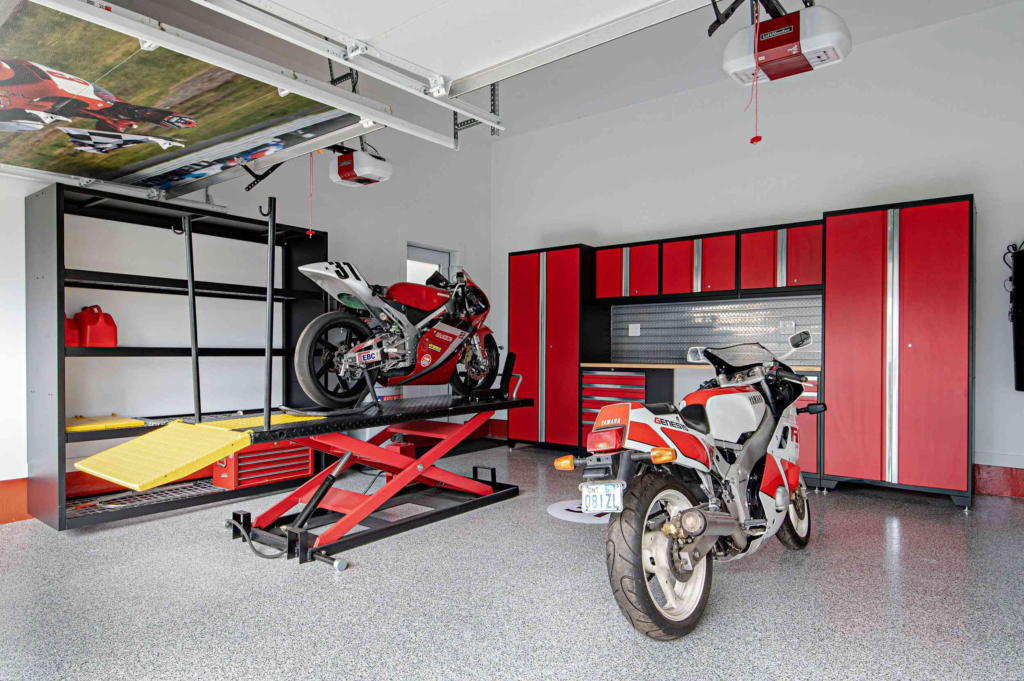
2. Bold Red Workshop Walls
Red is a classic workshop color often seen in automotive garages.
Benefits
- High energy and motivation
- Strong visual impact
- Great contrast with metal tools
Many automotive brands use red in garages and service centers because it creates an energetic and dynamic atmosphere.
Best Uses
- Behind tool cabinets
- Behind workbenches
- Automotive workspaces
However, red should be used sparingly—usually only one wall—to avoid overwhelming the space.
3. Deep Blue for a Professional Workshop
Blue is a fantastic accent color for workshops that require concentration and precision.
Why Blue Works
Blue tones create a calm but focused environment, making them ideal for tasks that require attention to detail.
Examples include:
- electronics repair
- woodworking
- model building
Deep navy or steel blue also pairs beautifully with:
- white walls
- light gray floors
- metallic shelving
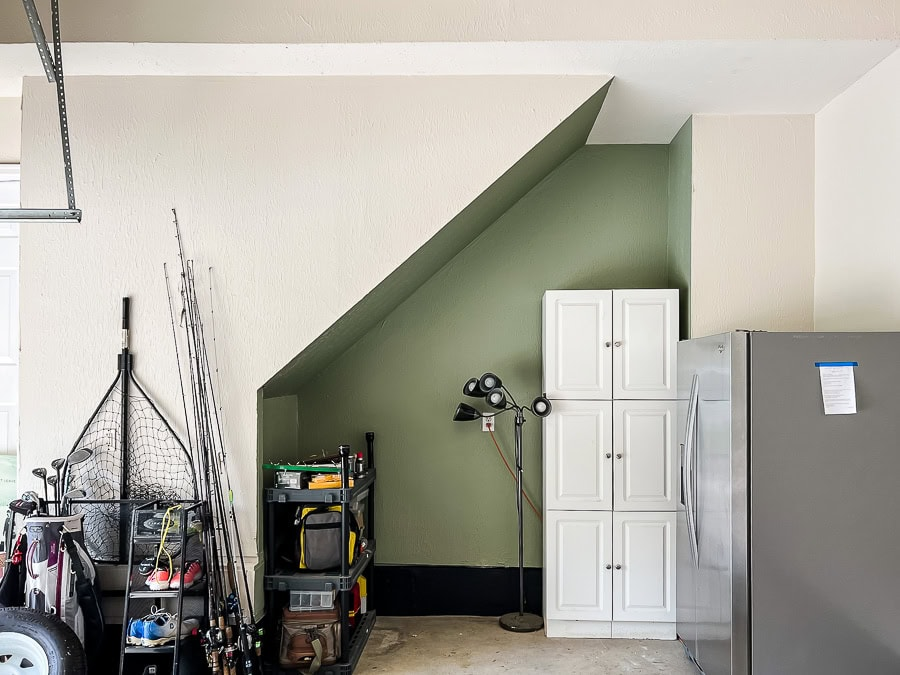
4. Forest Green for a Relaxing Workshop
Green is one of the most comfortable colors for the eyes.
If you spend long hours in your workshop, a green accent wall can create a calming environment that reduces eye strain.
This color works particularly well in workshops with:
- woodworking projects
- crafts
- gardening tools
It also complements natural materials like wood.
5. Bright Yellow for Energy and Creativity
Yellow is a powerful accent color that instantly brightens a space.
Benefits
- increases visibility
- adds warmth
- encourages creativity
Yellow accent walls work especially well behind tool pegboards, where the color helps tools stand out clearly.
However, bright yellow should be used carefully to avoid overwhelming the room.
6. Black Accent Walls for a Modern Workshop
Black may seem like a bold choice, but when used correctly it can create an ultra-modern workshop aesthetic.
Black walls work well with:
- LED lighting
- metallic cabinets
- white walls
- polished concrete floors
This approach is often used in high-end garage makeovers and car detailing garages.
However, proper lighting is essential if you choose dark colors.
Creative Accent Wall Design Ideas
Beyond color alone, there are creative ways to make your garage accent wall stand out.
Pegboard Accent Wall
Pegboards are a classic workshop feature.
Painting the wall behind a pegboard in a contrasting color creates a dramatic effect.
Benefits include:
- improved tool visibility
- organized storage
- customizable layouts
You can also paint the pegboard itself to match or contrast with the wall.
Two-Tone Workshop Walls
Two-tone walls combine two complementary colors.
For example:
- dark gray lower wall
- white upper wall
This approach is practical because the darker color hides scuffs and stains while the lighter color reflects light.
Tool Shadow Boards
Shadow boards are popular in professional workshops.
This involves outlining tools on a painted wall so each tool has a designated place.
Benefits include:
- faster tool organization
- easier cleanup
- professional appearance
Bright accent colors work best for shadow boards.
Striped Accent Walls
Horizontal or vertical stripes can add subtle design to a garage workshop.
For example:
- gray wall with white stripes
- black wall with yellow stripes
Stripes can also mimic industrial safety markings found in factories.
Geometric Workshop Walls
For a more modern look, geometric patterns using tape and multiple colors can create a unique accent wall.
Popular combinations include:
- navy and gray
- black and white
- green and beige
This approach adds personality without sacrificing functionality.
Using Accent Walls to Define Workshop Zones
One of the most effective uses of accent walls is defining different functional areas within the garage.
Workbench Zone
A bold accent wall behind the workbench clearly marks the primary workspace.
You can enhance it with:
- wall-mounted lighting
- pegboards
- magnetic tool strips
Tool Storage Zone
Painting the storage wall a different color helps organize the visual layout.
This is particularly useful for garages with large tool collections.
Project Assembly Area
If you have a separate area for assembling projects, a unique accent color can define that zone.
Parking Area Separation
In shared garages, accent walls can visually separate the workshop from the vehicle parking area.
This makes the space feel more structured and organized.
Best Paint Finishes for Garage Accent Walls
The paint finish you choose is just as important as the color.
For garage workshops, durability is essential.
Satin Finish
Satin paint offers a balance between durability and subtle sheen.
Benefits include:
- easy cleaning
- mild reflection
- good durability
Semi-Gloss Finish
Semi-gloss is ideal for high-contact areas like workbench walls.
Advantages include:
- highly durable
- moisture resistant
- easy to wipe clean
Matte Finish
Matte paint hides imperfections but may be harder to clean, so it’s better suited for ceilings or less-used walls.
Lighting and Accent Walls
Lighting dramatically affects how accent colors appear.
Here are some tips.
Use LED Workshop Lighting
Bright LED lights help accent colors appear vibrant and consistent.
Install Task Lighting
Lights mounted above workbenches enhance both visibility and wall aesthetics.
Avoid Shadows
Position lights carefully so tools and cabinets don’t cast large shadows on the accent wall.
Budget-Friendly Accent Wall Ideas
You don’t need a large budget to create a stunning accent wall.
Affordable options include:
- painting one wall only
- using leftover paint
- installing pegboards
- applying adhesive wall panels
- using stencils for patterns
These small upgrades can dramatically improve the look of a workshop.
Common Accent Wall Mistakes to Avoid
Even a simple project like painting an accent wall can go wrong without planning.
Choosing Too Many Colors
Stick to one or two accent colors to avoid visual clutter.
Ignoring Lighting
Dark colors can make poorly lit garages feel cramped.
Painting the Wrong Wall
Choose a wall that naturally draws attention.
Skipping Surface Preparation
Always clean and prime walls before painting to ensure durability.
Step-by-Step Guide to Painting a Garage Accent Wall
- Clean the wall thoroughly.
- Repair holes and cracks.
- Sand rough surfaces.
- Apply primer.
- Use painter’s tape to protect edges.
- Apply two coats of paint.
- Allow proper drying time.
This process ensures a long-lasting finish.
Final Thoughts
A garage workshop doesn’t have to feel dull or purely functional. With a simple accent wall, you can transform the space into a stylish, organized, and inspiring workspace.
By using color strategically, accent walls can:
- define different zones
- improve lighting
- highlight work areas
- enhance organization
- add personality to the workshop
Whether you prefer a bold red automotive wall, a calming blue workspace, or a sleek black modern garage, the right accent color can dramatically improve how your workshop looks and feels.
With thoughtful planning and the right paint choice, your garage can become more than just a place to store tools—it can become a creative hub where projects thrive and ideas come to life.