

Electric vehicles are rapidly transforming the automotive landscape. What was once a niche market is quickly becoming mainstream, with more homeowners choosing electric vehicles (EVs) as their primary mode of transportation. As governments encourage clean energy and automakers release new electric models, preparing your home for EV charging is no longer just a futuristic idea—it’s becoming a practical necessity.
For many homeowners, the garage will serve as the central charging hub for their electric vehicle. Installing the right infrastructure now can save money, improve charging efficiency, and ensure your garage is ready for the next generation of EV technology.
This comprehensive guide will walk you through everything you need to know about preparing your garage for EV charging by 2026, including electrical upgrades, charging options, installation tips, safety considerations, and future-ready design strategies.
Why EV Charging Infrastructure Matters
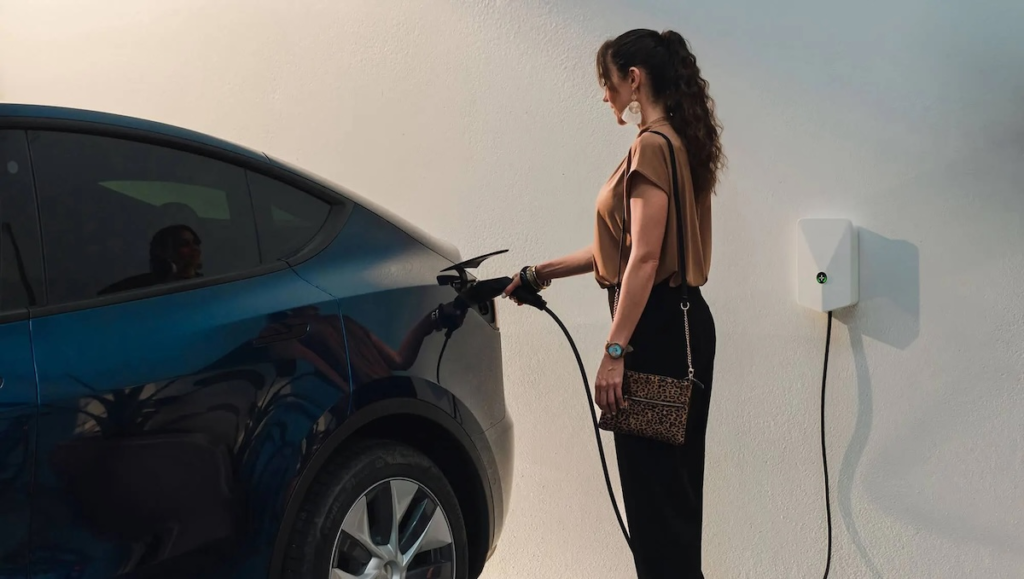
Electric vehicle ownership is increasing at a remarkable pace. As more people adopt EVs, the need for reliable and convenient charging solutions grows.
Installing charging infrastructure at home offers several advantages.
Convenience
Charging your EV at home means you can simply plug in overnight and start each day with a fully charged battery.
Unlike gasoline vehicles, you don’t need to visit a fueling station regularly.
Cost Savings
Home charging often costs significantly less than public charging stations.
Electricity rates during off-peak hours can make overnight charging extremely affordable.
Increased Home Value
As EV adoption grows, homes with installed charging infrastructure may become more attractive to buyers.
A well-prepared garage can be a strong selling point in the future.
Understanding the Basics of EV Charging
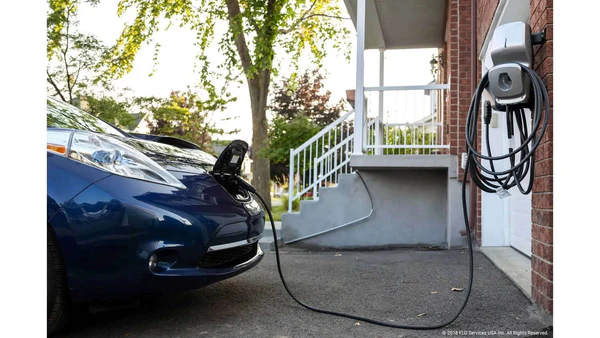
Before installing charging equipment, it’s important to understand how EV charging works.
There are three primary charging levels used for electric vehicles.
Level 1 Charging
Level 1 charging uses a standard 120-volt household outlet.
This method is the simplest because it requires no special installation.
However, Level 1 charging is very slow.
It typically adds 3 to 5 miles of range per hour, making it suitable only for drivers with short daily commutes.
Level 2 Charging
Level 2 charging uses a 240-volt outlet, similar to those used for electric dryers or ovens.
This charging level is much faster and is the most common choice for home installations.
Level 2 chargers can add approximately 20 to 40 miles of range per hour depending on the vehicle and charger.
For most homeowners preparing their garage for 2026, Level 2 charging is the ideal solution.
DC Fast Charging
DC fast chargers provide extremely rapid charging and are typically found at public charging stations.
They are rarely installed in homes due to their high power requirements and cost.
Evaluating Your Garage Electrical Capacity
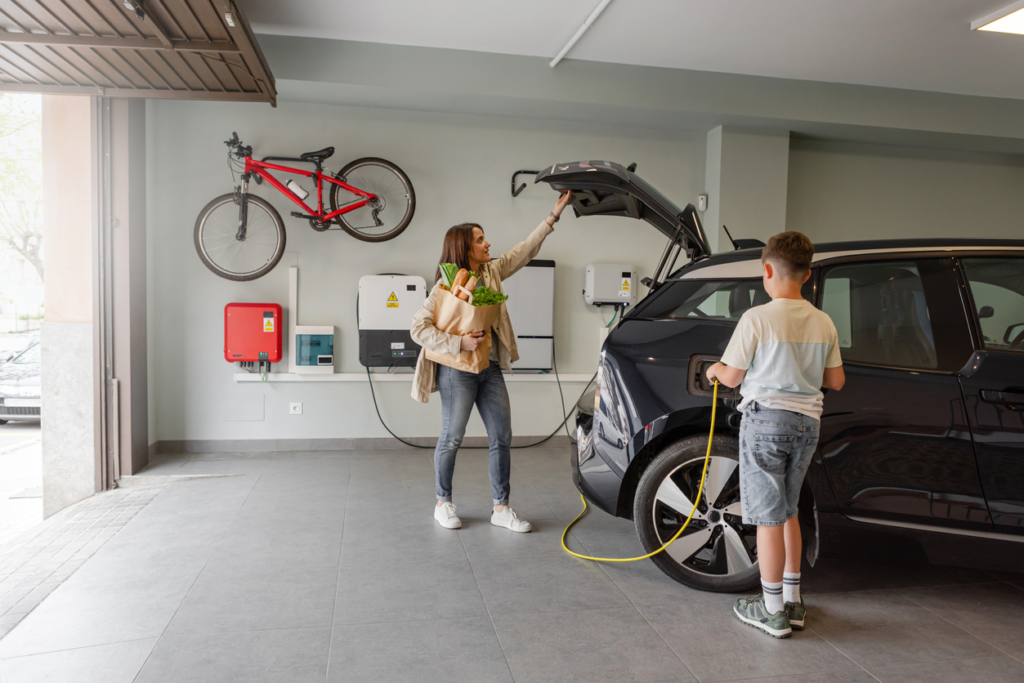
Before installing EV charging equipment, you must determine whether your home’s electrical system can support it.
Check Your Electrical Panel
Most homes have electrical panels rated between 100 and 200 amps.
EV chargers often require 30 to 60 amps of dedicated capacity.
If your panel is already near its limit, an upgrade may be necessary.
Panel Upgrade Considerations
Upgrading an electrical panel may involve:
- installing a larger breaker panel
- upgrading service lines
- obtaining permits
Although this can add cost, it also future-proofs your home for additional electrical needs.
Choosing the Right EV Charger for Your Garage
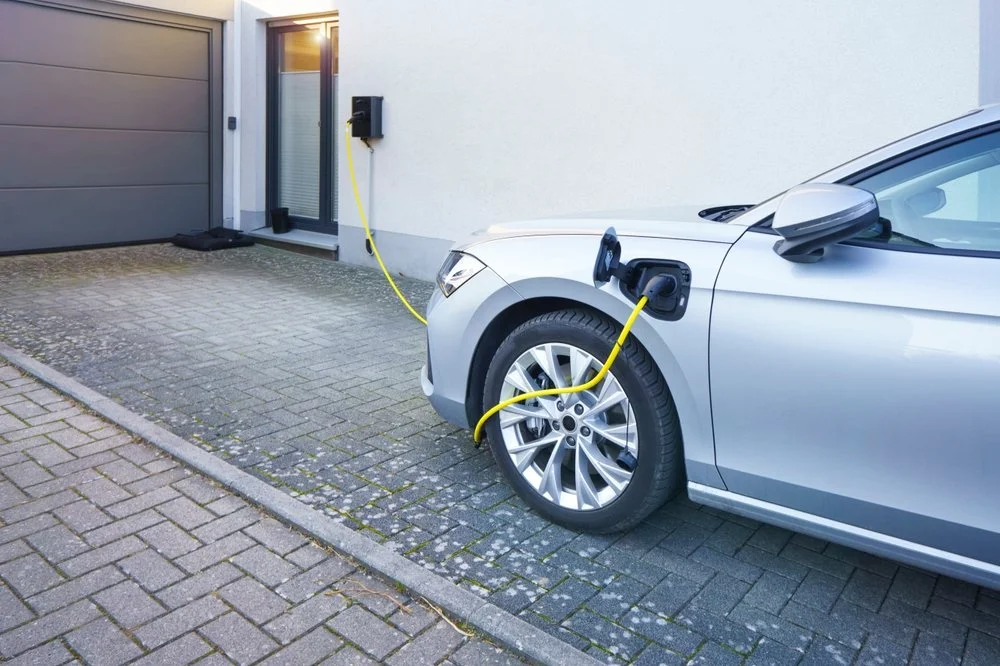
Not all chargers are the same. Selecting the right charger depends on your vehicle, driving habits, and available electrical capacity.
Smart Chargers
Smart EV chargers connect to Wi-Fi and allow you to monitor charging through a mobile app.
Features often include:
- scheduling charging sessions
- tracking energy usage
- remote control
These chargers are ideal for homeowners interested in energy management.
Adjustable Power Chargers
Some chargers allow you to adjust the power output.
This feature is helpful if your electrical system has limited capacity.
Multi-Vehicle Chargers
If your household owns multiple EVs, consider chargers designed to support two vehicles.
These systems distribute power intelligently between vehicles.
Planning the Charger Location
Where you install the charger in your garage is just as important as choosing the charger itself.
Consider Vehicle Parking Position
The charging cable must easily reach your vehicle’s charging port.
Different EV models place their charging ports in different locations, including:
- front grille
- rear side panel
- front fender
Position the charger so the cable reaches comfortably.
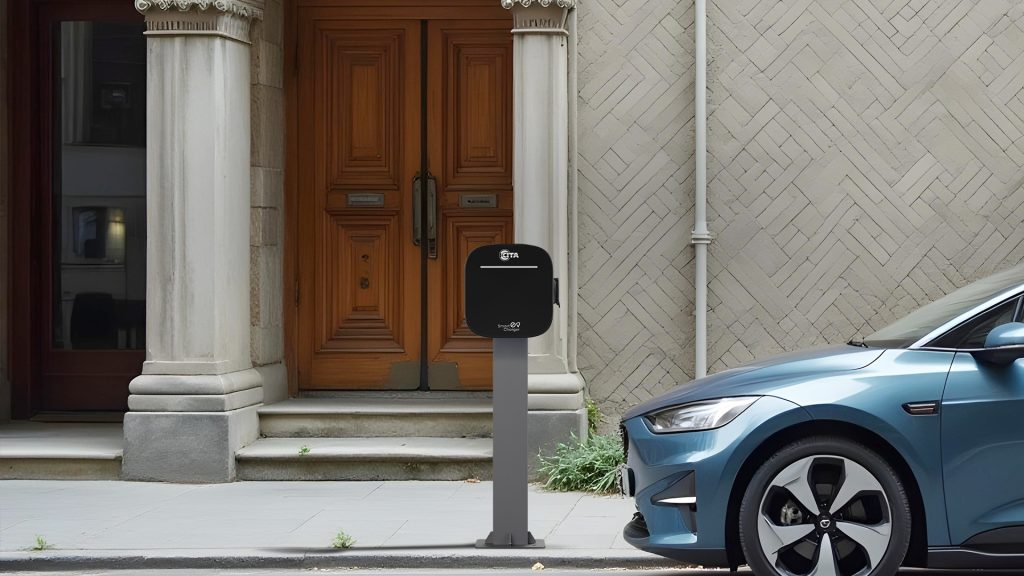
Wall-Mounted vs Pedestal Chargers
Most homeowners install wall-mounted chargers inside the garage.
However, pedestal-mounted chargers are useful for:
- outdoor installations
- detached garages
- driveways
Installing a Dedicated Circuit
EV chargers should always be installed on a dedicated electrical circuit.
A dedicated circuit ensures that the charger receives consistent power and prevents overloads.
Typical installations include:
- 40-amp circuits
- 50-amp circuits
- 60-amp circuits
A licensed electrician should handle this installation.
Preparing the Garage Layout for EV Charging
Installing a charger often requires rethinking the layout of your garage.
Maintain Parking Clearance
Ensure there is enough space for the vehicle to park without damaging the charger or cable.
Keep Walkways Clear
Charging cables should not create tripping hazards.
Cable management hooks or retractable systems can help keep cables organized.
Protect the Charger
Install chargers in locations where they are protected from accidental impacts.
EV Cable Management Solutions
Charging cables can become messy if left hanging.
Effective cable management improves safety and organization.
Wall Hooks
Simple hooks keep cables neatly coiled when not in use.
Retractable Cable Systems
Retractable systems automatically pull cables back into place.
These systems are ideal for busy garages.
Cable Reels
Cable reels allow you to extend or retract charging cables as needed.
Ventilation and Temperature Considerations
While EV chargers do not produce significant exhaust, heat management is still important.
Avoid Enclosed Cabinets
Chargers should not be installed in enclosed cabinets because they require airflow.
Consider Garage Temperature
Extreme heat or cold may affect charging efficiency.
Insulated garages maintain more stable temperatures.
Integrating Solar Power with EV Charging
Many homeowners planning EV infrastructure also consider solar energy.
Solar panels can generate electricity to power your vehicle.
Benefits include:
- reduced electricity costs
- cleaner energy usage
- energy independence
A solar-powered garage charging system can significantly reduce long-term operating costs.
Smart Energy Management Systems
Some homes install energy management systems that balance electricity use.
These systems can prioritize power between:
- EV charging
- household appliances
- HVAC systems
This prevents electrical overload and improves efficiency.
Preparing for Multiple EVs
By 2026, many households may own more than one electric vehicle.
Planning ahead ensures your garage can support future vehicles.
Consider installing:
- extra conduit for future wiring
- a larger electrical panel
- dual charging stations
Planning ahead avoids costly upgrades later.
Safety Tips for EV Charging
Safety should always be a top priority when installing charging infrastructure.
Professional Installation
Always hire a licensed electrician for installation.
Improper wiring can cause electrical hazards.
Use Certified Chargers
Choose chargers that meet recognized safety standards.
Certified chargers undergo extensive testing.
Install Ground Fault Protection
Ground fault protection devices prevent electrical shocks.
Most modern chargers include this feature.
EV Charging and Garage Flooring
Some homeowners upgrade garage floors when installing EV chargers.
Epoxy flooring is particularly popular.
Benefits include:
- moisture resistance
- easy cleaning
- improved aesthetics
Charging equipment looks more professional in a clean, finished garage.
Lighting Improvements for Charging Areas
Proper lighting makes it easier to connect charging cables.
Install bright lighting near the charger location.
Motion-sensor lights are especially helpful for nighttime charging.
Future EV Charging Technologies
EV technology is evolving rapidly.
Several innovations may become common by 2026.
Wireless Charging
Wireless charging systems allow vehicles to charge through inductive pads embedded in the floor.
Although still emerging, this technology could eliminate cables entirely.
Vehicle-to-Home Power
Some EVs can supply power back to the home during outages.
This feature effectively turns the vehicle into a backup battery.
Faster Charging Systems
Future chargers may provide faster home charging speeds as battery technology improves.
Budgeting for EV Charging Installation
Installing home charging infrastructure involves several potential costs.
Common expenses include:
- EV charger unit
- electrical wiring
- panel upgrades
- installation labor
- permits
Depending on the situation, total costs can range from several hundred to several thousand dollars.
However, many regions offer incentives or rebates for EV charger installations.
Preparing for Government Regulations
Many governments are encouraging EV adoption through new building codes and regulations.
Some new homes are already required to include EV-ready wiring.
Preparing your garage early ensures compliance with future standards.
Designing an EV-Ready Garage
A well-designed EV-ready garage includes:
- a dedicated charging station
- organized cable storage
- proper lighting
- clear parking zones
- safe electrical infrastructure
These features create a convenient and efficient charging environment.
Final Thoughts
As electric vehicles continue to gain popularity, preparing your garage for EV charging infrastructure is becoming an essential part of modern home design.
By understanding charging levels, upgrading electrical systems, selecting the right charger, and planning an efficient layout, homeowners can create a garage that supports both current and future EV technology.
Preparing your garage today ensures that when 2026 arrives, you’ll be ready to charge faster, drive farther, and embrace the future of transportation with confidence.
A well-designed EV charging setup not only improves convenience but also contributes to a cleaner and more sustainable lifestyle—making your garage a key part of the electric mobility revolution.