
Designing a small bedroom can feel like solving a puzzle. You’ve got limited space, too many things to fit, and somehow it still needs to feel calm—not cramped.
The good news? A small bedroom can actually feel better than a large one when it’s laid out correctly. It can be cozier, more functional, and surprisingly stylish.
The secret isn’t buying more furniture—it’s arranging your space smarter.
Let’s break down small bedroom layout ideas that truly work in real life (not just in Pinterest photos).
Why Layout Matters More Than Size
Before we jump into ideas, here’s something most people overlook:
It’s not about how small your room is—it’s about how well it’s arranged.
A bad layout:
- Blocks movement
- Feels cluttered
- Wastes space
A good layout:
- Maximizes every inch
- Feels open and breathable
- Makes daily life easier
So instead of focusing on what you don’t have, let’s work with what you do.
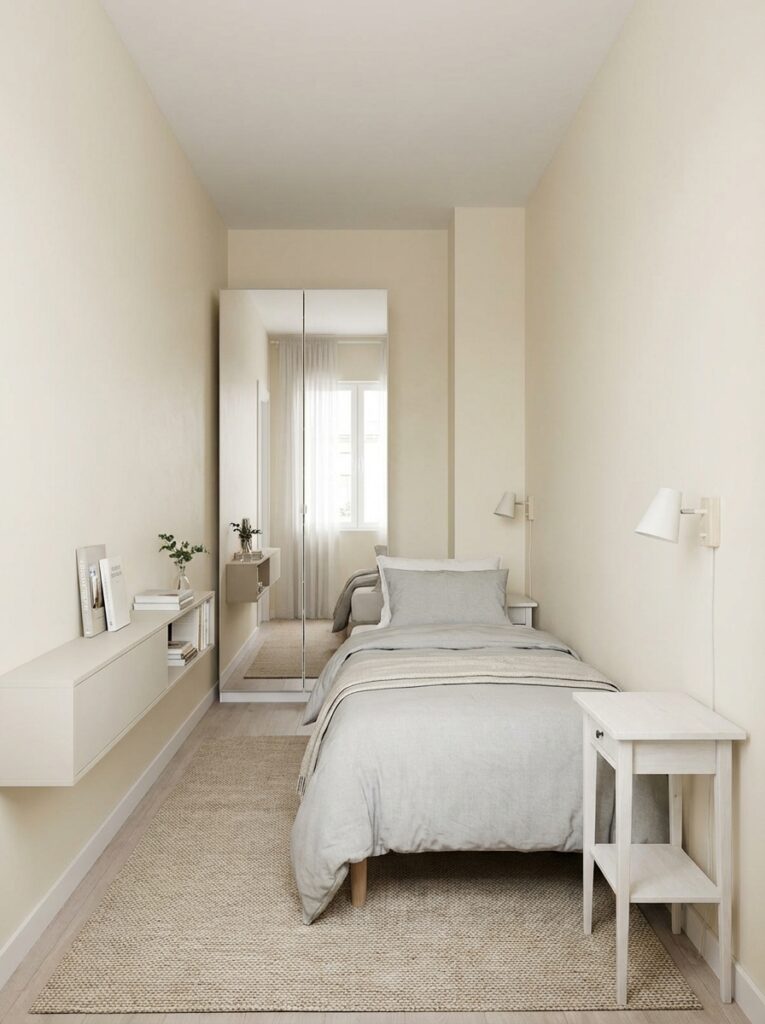
1. Start with Bed Placement (The Anchor)
Your bed is the biggest piece in the room—so it should always come first.
Best placement options:
- Against the longest wall
- Centered if space allows
- In a corner (for very small rooms)
Avoid:
- Blocking windows
- Placing it where doors can’t open fully
Pro tip:
If space is tight, push one side of the bed against the wall to free up walking space.
2. Use the “One Clear Path” Rule
A small room should have a clear, easy walking path.
Goal:
You should be able to walk from the door to the bed without squeezing or turning sideways.
How to do it:
- Keep furniture along walls
- Avoid placing items in the center
- Leave at least 24–30 inches of walking space if possible
This instantly makes your room feel bigger.
3. Go Vertical (Use Wall Space!)
When floor space is limited, your walls become your best friend.
Use vertical space for:
- Shelves above the bed
- Wall-mounted nightstands
- Hanging organizers
- Tall wardrobes
Why it works:
It frees up floor space while still giving you storage.
4. Choose Multi-Functional Furniture
In a small bedroom, every piece should do more than one job.
Smart choices:
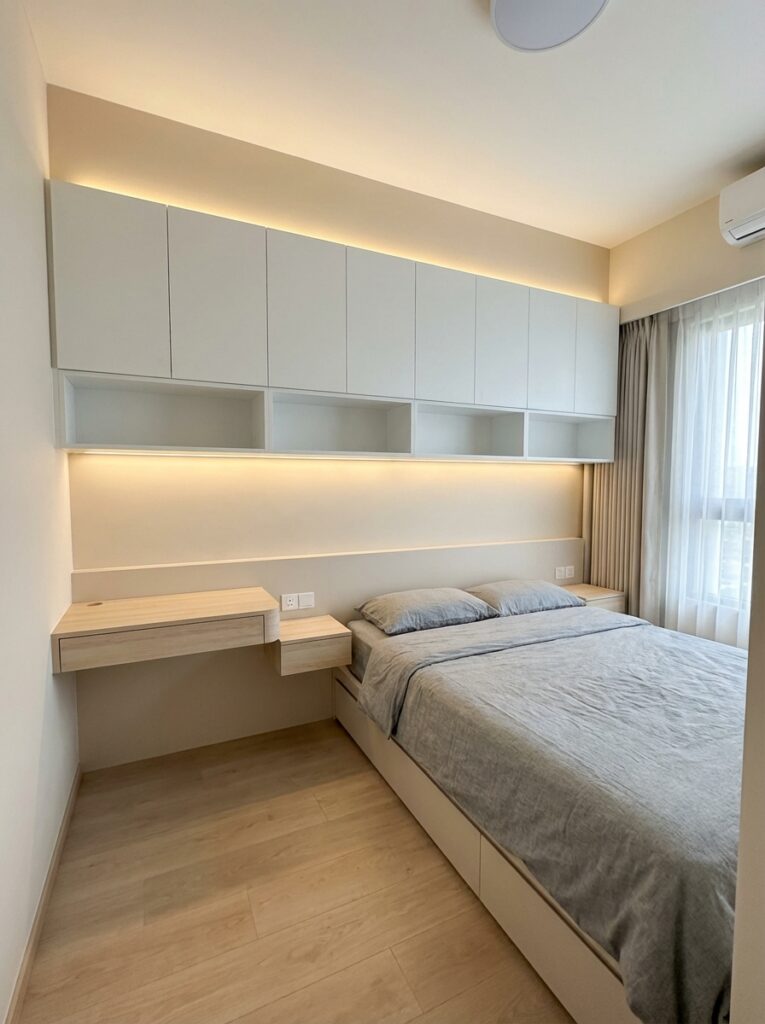
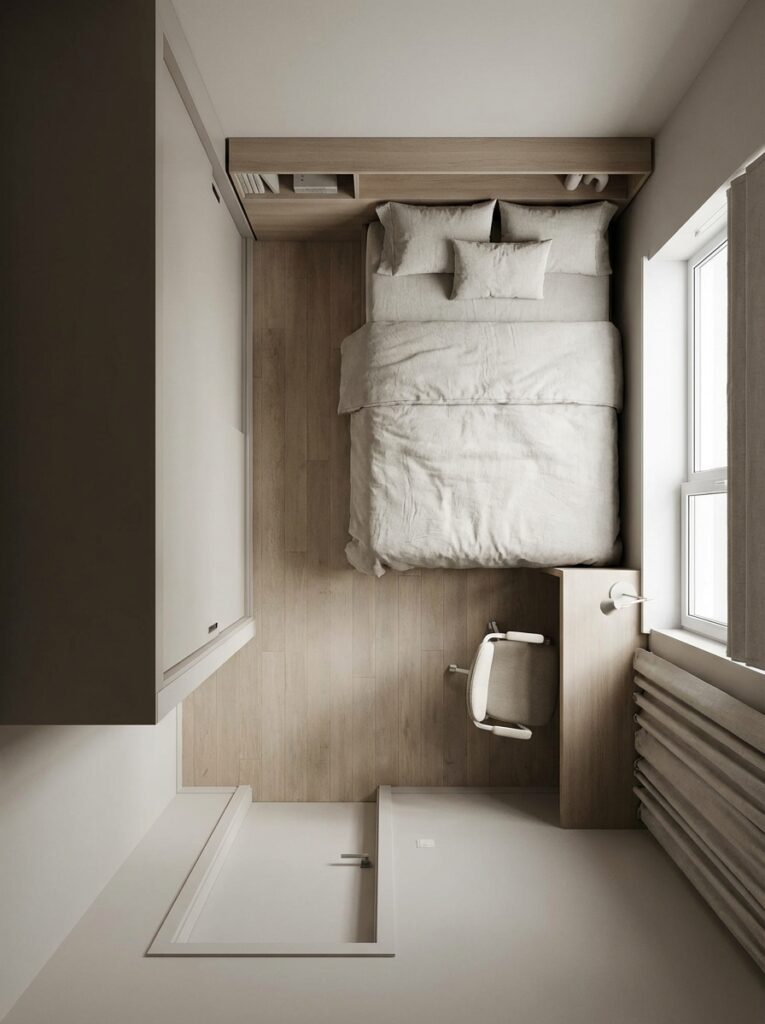
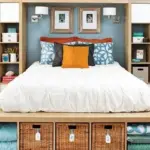
- Bed with storage drawers
- Ottoman with hidden storage
- Foldable desk
- Bedside table with shelves
Think like this:
If it only serves one purpose, it better be essential.
5. Try a Corner Bed Layout
If your room is really tight, this layout can be a game changer.
How it works:
- Push the bed into a corner
- Leave space on one side only
Benefits:
- Frees up floor space
- Creates room for a desk or storage
- Makes the room feel less crowded
Styling tip:
Add pillows along the wall to create a cozy daybed feel.
6. Use Floating Furniture
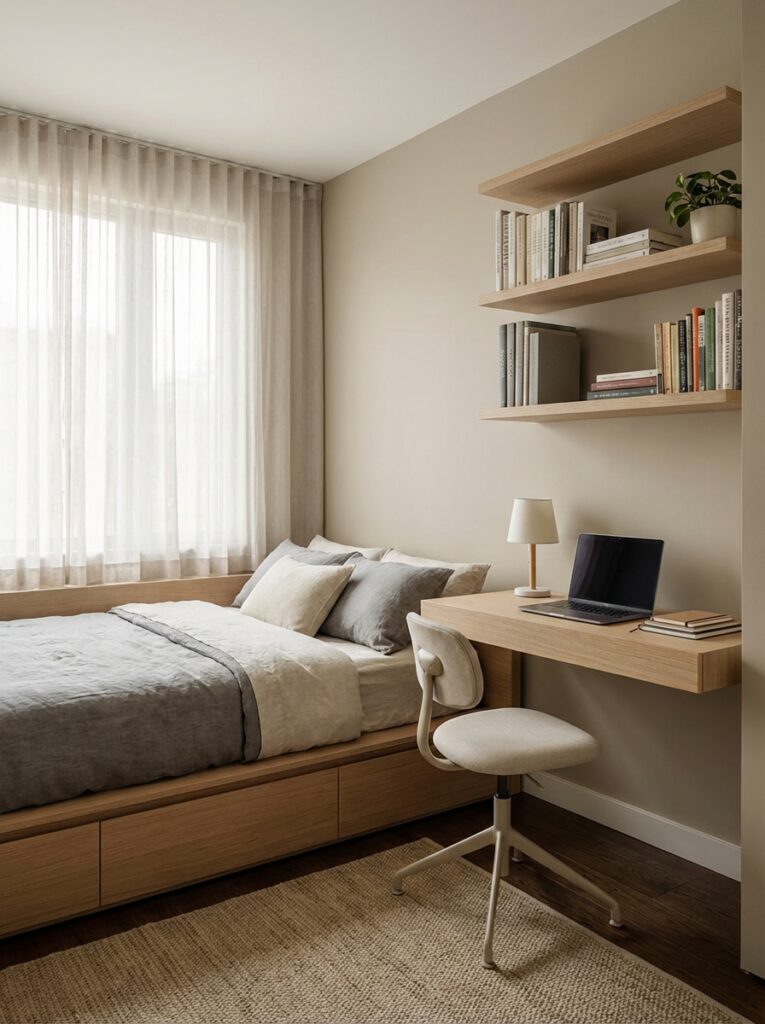
Furniture that “floats” off the ground creates visual space.

Examples:
- Floating nightstands
- Wall-mounted desks
- Floating shelves
Why it helps:
You can see more floor, which tricks the eye into thinking the room is bigger.
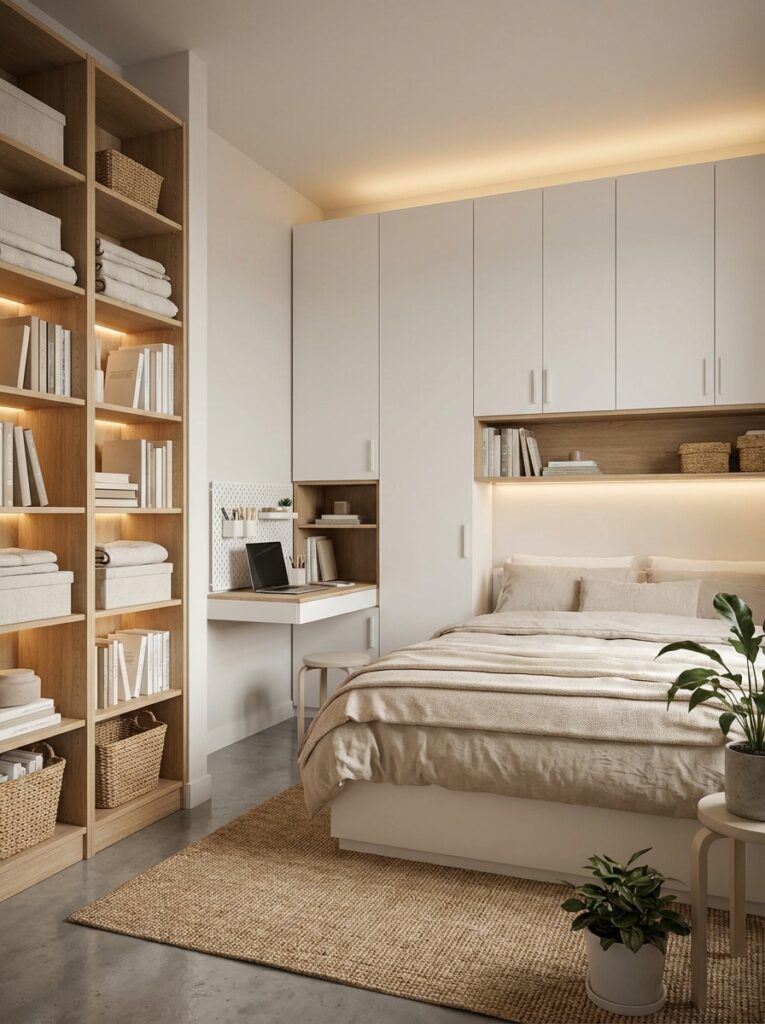
7. Keep Furniture Proportional
Oversized furniture is the biggest mistake in small bedrooms.
Choose:
- Slim bed frames
- Narrow dressers
- Compact nightstands
Avoid:
- Bulky headboards
- Deep, oversized furniture
Rule:
Scale everything to your room size.
8. Use Mirrors to Expand the Space
Mirrors are one of the easiest ways to make a small room feel bigger.
Best placements:
- Opposite a window
- Behind a nightstand
- Full-length mirror on a wall
Effect:
They reflect light and create the illusion of depth.
9. Ditch One Nightstand
You don’t always need two.
Try:
- One small nightstand
- Or a wall shelf on one side
Result:
More floor space and a less crowded layout.
10. Place the Bed Under a Window (If Needed)
This isn’t always ideal—but sometimes it’s the best option.
When it works:
- In narrow rooms
- When wall space is limited
Make it look intentional:
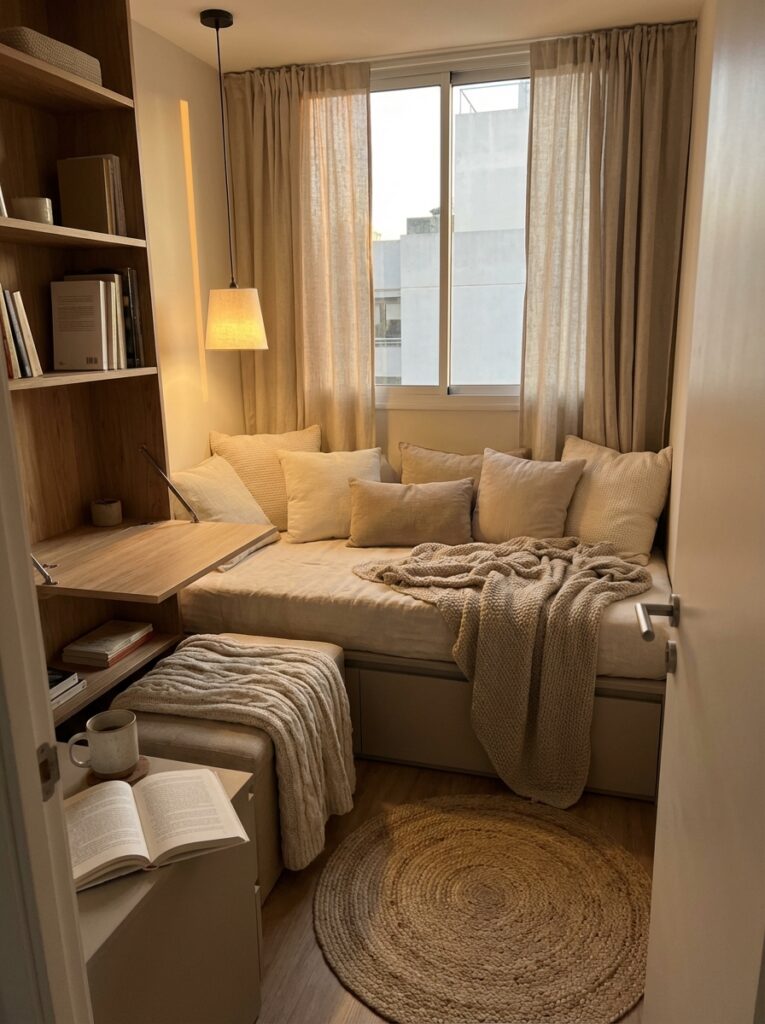
- Use simple curtains
- Keep the headboard low
This can free up other walls for storage.
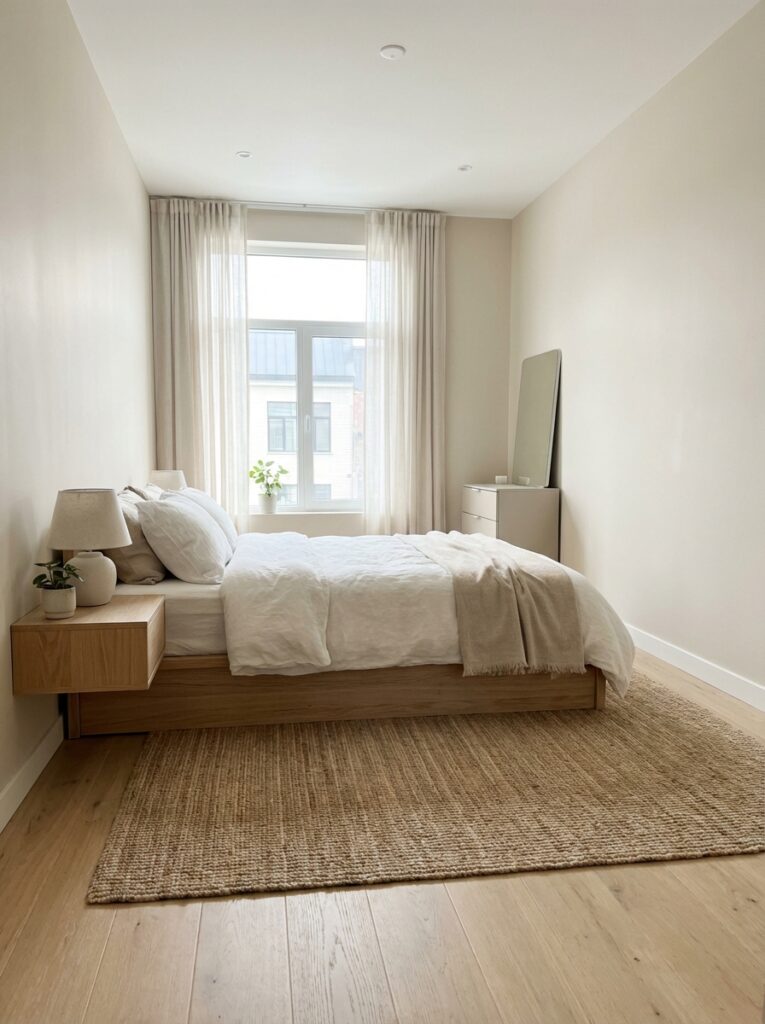
11. Use Light Colors for Layout Clarity
Color affects how spacious your room feels.
Best choices:
- White
- Soft gray
- Beige
- Light pastels
Why:
They reflect light and make the room feel open.
Add contrast carefully:
A few darker accents are fine—but keep the base light.
12. Keep the Floor Visible
The more floor you can see, the bigger your room feels.
How to do it:
- Use furniture with legs
- Avoid floor-to-ground bulky pieces
- Keep clutter off the floor
Result:
A lighter, more open look.

13. Use Sliding Doors or Curtains
If your closet or entry door takes up space, rethink it.
Options:
- Sliding closet doors
- Curtains instead of doors
- Folding doors
Benefit:
Saves valuable space and improves flow.
14. Create Zones (Even in Small Spaces)
Yes—even a tiny room can have zones.
Example:
- Sleep zone → bed
- Work zone → small desk
- Storage zone → wardrobe
How:
Use rugs, lighting, or placement to define each area.
15. Keep Decor Minimal and Strategic
Too much decor = visual clutter.
Stick to:
- One or two wall art pieces
- A small plant
- A lamp
Avoid:
Overcrowded shelves or too many accessories.
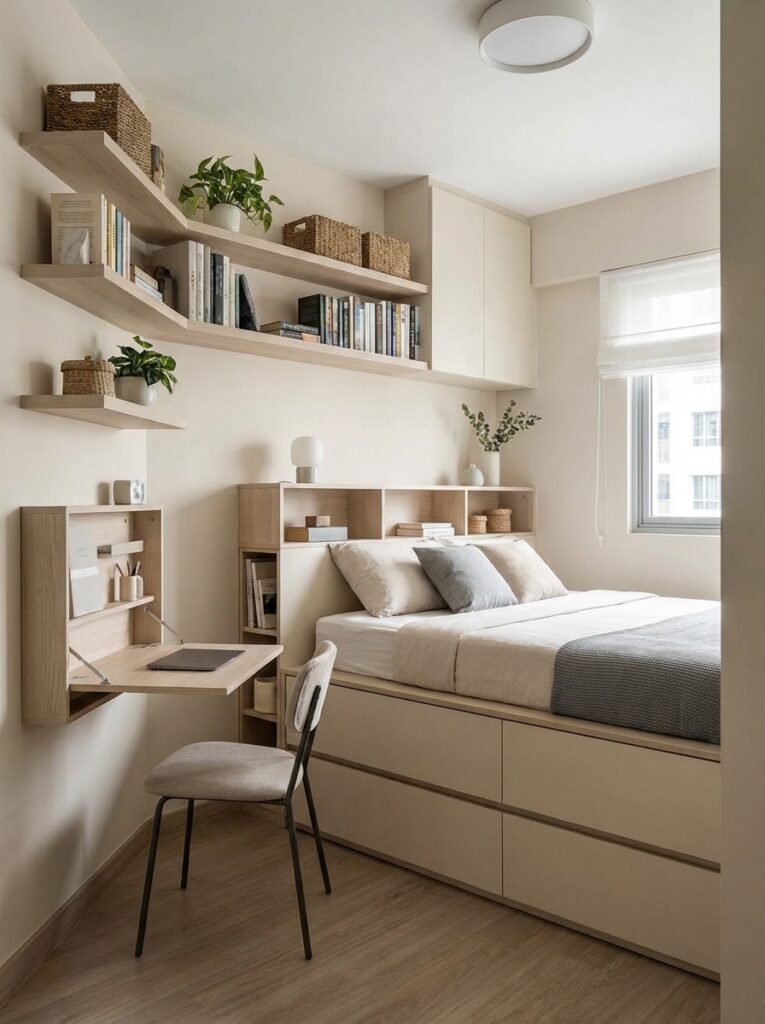
16. Use Under-Bed Storage
This is one of the most underused spaces.
Store:
- Seasonal clothes
- Shoes
- Extra bedding
Options:
- Storage bins
- Built-in drawers
- Vacuum bags
This keeps your room organized without taking up extra space.
17. Try a Loft Bed (If Possible)
If your ceiling height allows, this can completely transform your layout.
Under the bed:
- Desk
- Storage
- Seating area
Ideal for:
Students or very small rooms.
18. Keep It Clutter-Free (Seriously)
No layout works if the room is cluttered.
Simple rule:
If you don’t use it, remove it.
Focus on:
- Clear surfaces
- Organized storage
- Daily essentials only
19. Use Rugs to Define Space
Even in small rooms, rugs can help structure the layout.
Tip:
Use one medium-sized rug instead of multiple small ones.
Placement:
Partially under the bed to anchor the space.
20. The Feeling You’re Creating
At the end of the day, your bedroom should feel comfortable—not cramped.
You want it to feel:
- Easy to move around
- Visually calm
- Functional for your daily life
If you can walk in, relax, and not feel overwhelmed… your layout works.
Final Thoughts
A small bedroom doesn’t have to feel limiting—it just needs smart design.
Focus on:
- Strategic bed placement
- Multi-functional furniture
- Vertical storage
- Clean, open pathways
Start with one change—maybe moving your bed or clearing a surface—and build from there.
Because once your layout works, everything else falls into place… and your small bedroom starts to feel like the perfect space it was meant to be.