
Winter brings snow, slush, and freezing temperatures—but one of the most dangerous and costly winter garage problems often goes unnoticed: ice buildup on garage floors.
Many garage owners assume ice inside the garage is harmless or temporary. In reality, it creates a perfect storm of safety risks, structural damage, and long-term maintenance issues. Slippery floors lead to falls, vehicles lose traction, and concrete slowly deteriorates due to repeated freeze-thaw cycles.
This article explores why ice forms on garage floors, why it’s more dangerous than outdoor ice, and how it silently damages concrete over time. We’ll also cover practical solutions that homeowners can apply immediately to make garages safer and more durable during winter.
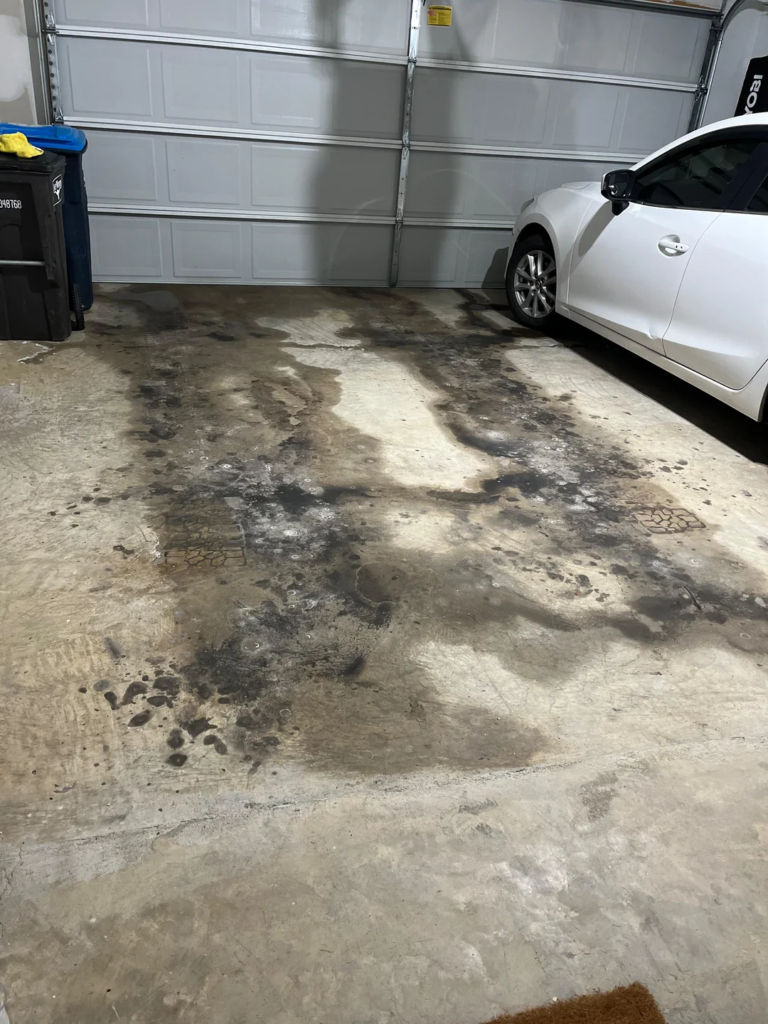
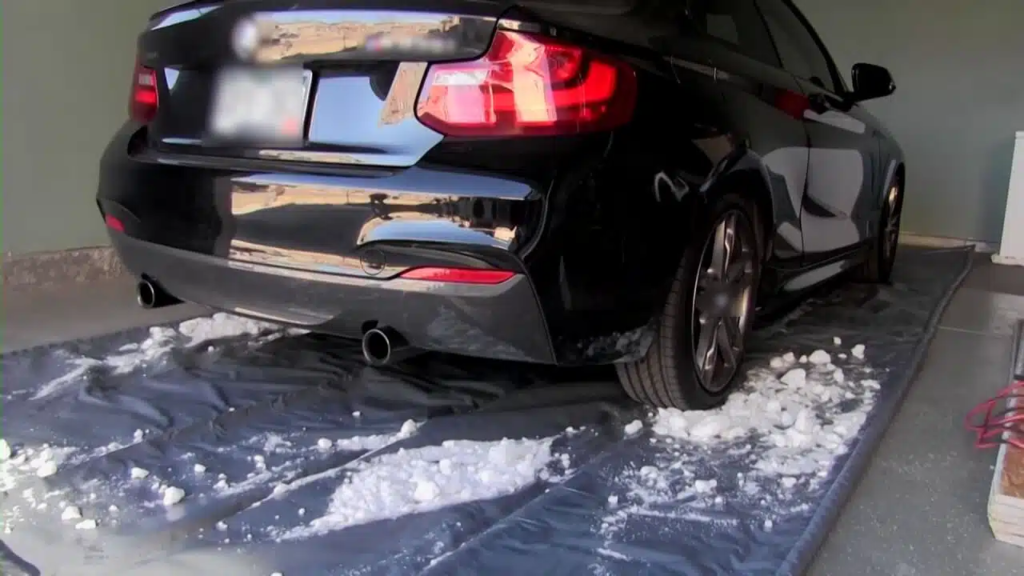
Snow Melts Off Tires — Then Refreezes on Garage Floors
Why Ice Forms Inside Garages (Even Heated Ones)
Many homeowners are surprised to find ice forming inside their garages, especially when the garage is attached to the house or partially insulated.
The primary reason is simple:
Snow and slush melt off warm tires — then refreeze on the cold concrete floor.
This cycle repeats every single time a vehicle enters the garage during winter.
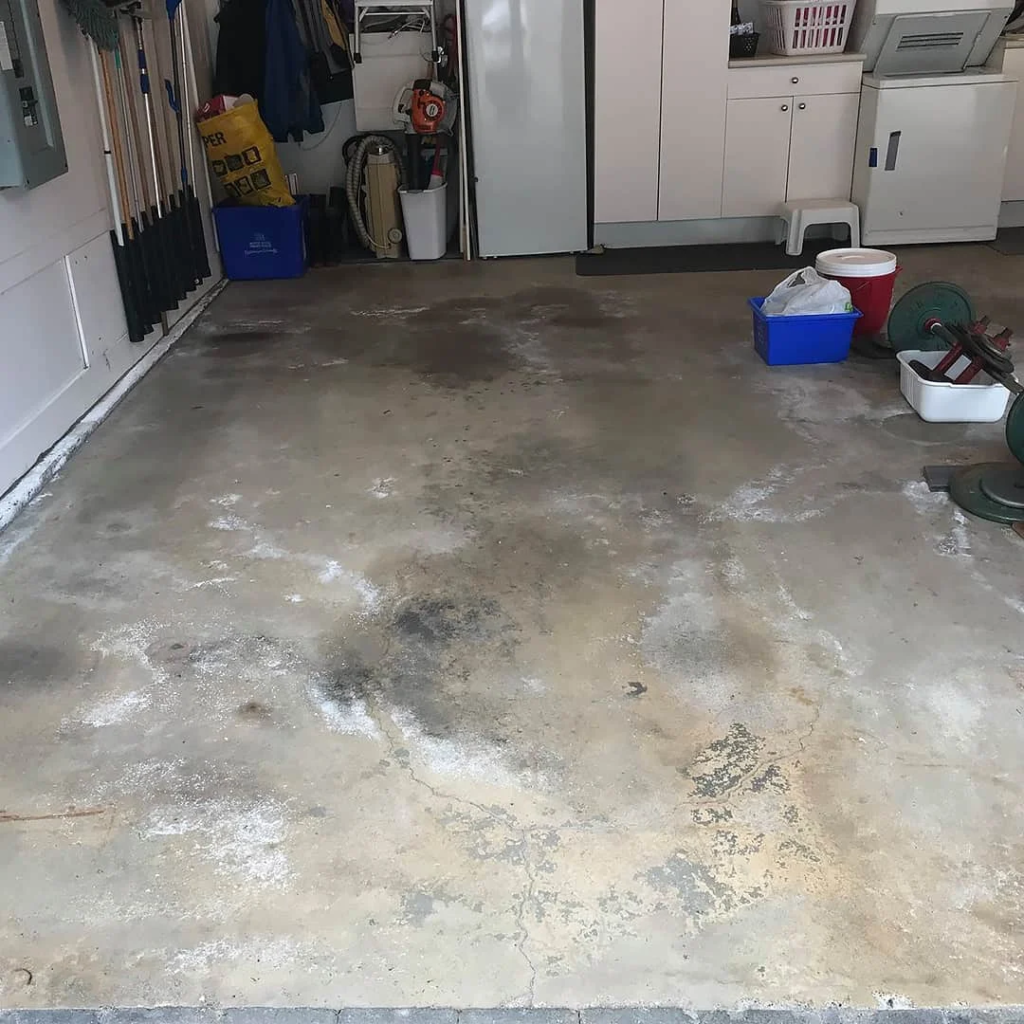
Step-by-Step: How Ice Buildup Actually Happens
- Vehicle drives through snow and slush
Snow, ice, and salt stick to tires, wheel wells, and undercarriage. - Warm engine and brakes raise tire temperature
Tires become warm enough to melt packed snow. - Snow melts onto the garage floor
Water spreads across concrete in thin layers. - Cold concrete absorbs heat rapidly
Garage floors are rarely insulated. - Water refreezes into ice sheets
Thin, invisible ice forms — often overnight.
This process happens even if the garage temperature stays above freezing briefly.
Why Garage Concrete Is Always Cold
Concrete floors are:
- In direct contact with frozen ground
- Highly conductive
- Poorly insulated in most homes
Even heated garages often have sub-freezing slab temperatures, making refreezing inevitable.

The Role of Road Salt and Chemicals
Salt accelerates melting—but also worsens refreezing:
- Lowers freezing point temporarily
- Leaves behind moisture
- Attracts water from the air (hygroscopic effect)
Result:
- Wet floor stays wet longer
- Refreezing becomes more severe overnight
Why This Problem Gets Worse as Winter Progresses
Over time:
- Micro-cracks form in concrete
- Surface becomes uneven
- Water pools more easily
- Ice forms faster and thicker
By mid-winter, garages that were “fine” in early December become skating rinks.
Vehicles That Make Ice Buildup Worse
- SUVs and trucks (larger tires = more snow)
- Vehicles with deep tread tires
- Cars parked outdoors overnight
- Multiple vehicles entering daily
Households with two or more vehicles experience this issue much more intensely.
Warning Signs Homeowners Ignore
- Shiny patches on the floor
- Damp concrete even on dry days
- Thin white salt residue
- Tires slipping slightly when parking
These are early indicators of recurring ice formation, not random moisture.
Extremely Slippery Garage Floors → A Serious Fall Hazard
Why Garage Ice Is More Dangerous Than Outdoor Ice
Outdoor ice is expected. People walk cautiously.
Garage ice is dangerous because:
- It’s unexpected
- Lighting is often poor
- Ice is thin and nearly invisible
- People carry items, reducing balance
Most garage falls happen during routine activities, not storms.
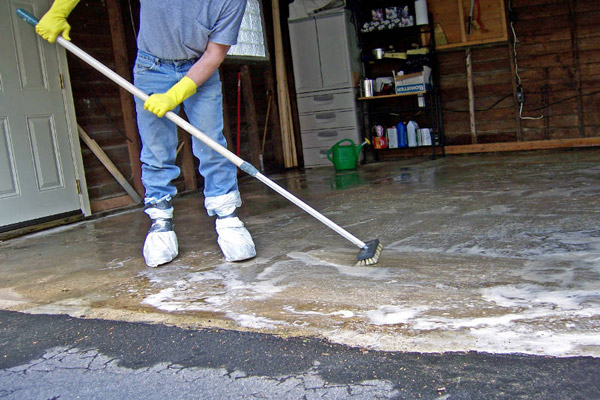
Who Is Most at Risk?
High-Risk Groups:
- Children running inside
- Elderly family members
- Pregnant women
- Anyone wearing smooth-soled shoes
- People carrying groceries or tools
A garage fall can be more severe than a sidewalk fall due to hard concrete impact.
Common Garage Fall Scenarios
- Stepping out of car onto black ice
- Carrying groceries from trunk
- Taking trash out through garage
- Working on car or tools
- Children playing briefly
These accidents happen within seconds, without warning.
Why “Black Ice” Is Common in Garages
Garage ice often forms as:
- Ultra-thin transparent layers
- Smooth sheets without texture
This is known as black ice, and it’s nearly impossible to see under artificial lighting.
Injury Types from Garage Falls
- Wrist and arm fractures
- Hip injuries
- Concussions
- Spinal compression injuries
- Torn ligaments
Unlike outdoor falls, garages have no snow cushion—just bare concrete.
Legal and Insurance Risks
Garage slip-and-fall incidents can lead to:
- Insurance claims
- Liability issues for homeowners
- Medical expenses not fully covered
If guests or delivery personnel fall, liability becomes even more serious.
Why Mats Alone Often Fail
Many homeowners try rubber mats, but:
- Mats shift on icy surfaces
- Water freezes underneath
- Edges curl and become trip hazards
Without proper drainage, mats trap moisture, making the problem worse.
Immediate Safety Measures That Actually Work
1. Use Sloped Drainage Mats
Designed to:
- Channel water away
- Prevent pooling
- Allow evaporation
2. Apply Non-Slip Floor Coatings
Textured epoxy or polyaspartic coatings increase traction even when wet.
3. Improve Lighting
Better visibility reduces surprise slips.
4. Keep Absorbent Materials Ready
Use:
- Squeegees
- Absorbent pads
- Floor drying fans
What NOT to Do
❌ Use rock salt directly on concrete
❌ Pour hot water on ice
❌ Ignore thin ice layers
❌ Assume garage heat alone solves the problem
These approaches increase long-term damage.
Concrete Damage from Freeze-Thaw Cycles
The Silent Destruction Happening Beneath the Ice
Ice buildup doesn’t just create slip hazards—it slowly destroys your garage floor.
Concrete damage occurs due to freeze-thaw cycles, where water penetrates the concrete, freezes, expands, and breaks it apart internally.
How Freeze-Thaw Cycles Damage Concrete
- Melted snow seeps into pores and cracks
- Temperature drops overnight
- Water freezes and expands (up to 9%)
- Internal pressure increases
- Micro-cracks grow larger
- Surface begins to flake and crumble
This repeats dozens of times each winter.
Early Signs of Concrete Freeze Damage
- Flaking surface (scaling)
- Powdery residue
- Small pits
- Hairline cracks
Most homeowners ignore these signs until damage becomes severe.
Advanced Damage Symptoms
- Large cracks spreading outward
- Spalling (chunks breaking off)
- Uneven surface
- Water pooling in depressions
At this stage, repairs become expensive and disruptive.
Why Garages Are Especially Vulnerable
Garage concrete:
- Is thinner than driveways
- Often lacks vapor barriers
- Was poured without winter durability additives
- Is exposed to salt and chemicals
This makes garage slabs more fragile than outdoor concrete.

The Role of De-Icing Salts
Salt accelerates damage by:
- Increasing moisture absorption
- Chemically attacking concrete paste
- Lowering freeze point, causing repeated thawing
Salt doesn’t protect concrete—it destroys it.
Cost of Ignoring Freeze-Thaw Damage
- Minor crack repair: low cost
- Surface resurfacing: moderate cost
- Full slab replacement: very high cost
Many homeowners face full replacement 10–15 years earlier due to winter neglect.
Long-Term Concrete Protection Strategies
1. Seal Concrete Annually
Use penetrating sealers designed for cold climates.
2. Improve Drainage
Ensure water flows toward garage door, not corners.
3. Install Floor Coatings
Epoxy or polyaspartic coatings:
- Seal pores
- Resist chemicals
- Improve traction
4. Control Moisture Entry
- Seal door gaps
- Install threshold barriers
- Use garage door weather stripping
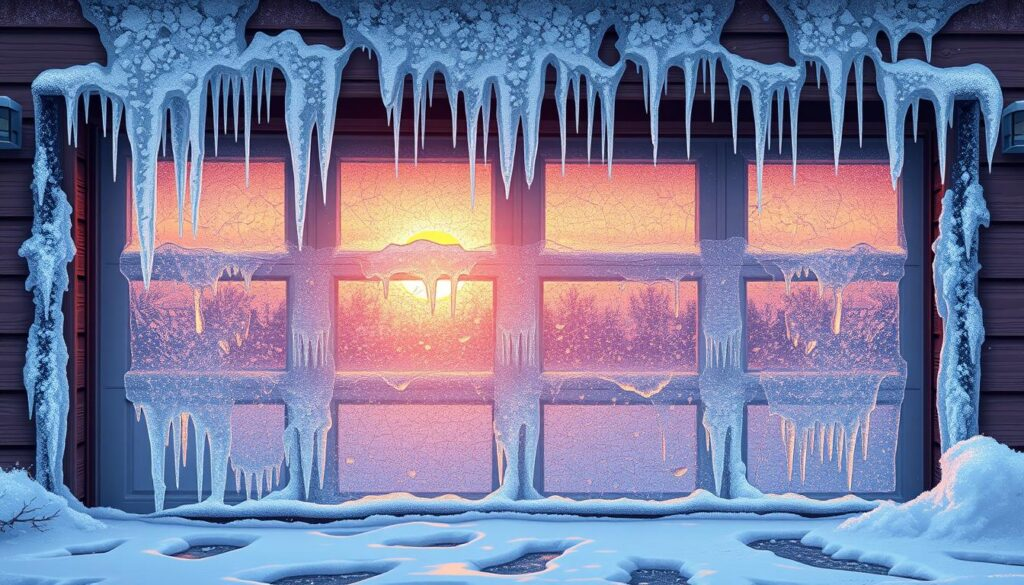
Best Winter Maintenance Routine
Weekly:
- Squeegee melted snow
- Remove standing water
Monthly:
- Inspect cracks
- Check drainage slope
Seasonally:
- Apply sealers
- Inspect floor coatings
Final Thoughts: Ice on Garage Floors Is Not a Small Problem
Ice buildup on garage floors is one of the most underestimated winter hazards homeowners face.
It:
- Creates serious fall risks
- Damages vehicles
- Destroys concrete slowly
- Leads to costly repairs
- Poses legal and insurance risks
The danger isn’t dramatic—it’s gradual and deceptive.
By understanding:
- Why snow melts and refreezes
- How slippery garage ice really is
- How freeze-thaw cycles destroy concrete
Homeowners can take simple but powerful steps to make garages safer, stronger, and winter-proof.