

Let’s be honest—when most people hear the word minimalist, they picture a plain white room with barely any furniture and zero personality.
But real minimalism? It’s not about stripping your space down until it feels lifeless. It’s about intentional design—keeping only what you love and use, while still creating a bedroom that feels warm, stylish, and uniquely yours.
If you want a clean, clutter-free space without sacrificing comfort or character, you’re in the right place. Let’s dive into minimalist bedroom ideas that actually feel cozy, interesting, and far from boring.

What Minimalism Really Means (Hint: It’s Not Empty)
Minimalism isn’t about having less just for the sake of it—it’s about having the right things.
A minimalist bedroom should feel:
- Calm, not cold
- Simple, not empty
- Clean, but still personal
The goal? Walk into your room and instantly feel relaxed—not like you’re in a showroom.
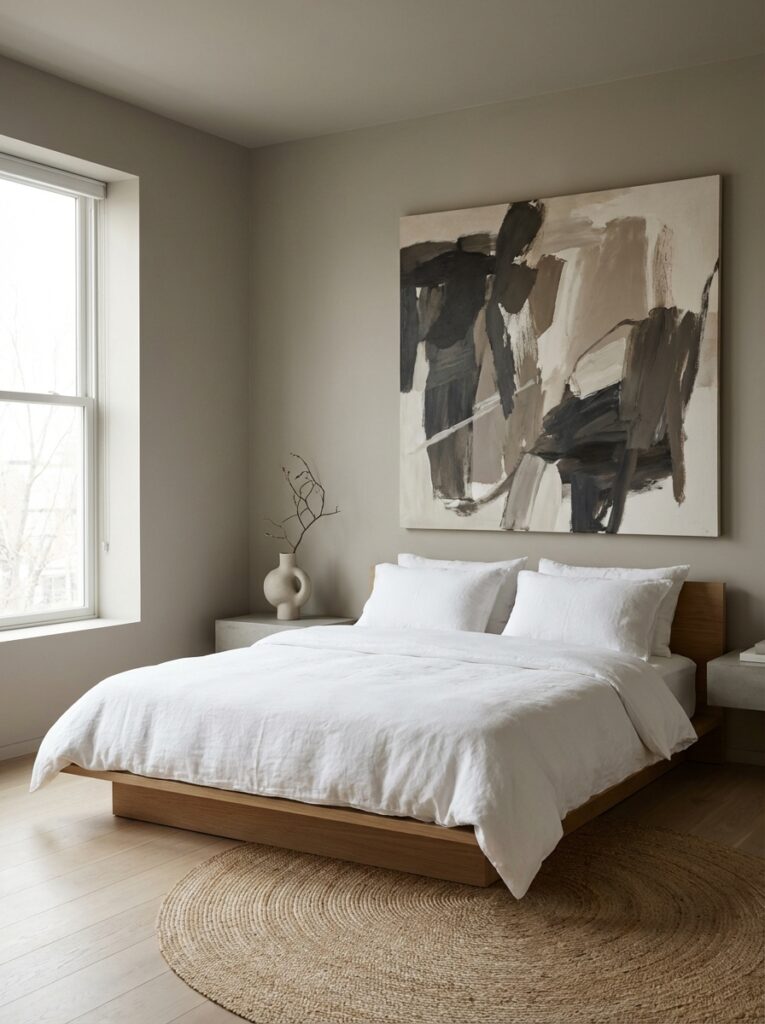
1. Start with a Clean, Neutral Base
A minimalist room always begins with a simple color palette.
Go for:
- White
- Soft beige
- Warm gray
- Light taupe
These colors reflect light and make your space feel open and airy.
But here’s the trick:
Don’t rely on just one shade. Layer slightly different tones to add depth.
Example:
- Cream walls
- Beige bedding
- Light wood furniture
It keeps things minimal—but not flat.
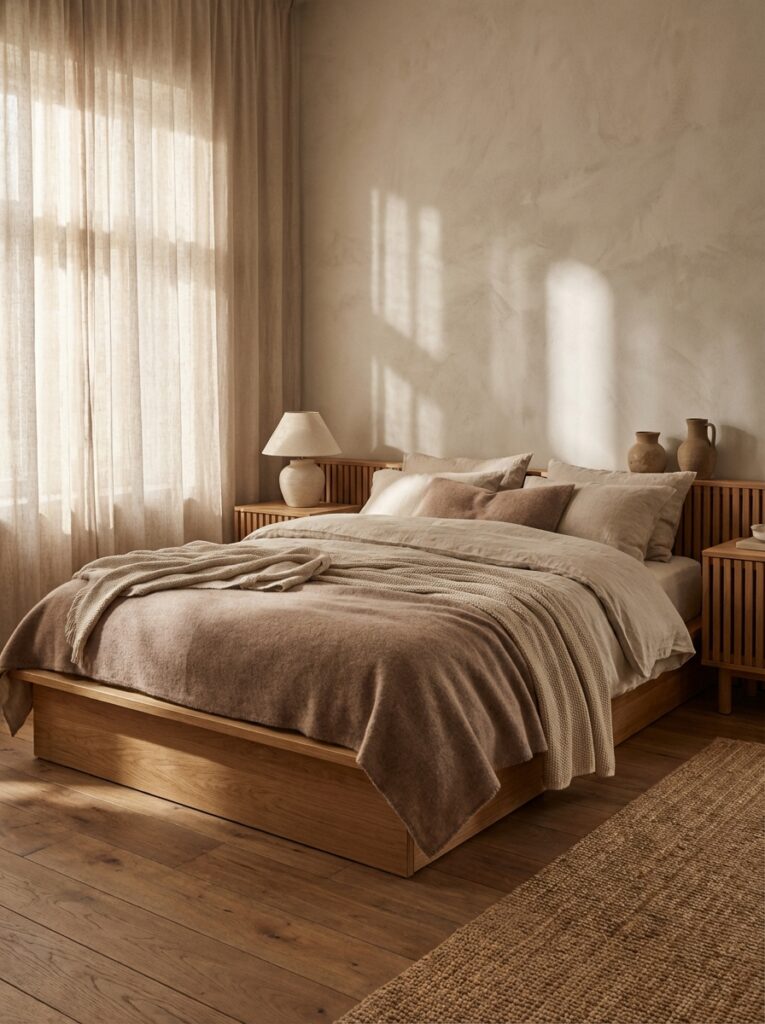
2. Add Texture (This Is What Prevents Boredom)
If minimalist rooms ever feel boring, it’s usually because they lack texture.
Mix materials like:
- Linen bedding
- Chunky knit blankets
- Soft rugs
- Wood furniture
- Matte ceramics
Why it works:
Even with neutral colors, different textures create visual interest and warmth.
Think: simple color, rich feel.
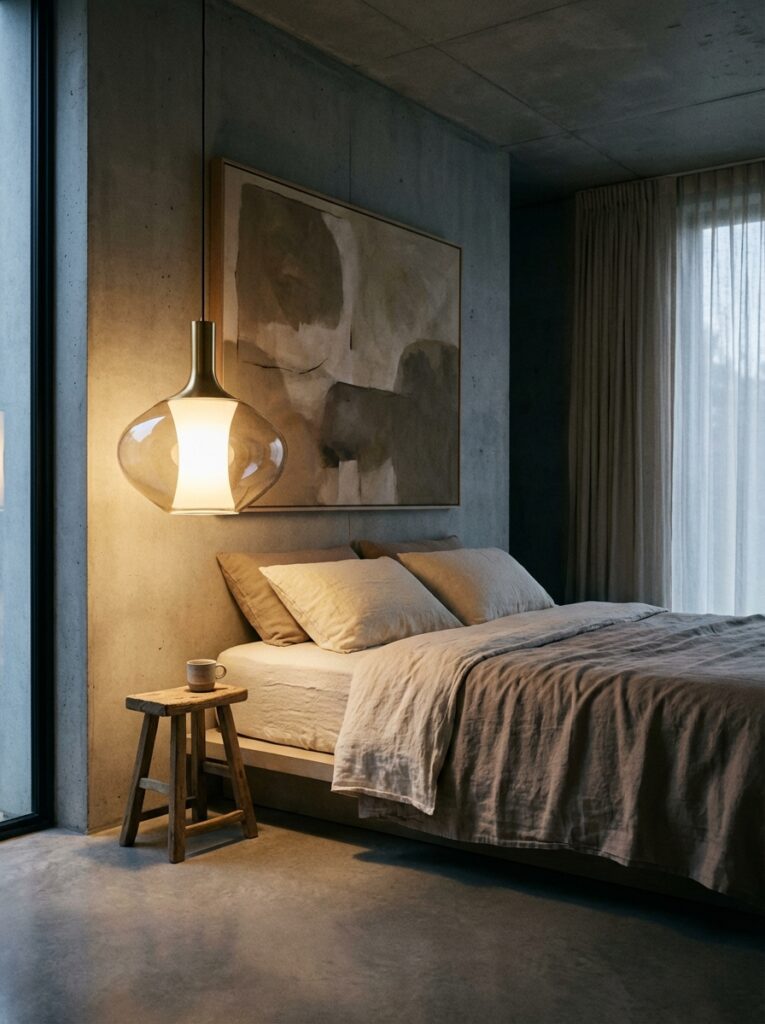
3. Keep Furniture Simple—but Not Generic
Minimalism loves clean lines, but that doesn’t mean everything has to look identical.
Look for:
- Sleek bed frames
- Streamlined nightstands
- Functional dressers
Avoid:
- Bulky or overly decorative furniture
- Cheap, generic pieces with no character
Upgrade tip:
Choose one statement furniture piece—like a unique headboard or a beautifully crafted chair.
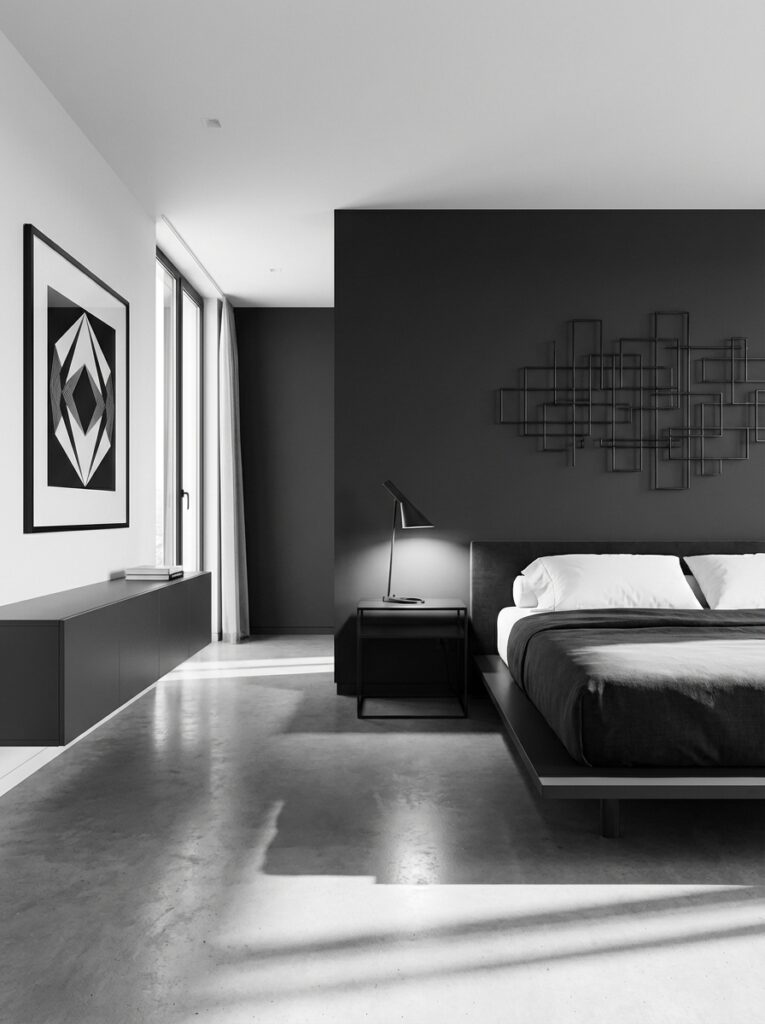
4. Limit Decor, But Make It Count
Minimalism isn’t “no decor”—it’s intentional decor.
Instead of 10 small items:
Choose 2–3 meaningful pieces.
Ideas:
- A framed art print
- A ceramic vase
- A small stack of books
Each item should feel like it belongs.
5. Let One Element Stand Out
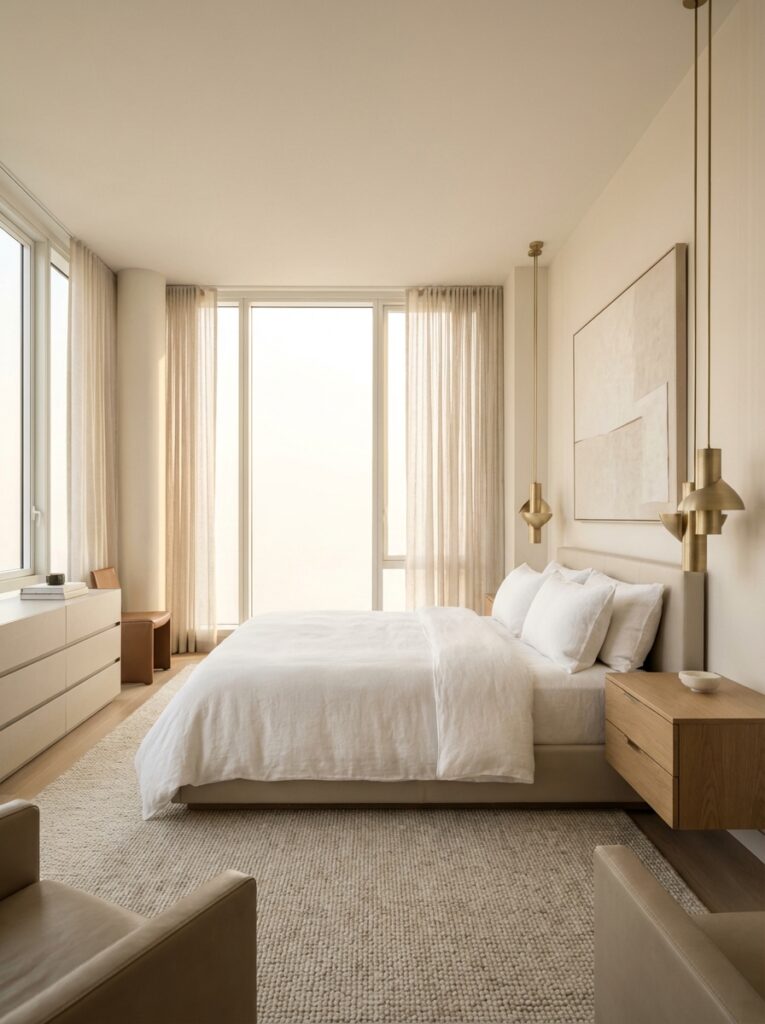
Here’s how you keep minimalism interesting: add a focal point.
Options:
- A bold piece of art
- A textured headboard
- A statement light fixture
- A dark accent wall
Why it works:
When everything else is simple, one standout feature becomes powerful.
6. Declutter Surfaces Completely
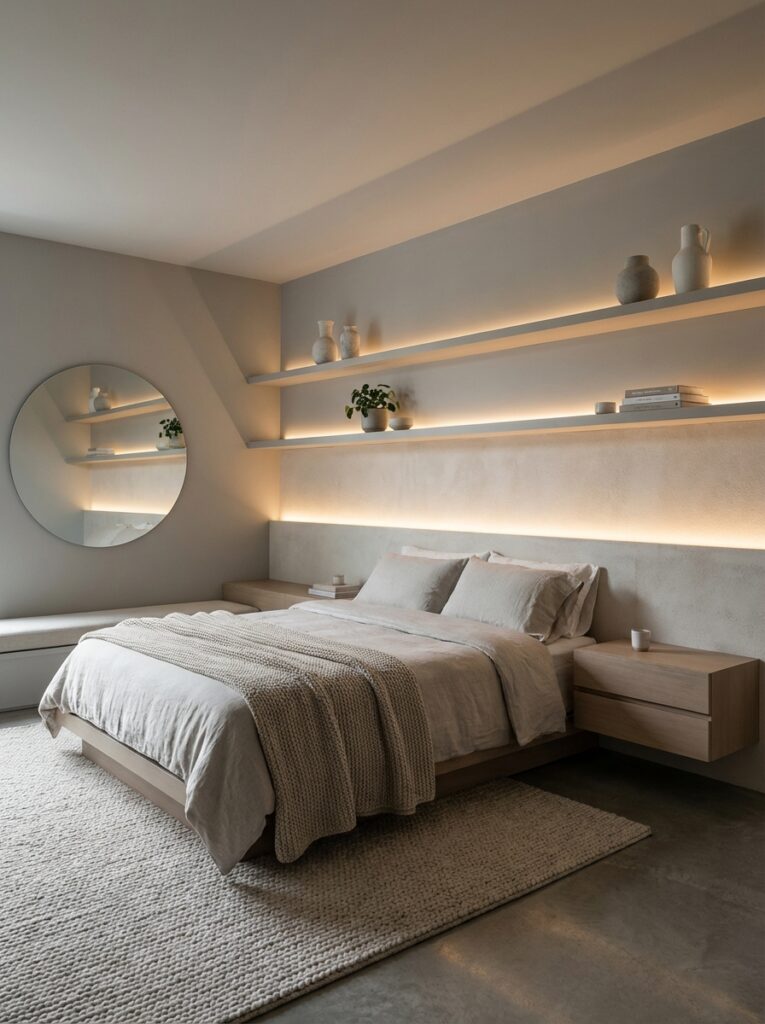
This is where the magic happens.
Clear:
- Nightstands
- Dressers
- Desks
Keep only essentials:
- Lamp
- Book
- Small decor item
The result:
Your room instantly feels calmer, bigger, and more intentional.
7. Use Hidden Storage
Minimalism looks clean because clutter is out of sight.
Smart storage ideas:
- Under-bed drawers
- Storage beds
- Built-in shelves
- Baskets
Rule:
If it’s not aesthetically pleasing, hide it.
8. Bring in Natural Elements
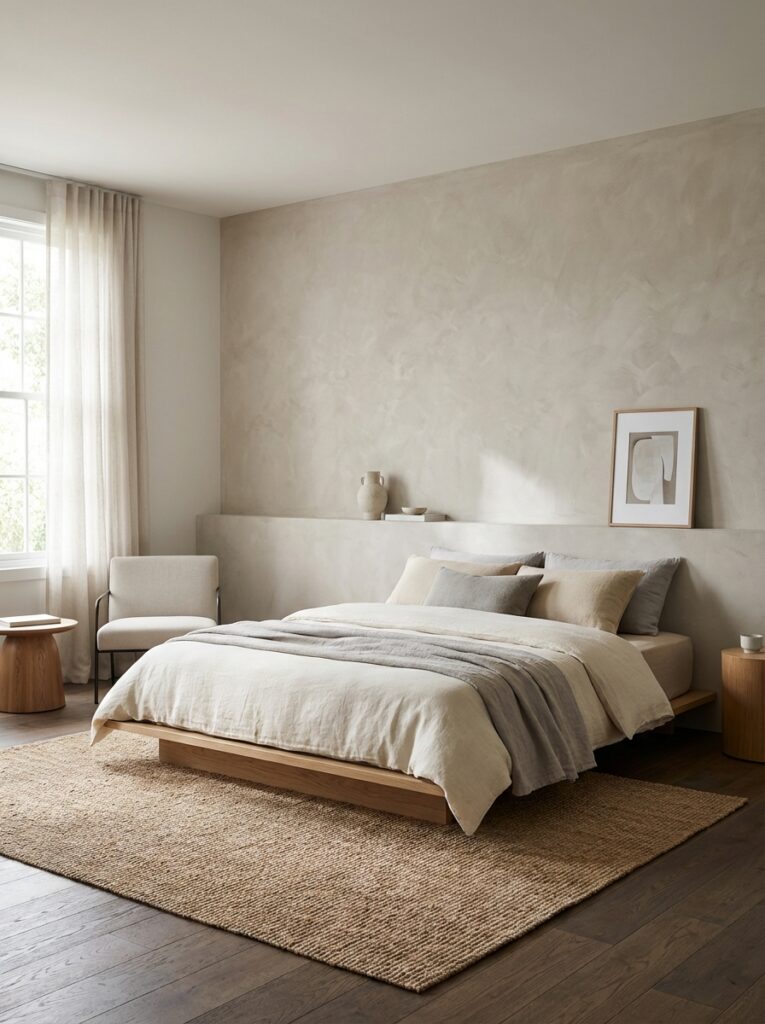
Nature adds life without adding clutter.
Easy additions:
- A single plant
- Wooden furniture
- Linen or cotton fabrics
Keep it simple:
One plant > five random ones.
9. Choose Calm, Layered Lighting
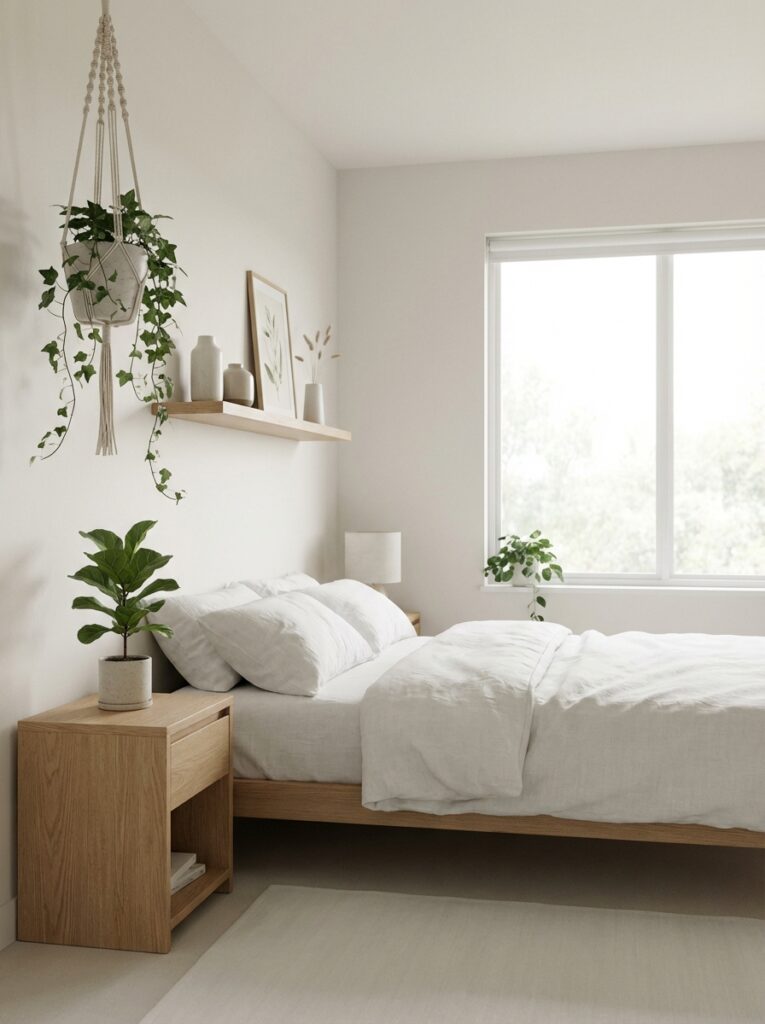
Lighting can make or break a minimalist bedroom.
Use:
- Soft bedside lamps
- Warm light bulbs
- Simple pendant lights
Avoid:
- Harsh overhead lighting
- Overly decorative fixtures
Pro tip:
Layer light sources for a cozy, inviting feel.
10. Stick to a Tight Color Palette
Too many colors = visual clutter.
Keep it to:
2–4 colors max
Example palette:
- White
- Beige
- Light wood
- Black accents
This creates harmony and keeps your room visually clean.
11. Make Your Bed Look Effortless
Your bed is the centerpiece—so keep it simple but inviting.
Styling tips:
- Use high-quality bedding
- Stick to neutral tones
- Add 1–2 pillows max
- Layer a throw blanket
Avoid:
Too many decorative pillows or busy patterns.
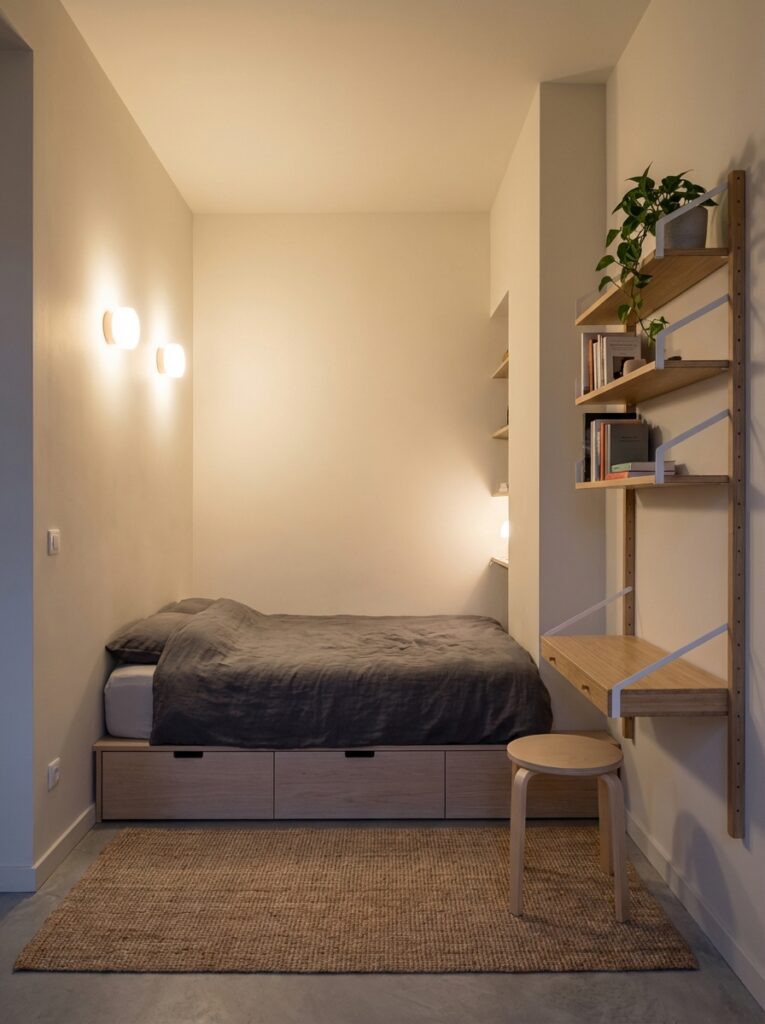
12. Embrace Negative Space
Empty space isn’t wasted space—it’s breathing room.
Don’t fill:
- Every wall
- Every corner
- Every surface
Why it matters:
Negative space highlights the items you do have.
13. Add Subtle Contrast
Minimal doesn’t mean monochrome.
Try:
- White walls + black accents
- Light bedding + dark throw
- Pale wood + charcoal decor
Keep it balanced:
Soft contrast adds depth without overwhelming the space.
14. Use Art the Right Way
Art can elevate a minimalist room instantly.
Best approach:
- One large piece
- Or a pair of simple prints
Style ideas:
- Abstract
- Line art
- Nature-inspired
Avoid:
Busy gallery walls (unless very curated).
15. Focus on Quality Over Quantity
Minimalism is about investing in fewer, better things.
Upgrade slowly:
- Better sheets
- A sturdy bed frame
- Durable furniture
These pieces last longer and feel more luxurious.
16. Keep Patterns Minimal
Patterns can work—but use them carefully.
Stick to:
- Subtle stripes
- Soft textures
- Tone-on-tone designs
Avoid:
Loud, busy patterns that distract from the calm vibe.
17. Create a Small Relaxation Corner
Even in a minimalist room, you can have a cozy spot.
Add:
- A simple chair
- A small table
- A soft throw
This creates a space for reading, relaxing, or just unwinding.
18. Keep Technology Low-Key
Screens and wires can ruin the aesthetic quickly.
What to do:
- Hide cables
- Use simple device designs
- Keep tech minimal
Your room should feel like a retreat—not an office.
19. Personal Touches (Without the Clutter)
Minimalist doesn’t mean impersonal.
Add:
- A favorite book
- A meaningful photo
- A special object
The key:
Choose items that actually mean something to you.
20. The Feeling You’re Creating
At the end of the day, your minimalist bedroom should feel like a reset button.
You want it to feel:
- Calm when you walk in
- Peaceful when you wake up
- Relaxing when you go to sleep
If your space helps you breathe easier… you’ve done it right.
Final Thoughts
Minimalist bedrooms don’t have to be boring—they just need intention.
By focusing on:
- Texture over clutter
- Quality over quantity
- Simplicity with personality
…you can create a bedroom that feels both clean and inviting.
Start small. Clear one surface. Replace one cluttered corner. Add one meaningful piece.
And before you know it, your bedroom won’t just look better—it’ll feel like the calmest place in your entire home.